The AI Boom is Over - And That's Exactly What Your Business Needs
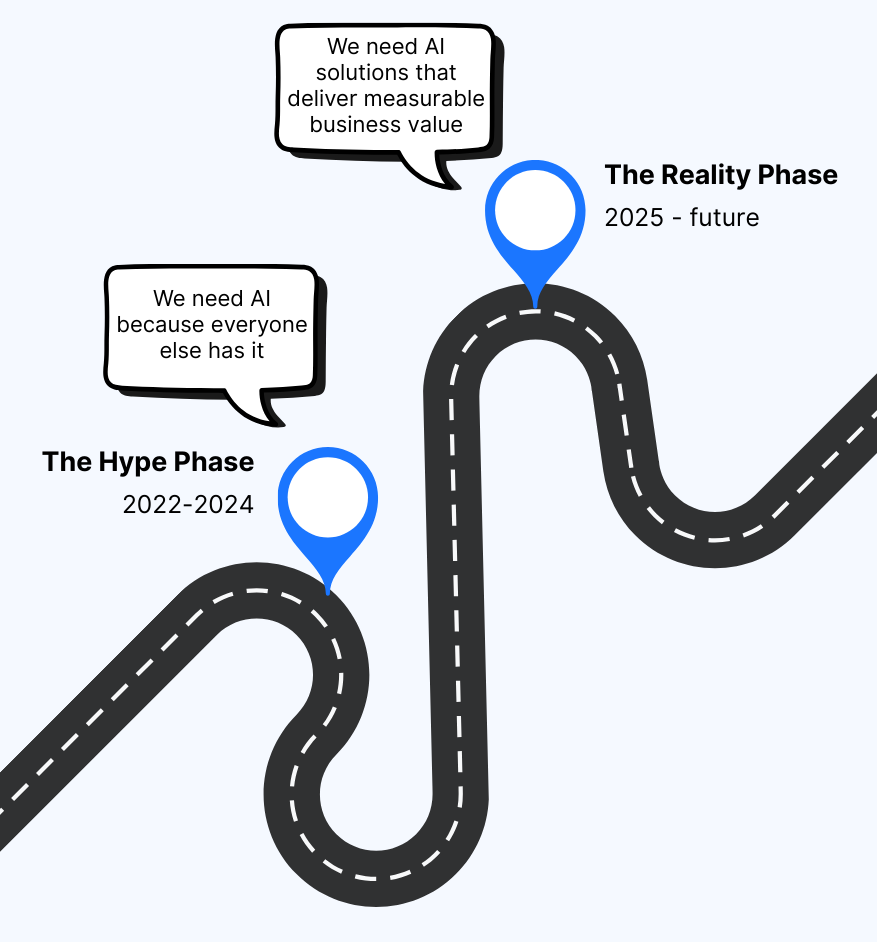
After years of breathless headlines and astronomical valuations, the AI boom has officially entered its reality check phase.
But here's the twist: this isn't bad news for enterprise leaders. It's the best thing that could happen to your AI strategy.
The FOMO-Driven AI Rush: A Multi-Billion Dollar Lesson
For the past three years, enterprise leadership across the globe have been gripped by AI FOMO. C-level executives suddenly demanded AI initiatives by quarter's end.
The result? A spectacular parade of failed pilots, abandoned projects, and inflated AI partner contracts.
Sound familiar?
The fear of missing out drove many leaders to rush into AI adoption without fundamental clarity on business outcomes. We've witnessed countless enterprises chase the AI trend instead of solving actual business problems.
This rush-to-AI mentality created a perfect storm of wasted resources, misaligned expectations, and technology implementations that solved problems nobody had.
What "AI Boom is Over" Actually Means for Enterprise Leaders
The end of the AI hype cycle doesn't signal technology failure - it marks the beginning of strategic maturity.
This transition represents a fundamental shift from technology-first to outcome-first thinking. Enterprises are moving beyond proof-of-concepts toward sustainable, scalable AI implementations that directly impact bottom-line results.
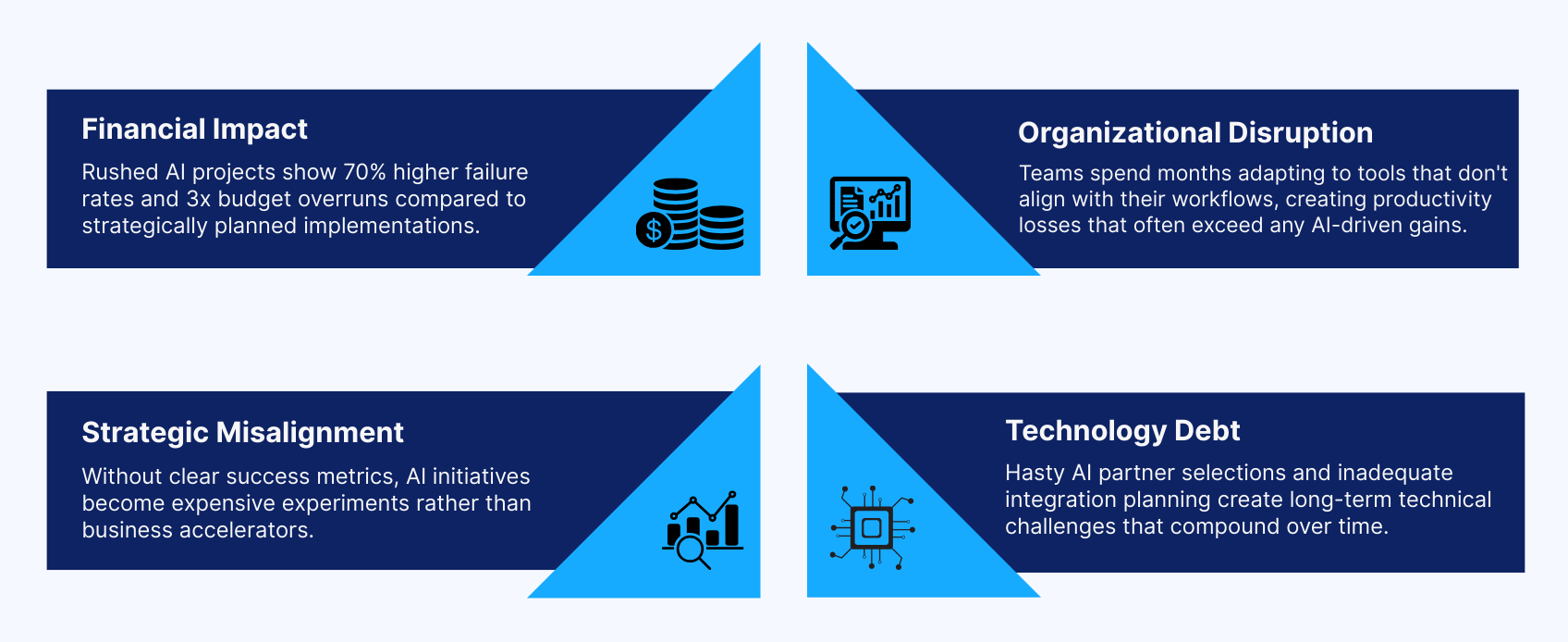
The Hidden Cost of Fear-Driven AI Decisions
When business leaders make AI adoption decisions based on competitive pressure rather than strategic need, the consequences cascade throughout the organization:
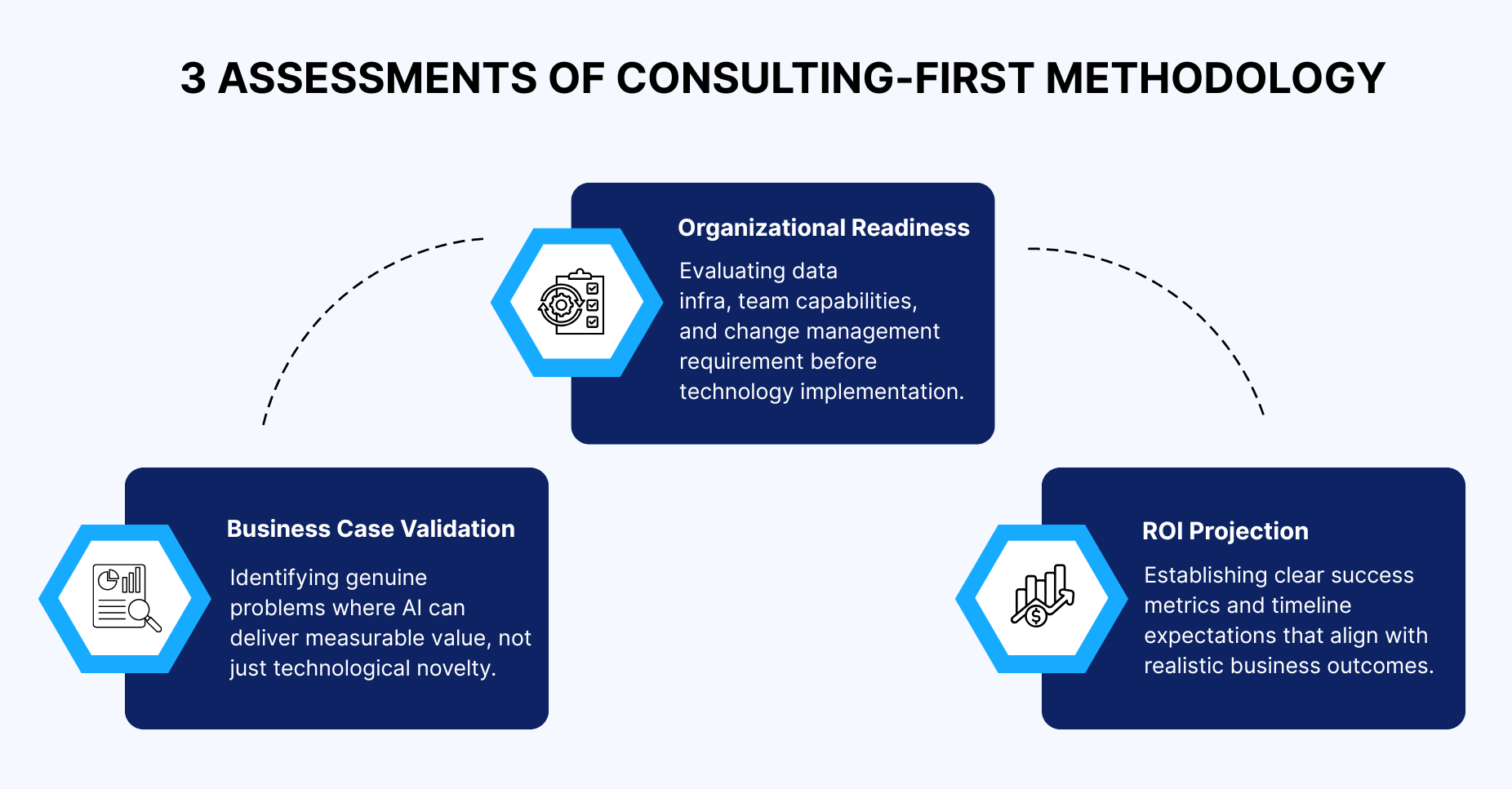
The Consulting-First Approach: NamaSYS Analytics' Reality Check
This is where strategic AI consulting becomes invaluable. Namasys Analytics approaches every engagement with a fundamental question: "Do you actually need AI to solve this problem?"
Our role isn't to sell AI solutions - it's to evaluate whether AI is the right tool for your specific business challenges. Sometimes the answer is yes. Often, it's not. But that clarity is worth its weight in prevented disasters.
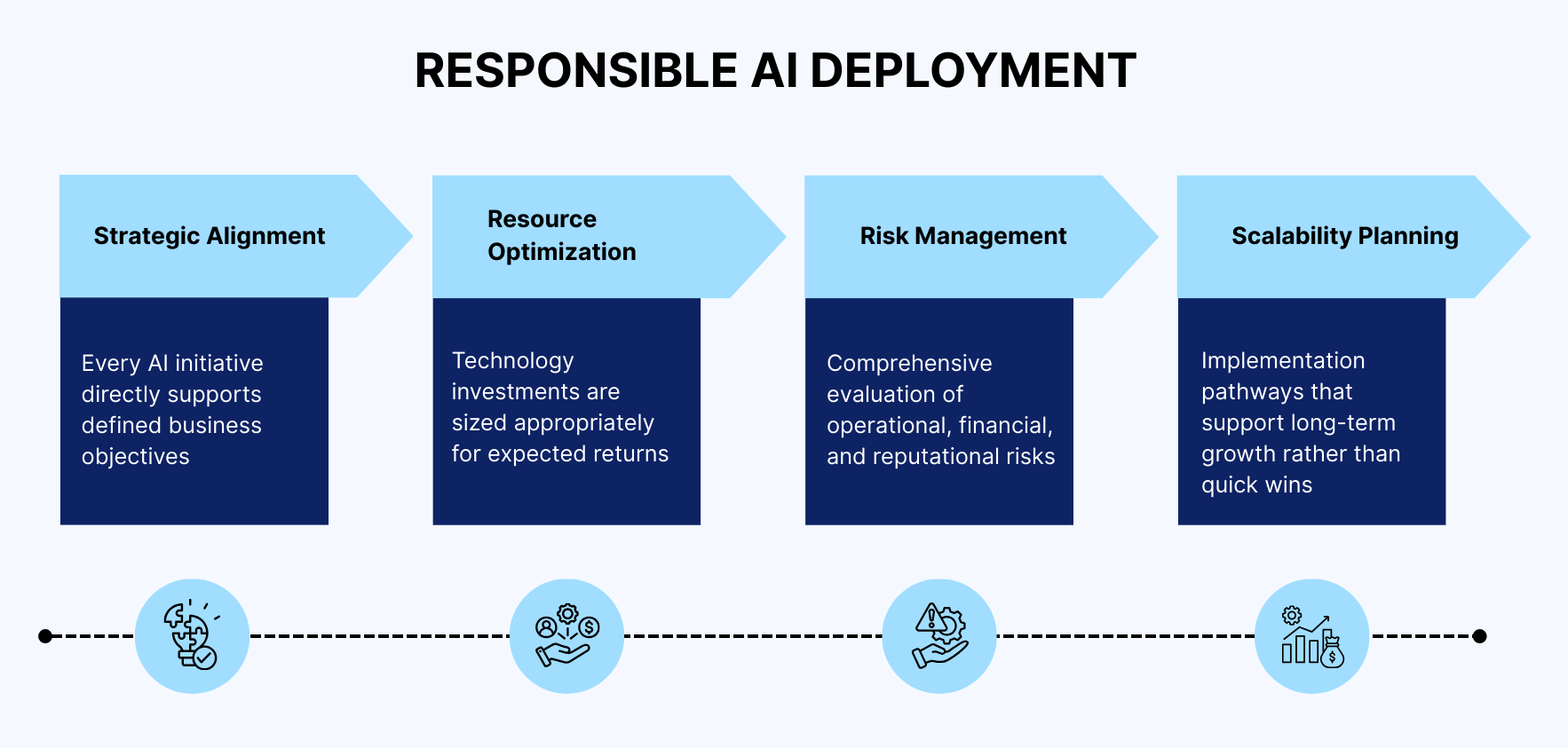
Responsible AI Deployment: The New Competitive Advantage
As the AI boom transitions into the AI reality phase, responsible deployment becomes the differentiating factor between successful implementations and expensive failures.
Organizations that embrace this disciplined approach to AI adoption will emerge stronger from the post-boom landscape, while competitors struggle with the technical debt of hasty implementations.
Your Next Move in the Post-Boom AI Landscape
The end of the AI boom creates unprecedented opportunity for thoughtful business leaders. With reduced market pressure and vendor desperation, enterprises can now focus on strategic AI implementations that deliver genuine value.
The AI boom may be over, but the AI opportunity is just beginning - for leaders who approach it strategically.
The question isn't whether your organization needs AI. The question is whether you have the clarity and strategic framework to implement AI solutions that actually move your business forward.
What's your experience with AI adoption in your organization? Share your insights in the comments - the post-boom AI landscape needs more honest conversation about what actually works.
As enterprises connect AI agents to live workflows, security risks extend beyond the model. Learn how prompt injection, excessive access, weak governance and poor oversight can expose business systems—and how leaders can secure AI agents from the start.
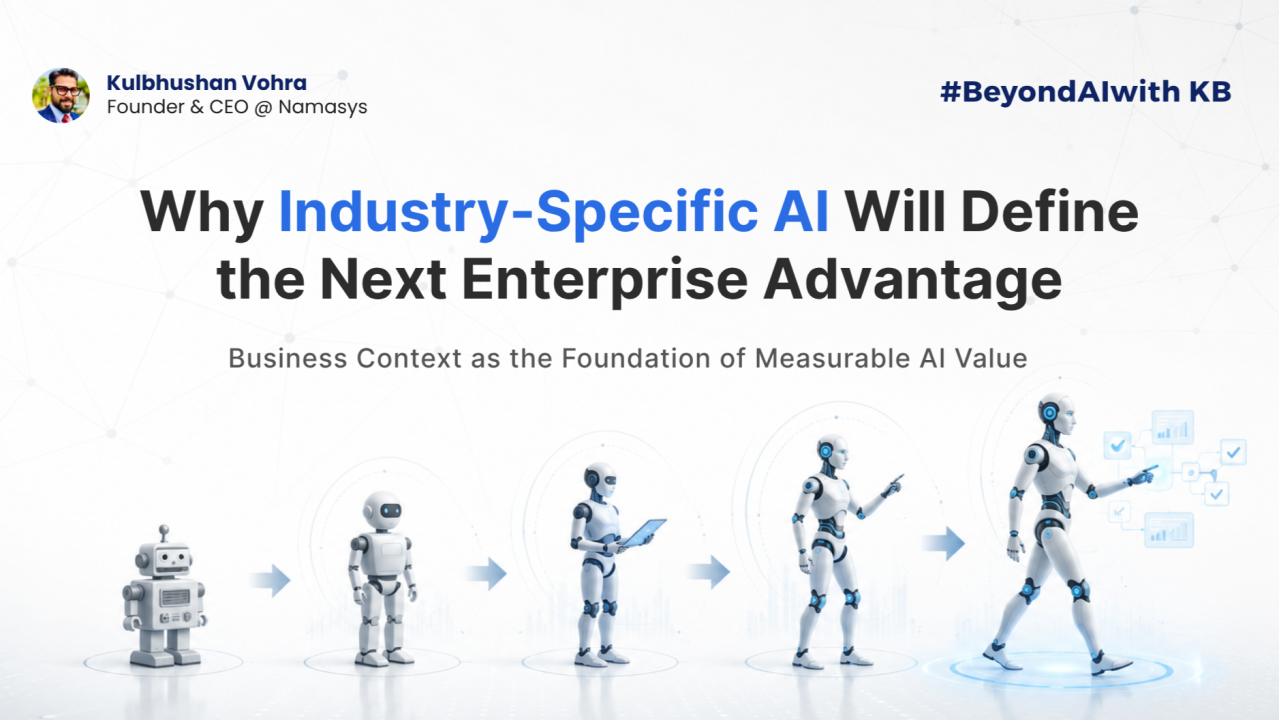
Generic AI improves productivity, but industry-specific AI creates measurable business value by combining enterprise data, workflows, governance and domain expertise. Explore why context will define the next phase of AI adoption.
Namasys Powers What’s Next for Your Enterprise
Bring clarity, efficiency, and agility to every department. With Namasys, your teams are empowered by AI that works in sync with enterprise systems and strategy.

.png)