Enterprise AI no longer sits at the edge of the business. It now sits inside the operating model.
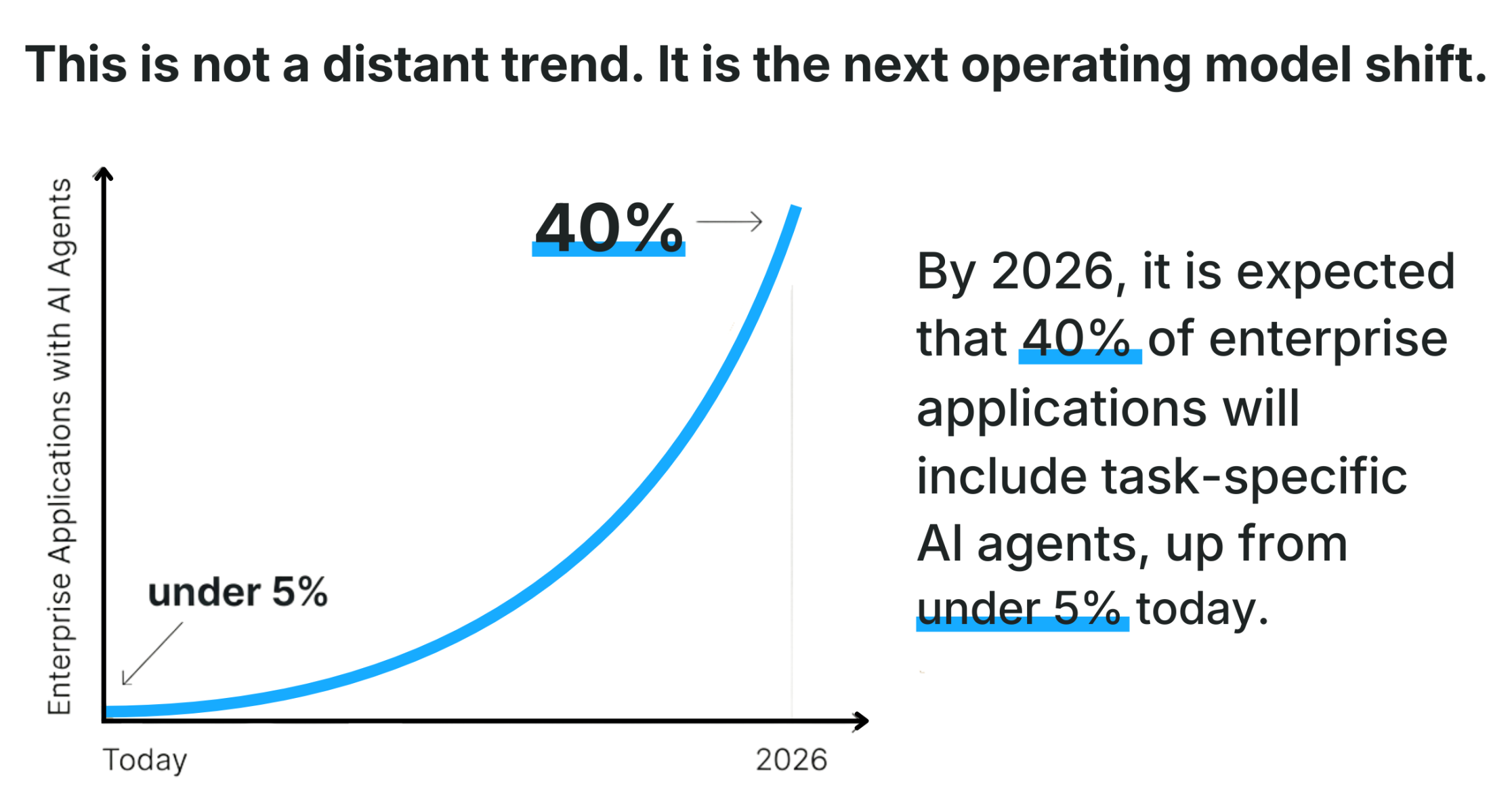
More than 80% of enterprises will deploy generative AI enabled applications by 2026, compared to less than 5% just three years ago. This alone tells us that access to AI is no longer the problem.
The question CXOs ask is not whether AI exists in the organization, but whether it works reliably, scales responsibly, and delivers measurable business outcomes.
This is the year enterprise AI grows up.
From Models to Systems
For the past two years, AI strategy conversations have revolved around models. Which LLM? Which benchmark? Which provider?
But inside high-performing organizations, the focus has already moved on.
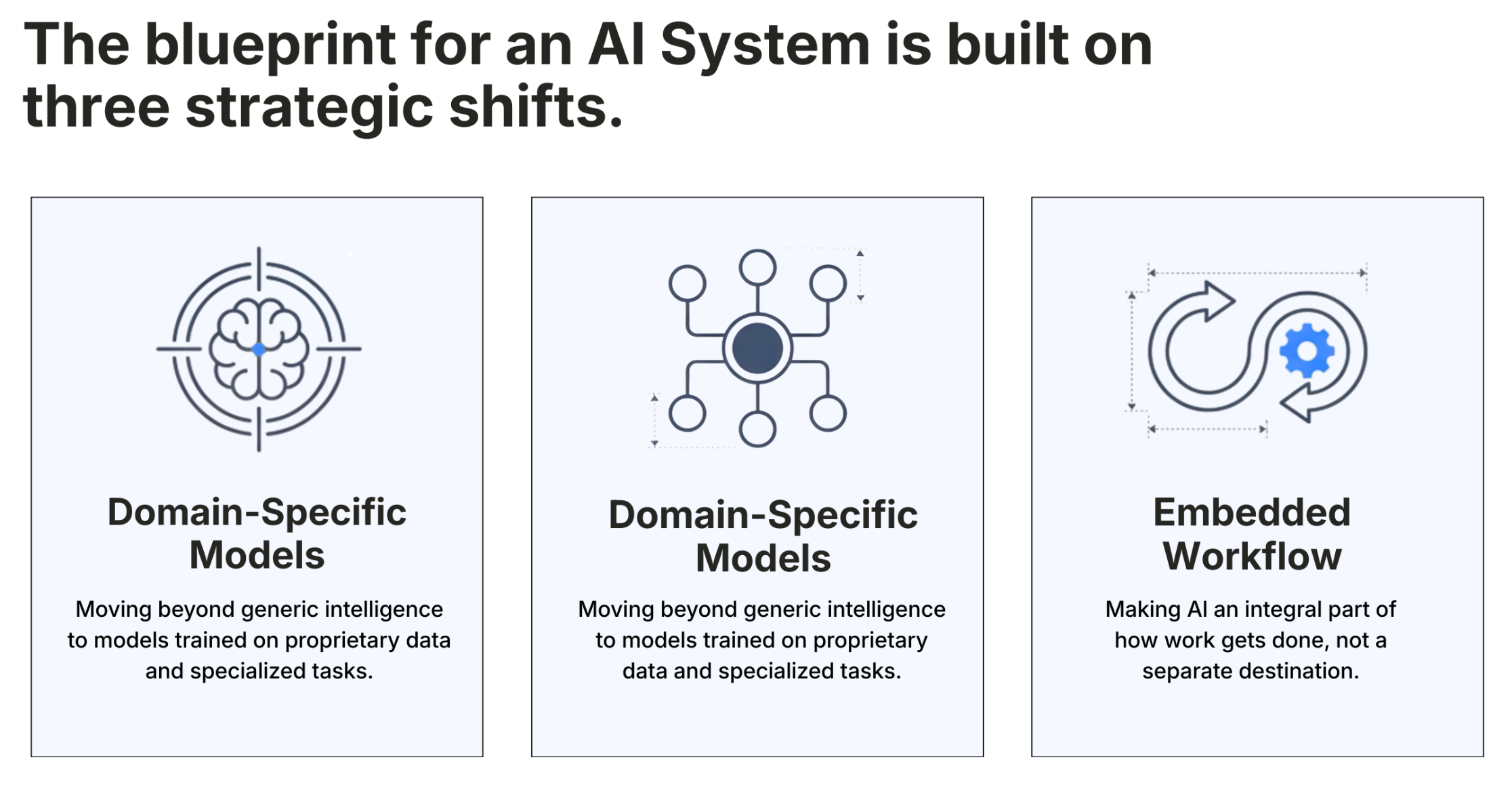
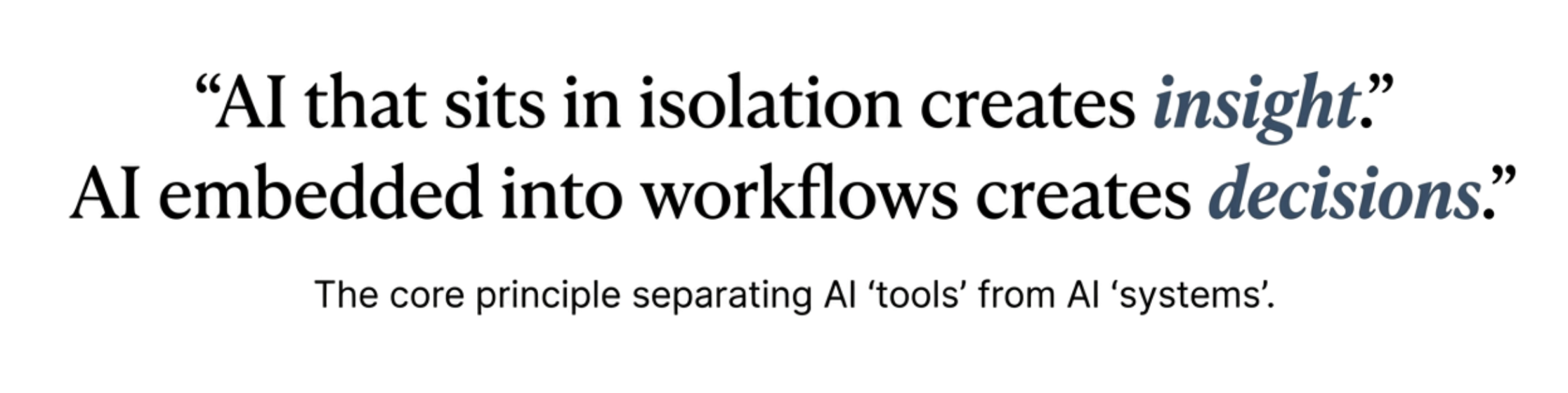
What they are building now are AI systems, not AI tools.
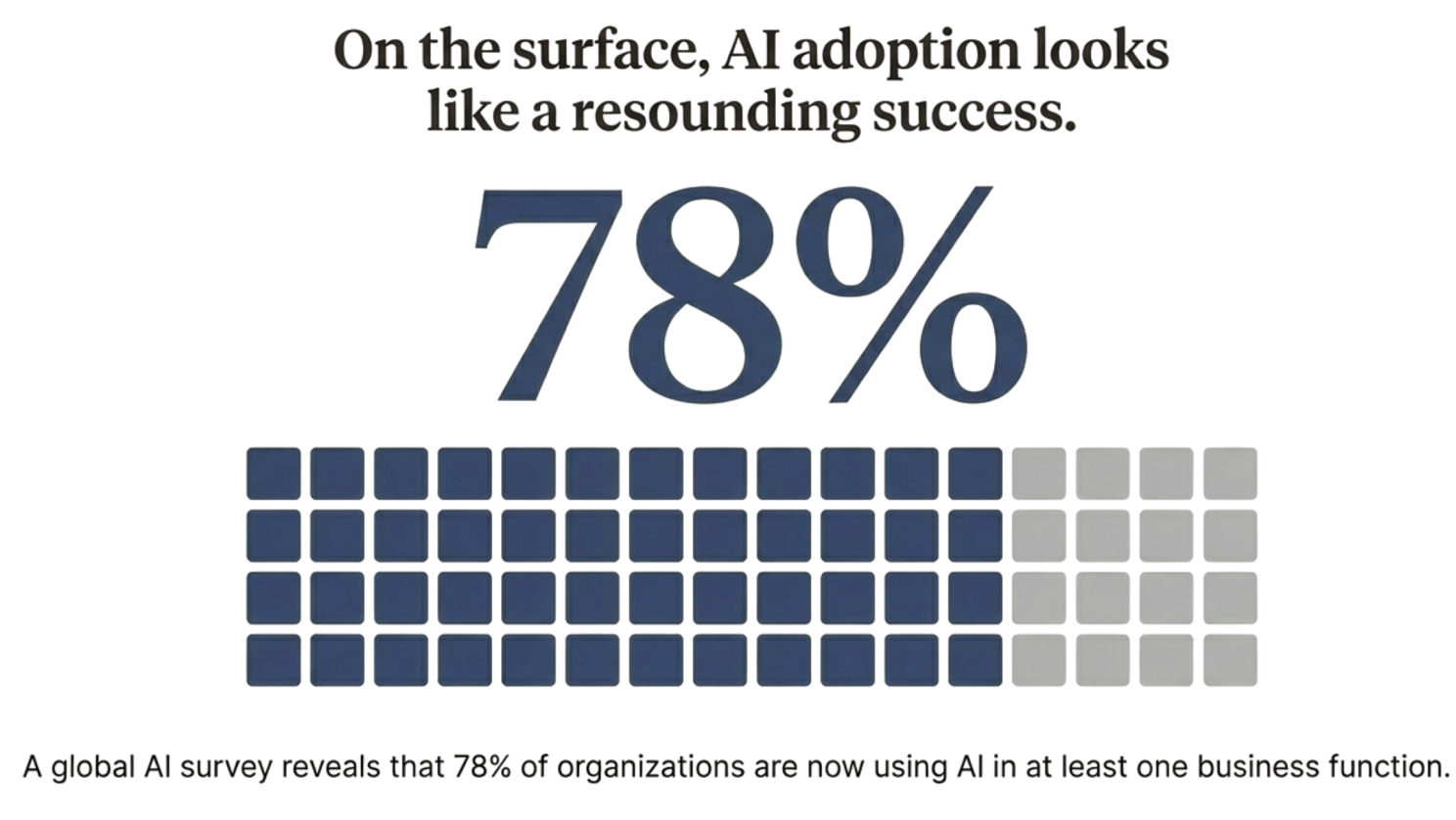
This shift is visible in the data. Even though 78% of organizations are using AI, only a much smaller subset report sustained financial impact. The difference is not intelligence, it is integration.
AI is becoming part of how work flows, not how demos run.
What This Means for CXOs:
AI must now be governed like any other mission-critical business system. That means clear unit economics, explicit ownership for risk and failure, and hard metrics on how deeply AI influences core decisions and workflows. If you cannot explain its value, control its risk, and stand behind its outcomes, it is not ready to scale.
Execution Outperforms Intelligence
There is an uncomfortable truth emerging among leaders: AI is expensive to run at scale.
Compute costs, energy consumption, latency requirements, and chip constraints are forcing enterprises to rethink the "bigger is better" mindset. At the same time, the talent required to operationalize AI looks fundamentally different than most organizations expected.
The shift is two-fold:
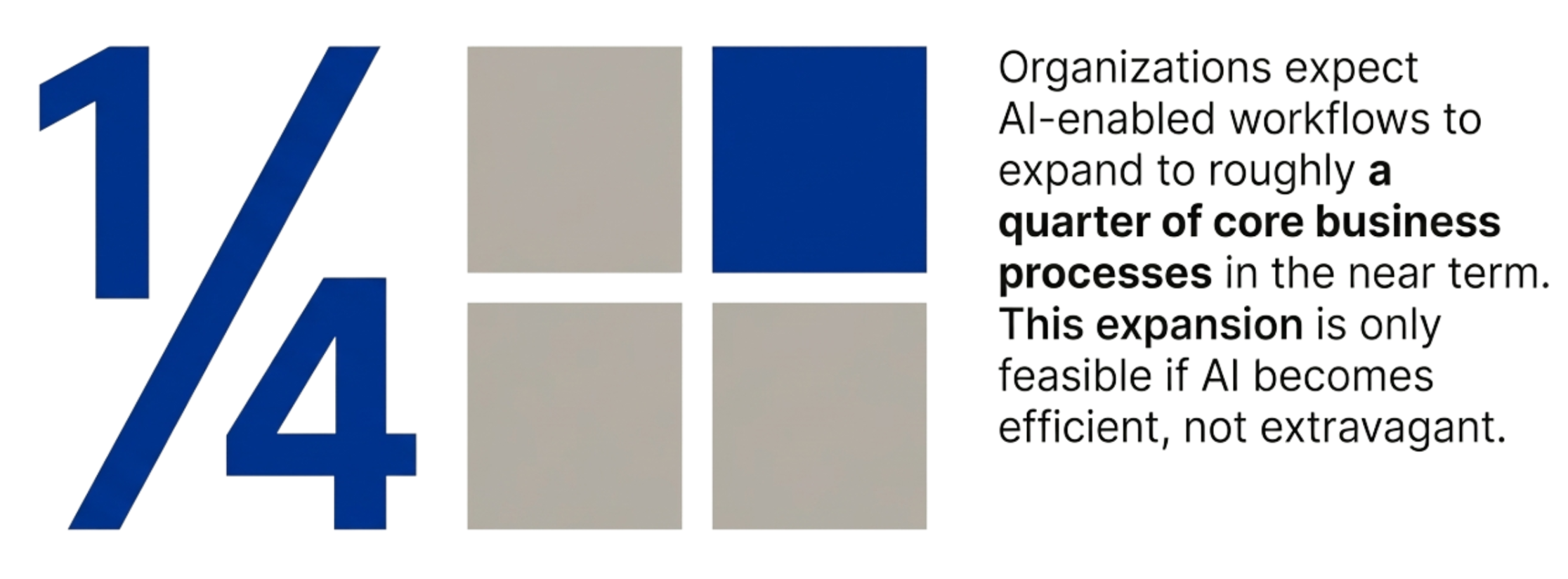
First, efficiency is replacing scale. Enterprise research shows that organizations expect AI-enabled workflows to expand dramatically, reaching roughly a quarter of core business processes in the near term. But that expansion is only feasible if AI becomes efficient, not extravagant.
This is why 2026 is shaping up to be the year of smaller task-optimized models, hybrid inference across cloud and edge, performance-per-watt as a strategic metric, and AI investments justified by operational ROI.
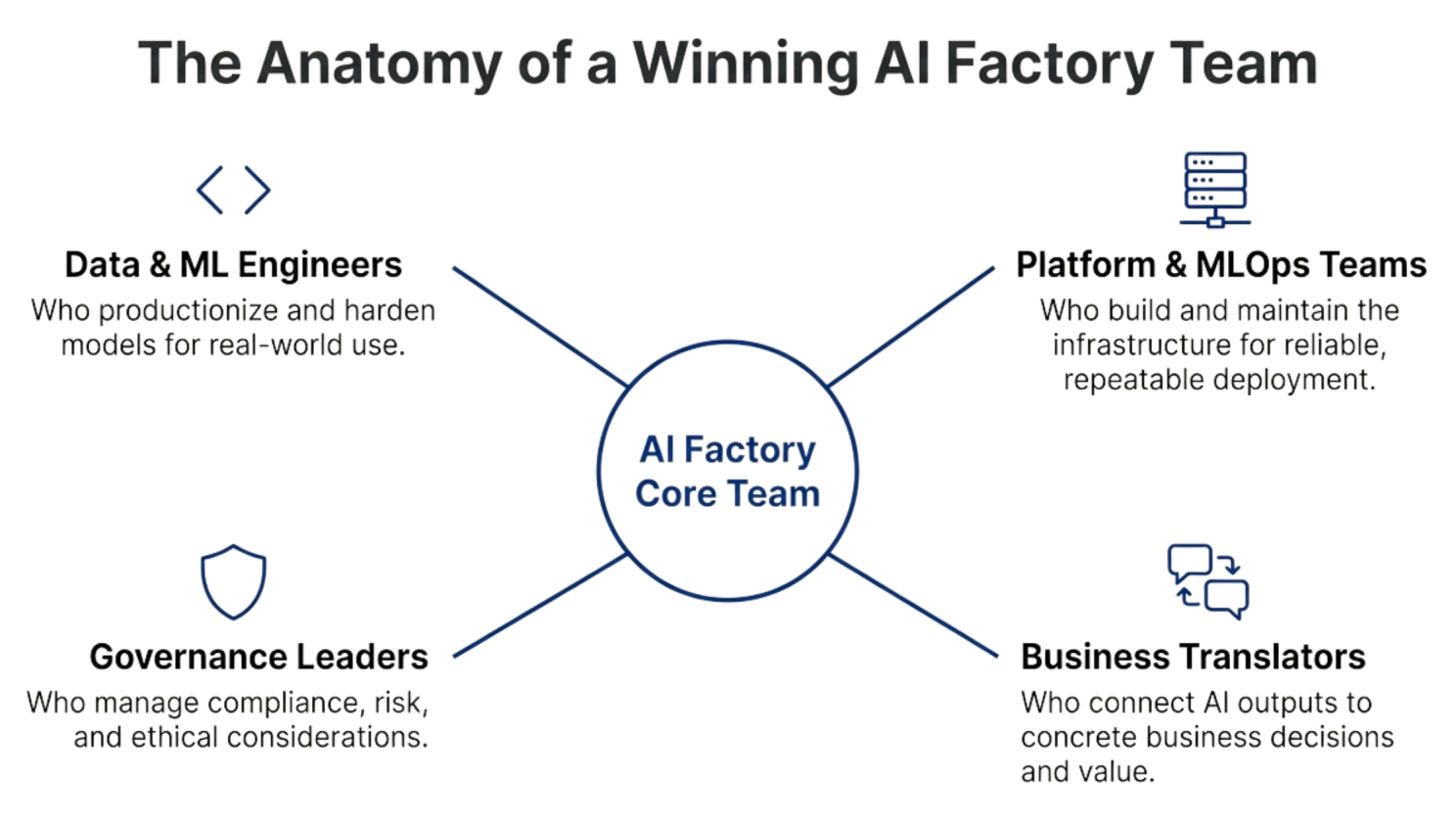
Second, operator-heavy teams are replacing model-heavy labs. The World Economic Forum's Future of Jobs Report 2025 shows that while AI roles are growing fastest globally, analytical thinking, systems thinking, and adaptability rank higher than pure technical specialization.
Across leading organizations, spend is shifting decisively toward infrastructure, integration, and operations, where the majority of real enterprise AI cost and effort now sit.
Governance Has Become the Price of Admission
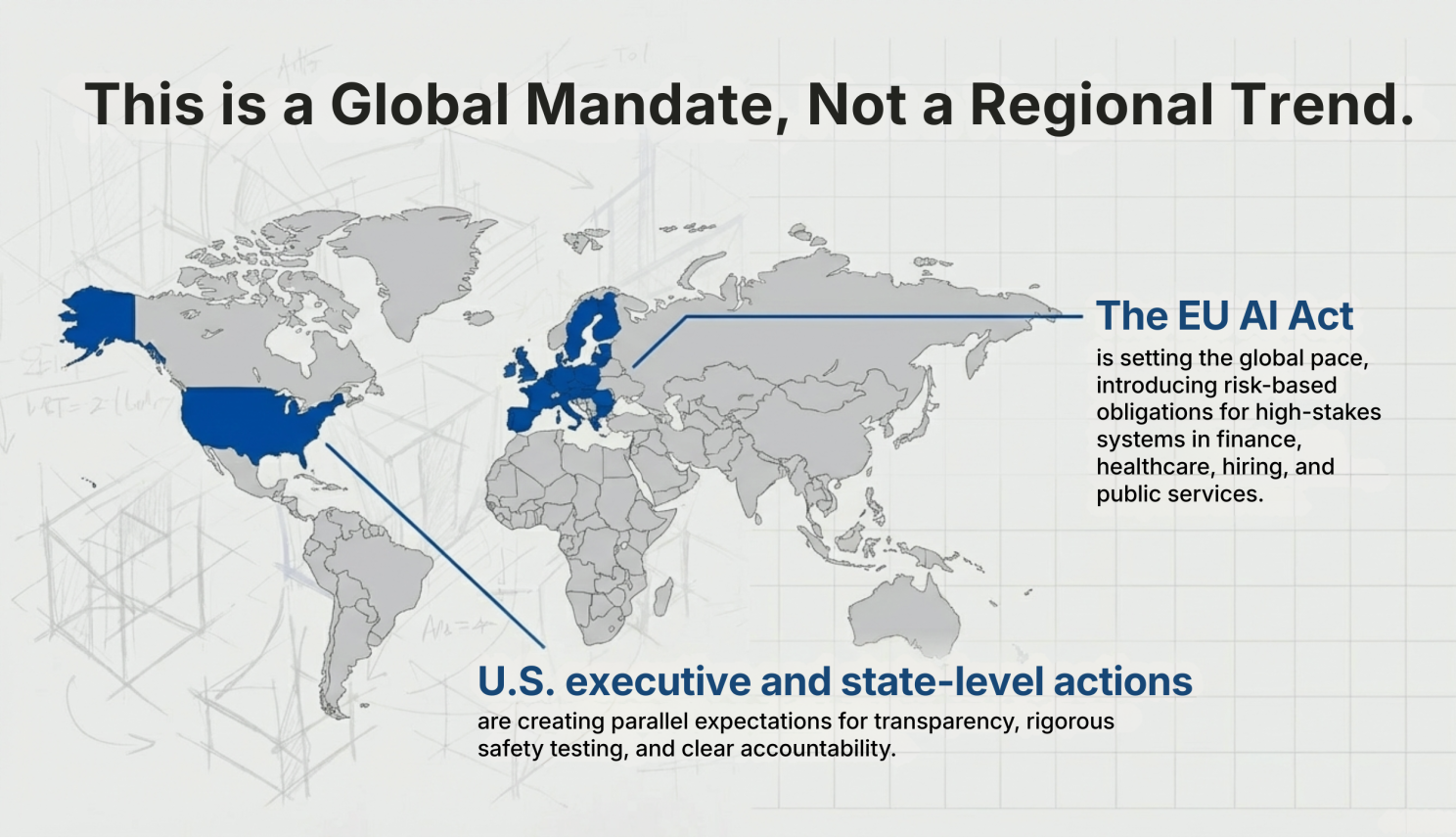
Perhaps the most decisive shift entering 2026 is regulatory maturity.
AI governance is no longer aspirational. It is becoming enforceable.
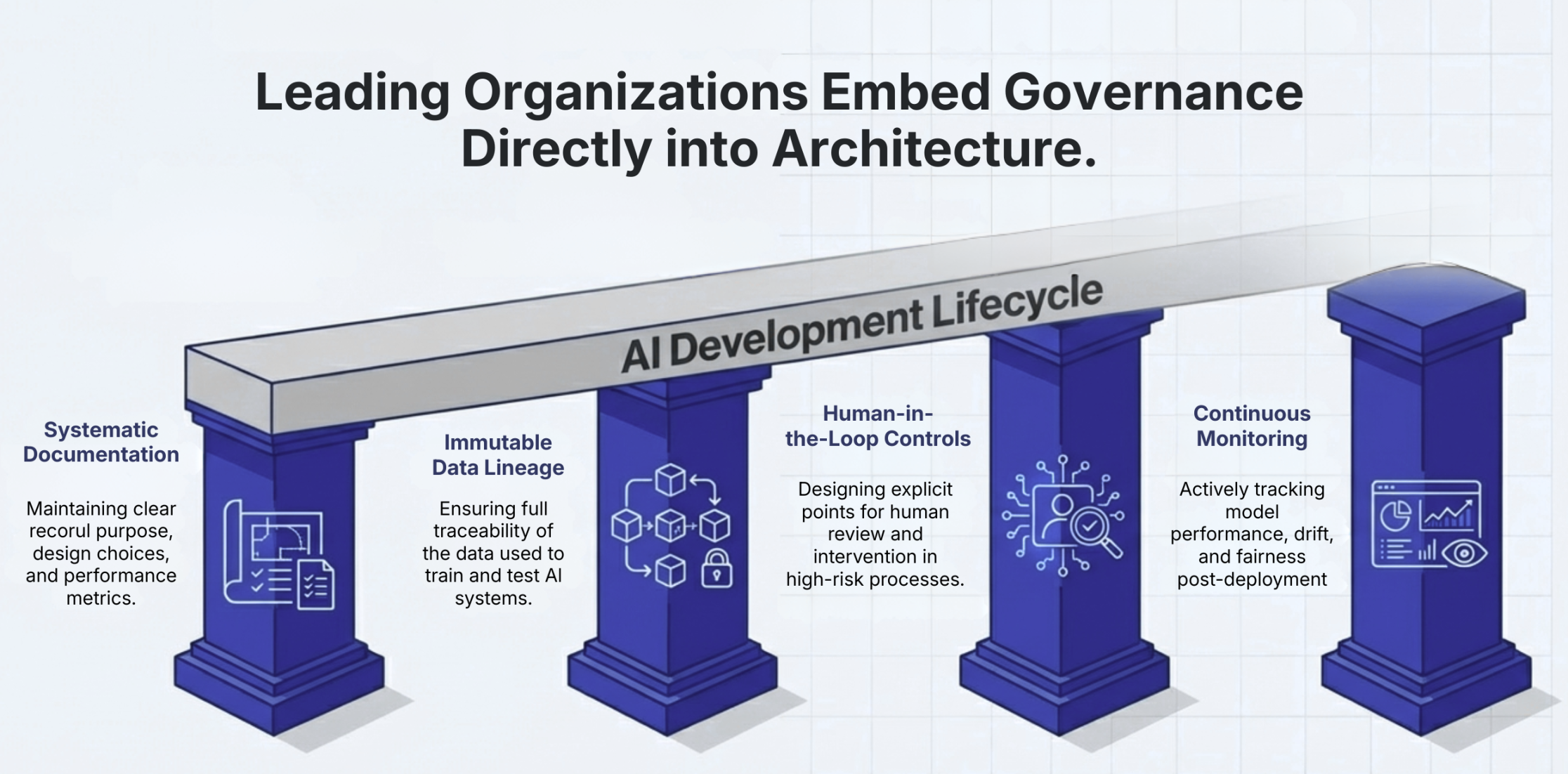
Globally, bodies such as the OECD and G7 are converging around core principles: explainability, human oversight, security and robustness, and accountability across the AI lifecycle.
The implication for enterprises is direct:
If your AI cannot be explained, audited, or governed, it will not scale.
Governance is not a constraint on innovation. It is what makes enterprise deployment possible.
Most Enterprises Avoid This
The pressure to "do AI" has led to pilot proliferation, experiments that never graduate, features that add complexity without delivering value, and systems deployed without clear ownership.
High-performing organizations are running the opposite playbook. They are:
Aggressively pruning AI initiatives that fail to meet ROI thresholds
Consolidating around a small number of high-impact use cases
Requiring clear articulation of decision value and error cost
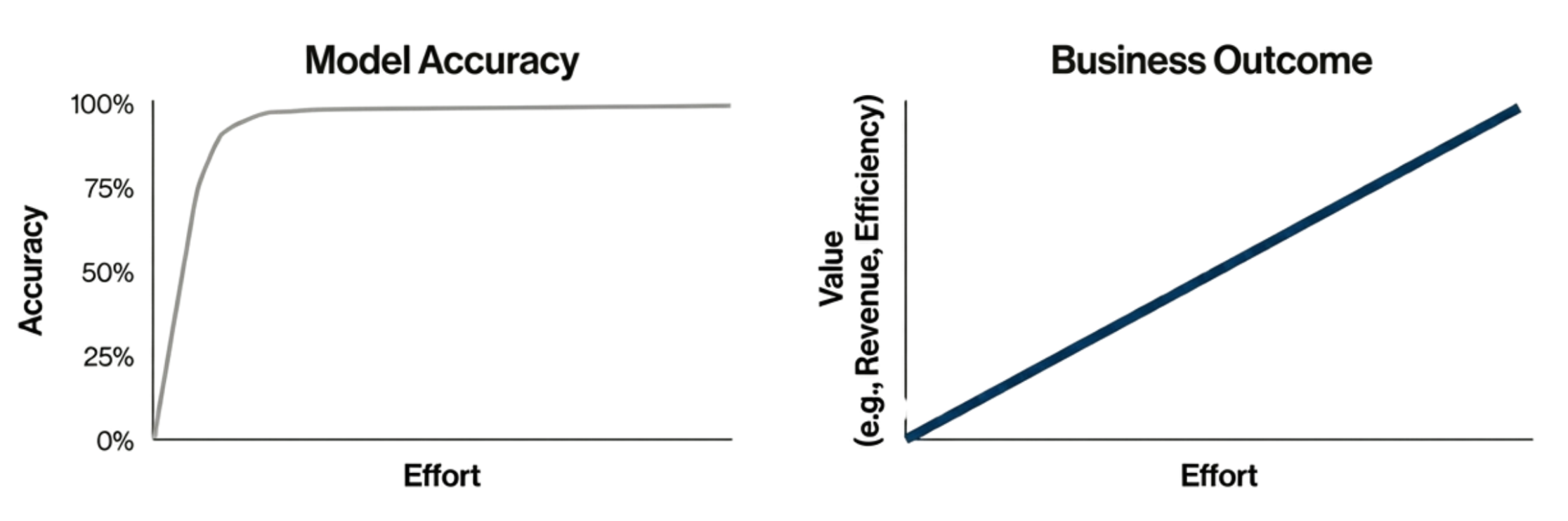
Measuring decision quality and business outcomes, not just model accurac
If you cannot clearly articulate the cost of being wrong, the value of being right, and the workflow impact of the AI system, you should not deploy it.
It means admitting some AI investments were theater, not strategy. Focus beats fragmentation, every time.
What Matters Now
After reviewing the data, the trends, and what we see on the ground, the question for 2026 is:
Can we trust it, operate it, and stand behind its decisions at scale?
The organizations that win this year will be the ones that:
Treat AI as a long-term capability
Align AI investments to business outcomes
Build systems that are efficient, governable, and resilient
Develop people who can work with AI and not just deploy it
AI is no longer about intelligence. It is about execution maturity.
The real test for leadership in 2026 is not how fast you adopt AI, but how disciplined you are in deciding where it belongs.
As enterprises connect AI agents to live workflows, security risks extend beyond the model. Learn how prompt injection, excessive access, weak governance and poor oversight can expose business systems—and how leaders can secure AI agents from the start.
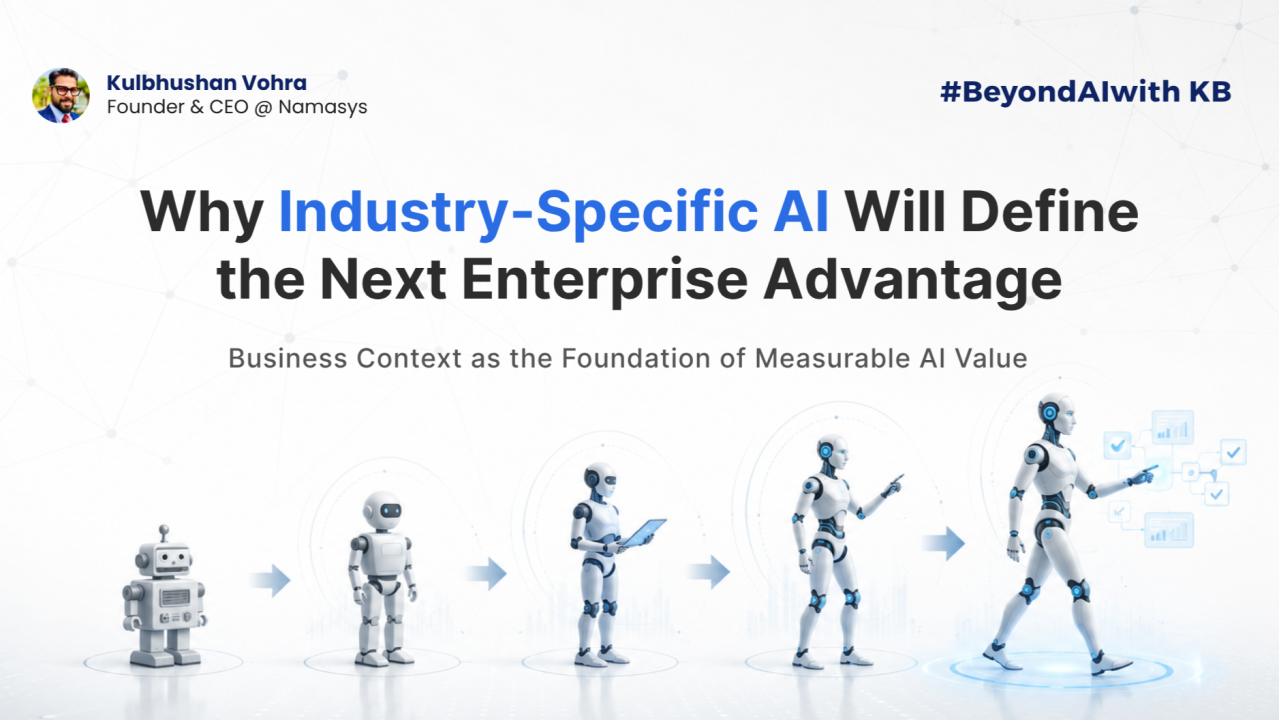
Generic AI improves productivity, but industry-specific AI creates measurable business value by combining enterprise data, workflows, governance and domain expertise. Explore why context will define the next phase of AI adoption.
Namasys Powers What’s Next for Your Enterprise
Bring clarity, efficiency, and agility to every department. With Namasys, your teams are empowered by AI that works in sync with enterprise systems and strategy.

.png)