In the current wave of AI transformation, much of the narrative is dominated by generative models answering queries or generating content. But the frontier is shifting toward autonomous systems that do, not just say. This is the promise of Agentic AI and at Namasys Analytics, it’s no longer a concept. It’s operating inside live enterprises, creating tangible value.
Over the past 18 months, we’ve led more than a dozen enterprise-scale Agentic AI deployments across sectors including banking, telecom, insurance, manufacturing, and logistics. What follows isn’t theory. It’s a set of grounded insights drawn from field-tested implementation at scale, under real-world constraints.
What Is Agentic AI and Why Is It the Next Enterprise Capability?
Agentic AI refers to context-aware, goal-driven AI systems capable of perceiving, reasoning, planning, acting, and learning over time - with minimal human intervention. This is not about prompt engineering or chat interface refinement. This is about systems that embed into workflows, act under policies, and deliver results.
The industry is moving past LLM-as-a-service to AI as infrastructure - where autonomous agents integrate with ERP, CRM, data lakes, and operational APIs to make decisions, negotiate, retrieve insights, and even generate strategy recommendations. These systems:
Operate continuously and iteratively
Build memory and learn from outcomes
Improve with reinforcement and human feedback
Respect enterprise constraints, compliance, and governance
While OpenAI’s AutoGPT, Anthropic’s Claude 3, and others have made agentic architectures accessible, tooling alone does not guarantee business success. True ROI comes from alignment with business strategy, operational maturity, and organizational readiness, which is where most initiatives falter.
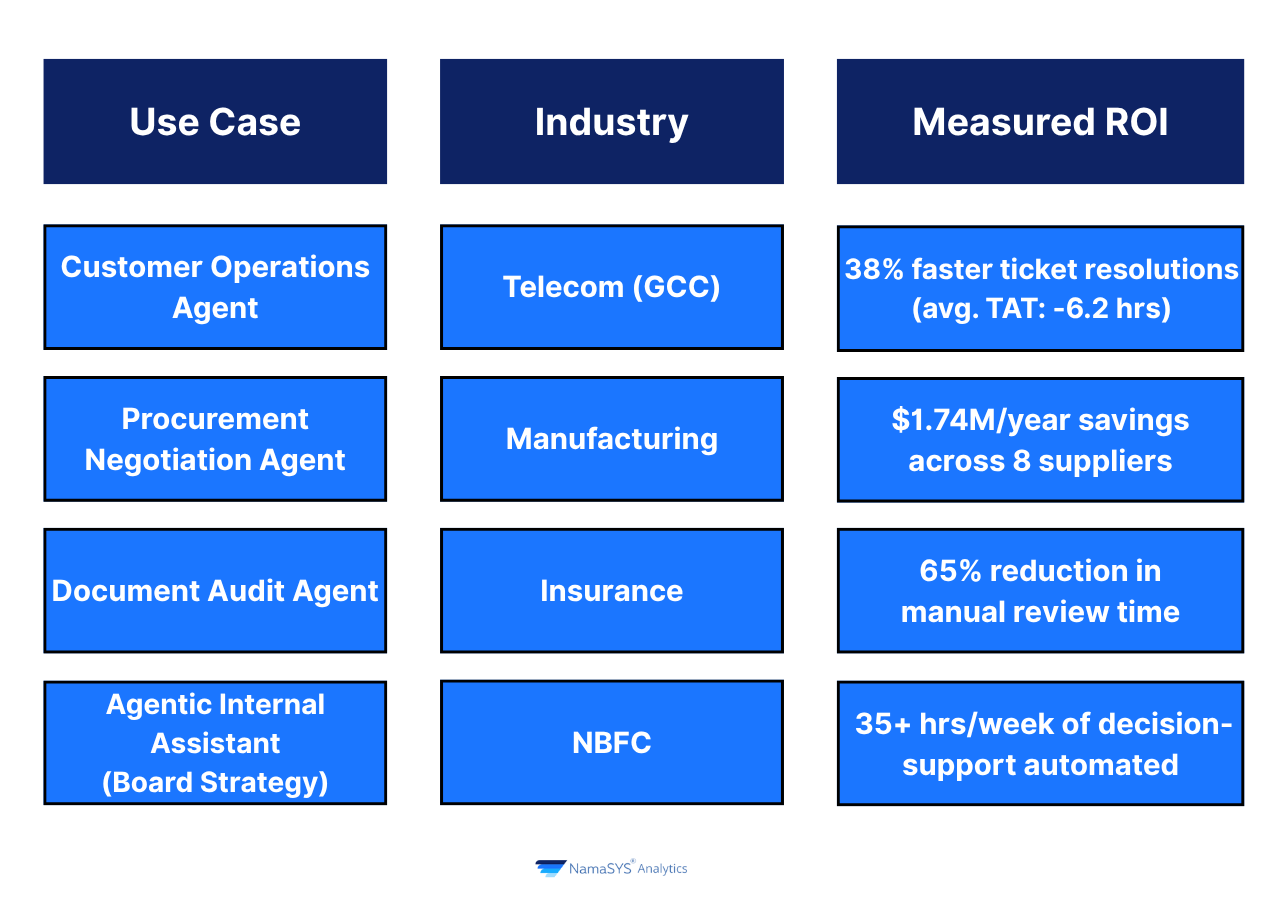
What We Delivered- Measured ROI Across Real Deployments
Here are some concrete outcomes from our client ecosystems:
These weren’t achieved overnight. Nor were they led by generic LLM wrappers. Each outcome was the result of structured deployment, co-designed with business teams, and monitored for outcome fidelity.
The AgentOps Framework: Our Methodology for Agentic AI Success
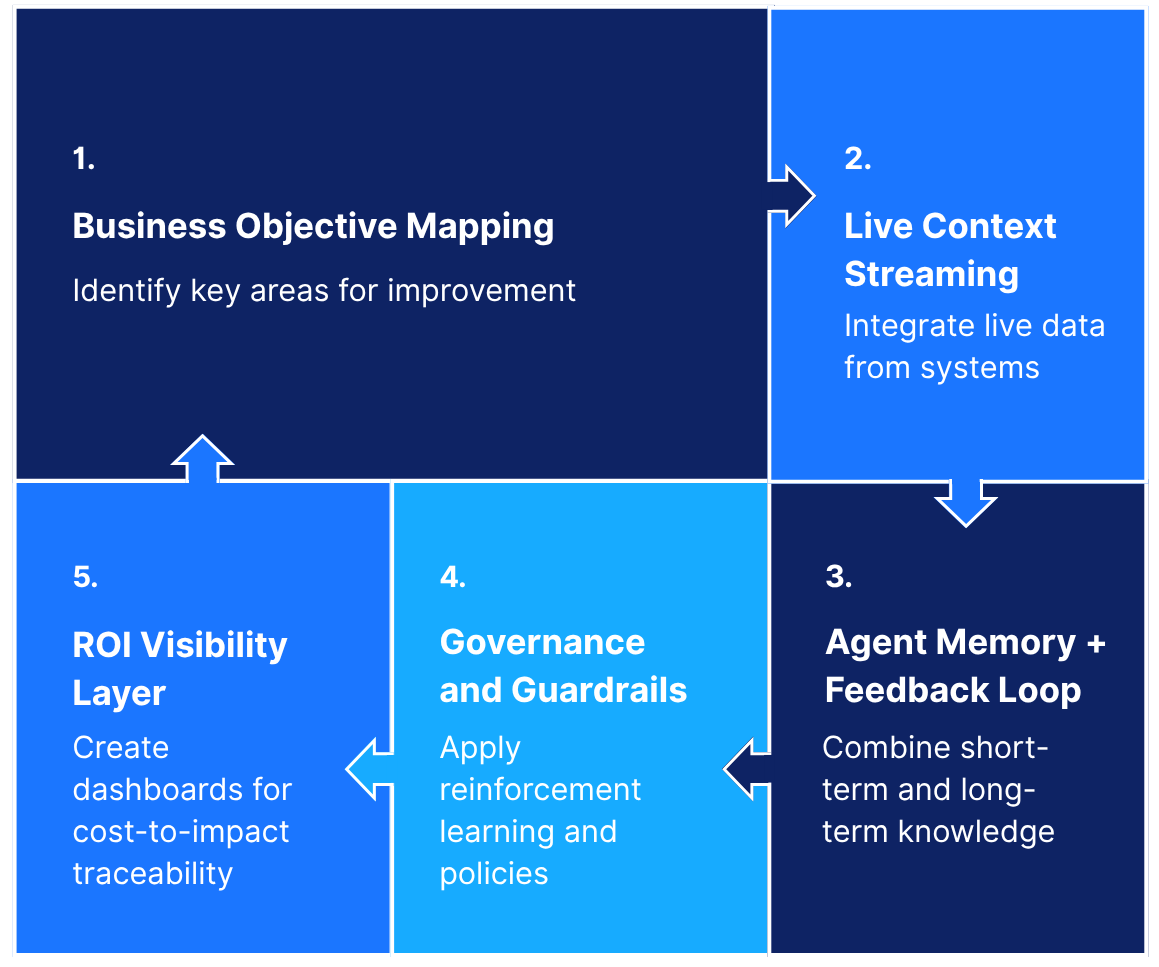
To move from experimentation to execution, we developed the AgentOps framework, a five-layer methodology designed to make Agentic AI predictable, governed, and performance-oriented.
Business Objective Mapping Define measurable targets tied to cost, time, revenue, or risk impact.
Live Context Streaming Real-time integration with enterprise systems (SAP, Salesforce, Zoho, etc.) ensures decisions are contextually valid.
Agent Memory + Feedback Loop Combine operational memory, case-based learning, and long-term adaptation to reduce context decay and cognitive drift.
Governance and Guardrails Embed policy adherence, reward models, and failover protocols to human-in-loop systems.
ROI Visibility Layer Dashboards and metrics built into existing BI stacks to monitor business impact - not token consumption.
AgentOps Framework
This stack helped reduce experimentation waste by over 52% compared to traditional unstructured LLM deployments.
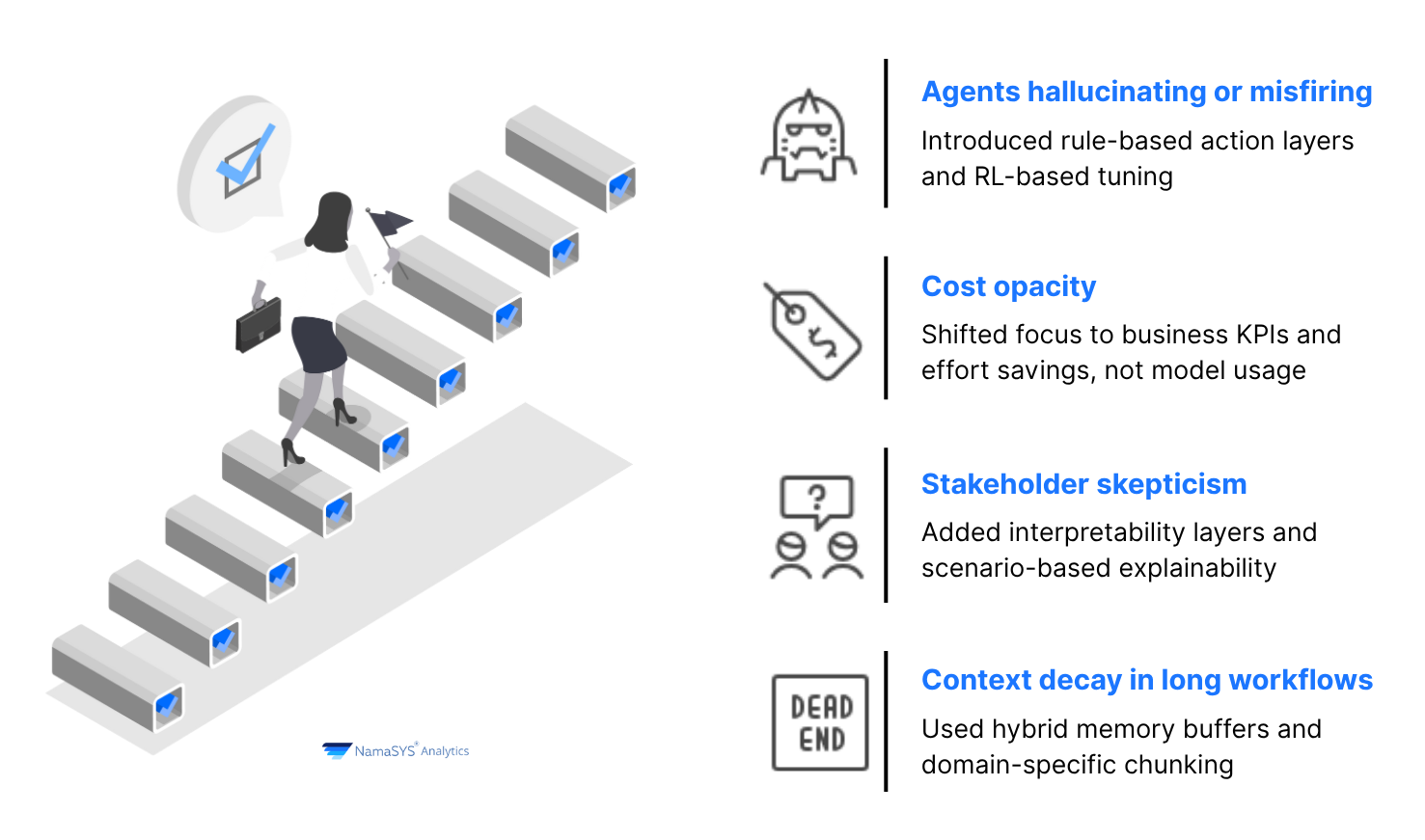
Pitfalls We Encountered and How We Addressed Them
According to a survey, by 2026, over 70% of AI initiatives will underperform or fail - not because of model capability, but due to governance failure and business misalignment.
Our learning: build for governance first. The intelligence can scale only when trust scales.
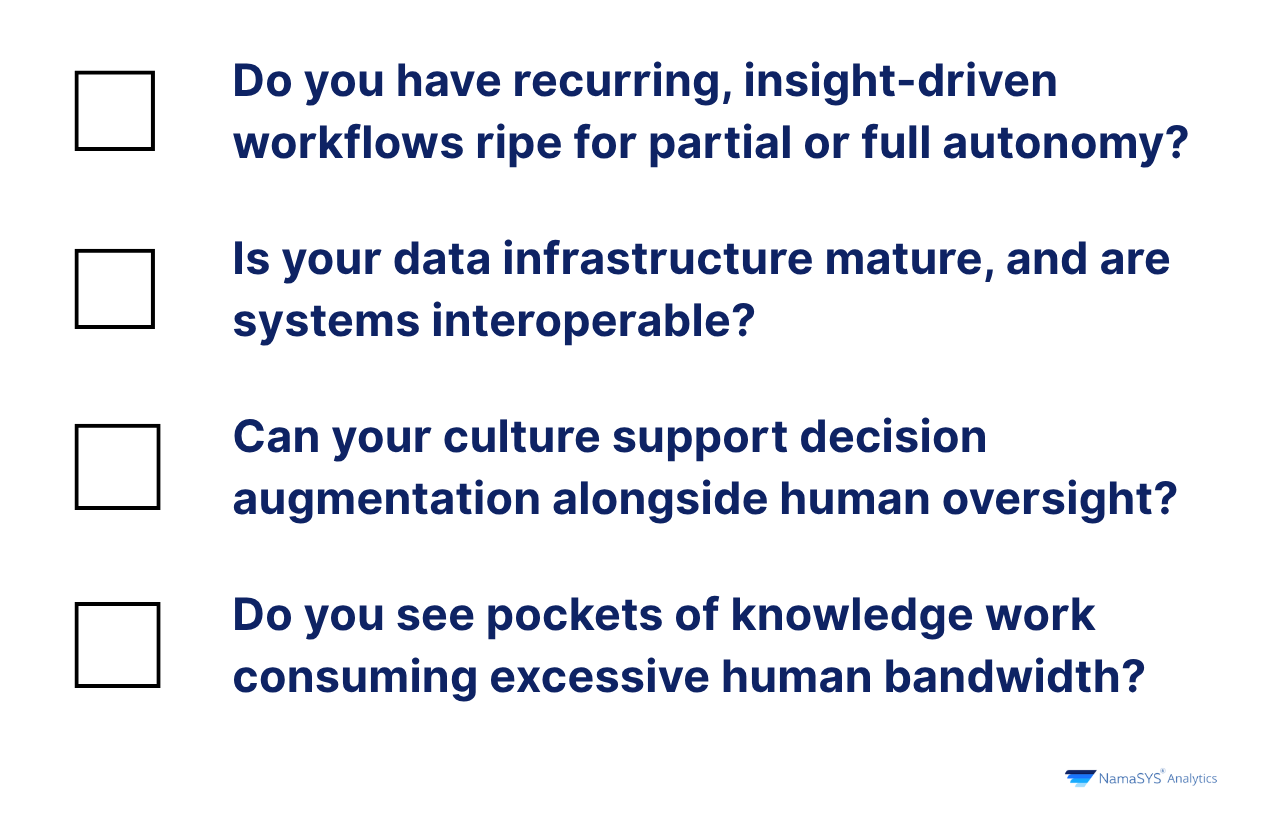
CEO Checklist: Is Your Enterprise Ready for Agentic AI?
Ask these four questions:
If the answer is “yes” to three or more, you are closer to deploying Agentic AI at scale than you might think.
Final Perspective: From Capabilities to Compound Impact
Agentic AI isn’t about building tools - it’s about building capabilities that compound over time. These are systems that learn, adapt, and integrate into the core fabric of business operations, continuously driving value without constant supervision.
This shift isn’t about chasing demos or media headlines. It’s about creating trust over hype, anchoring to business KPIs instead of benchmarks, and augmenting - not replacing human decision-makers. The real promise of Agentic AI lies in strategic autonomy, where machines manage operational complexity so people can operate at their highest cognitive and creative levels.
At Namasys Analytics, we don’t approach Agentic AI as a technology experiment, we treat it as a business capability. Every agent we deploy is aligned to a clear outcome, governed by real-world constraints, and designed to scale with the enterprise. It’s not about proving AI works. It’s about proving that AI works for you.
Agentic AI is not a technical upgrade. It’s a strategic reset. And for leaders who act early and wisely, it offers more than just efficiency - it offers a lasting edge.
As enterprises connect AI agents to live workflows, security risks extend beyond the model. Learn how prompt injection, excessive access, weak governance and poor oversight can expose business systems—and how leaders can secure AI agents from the start.
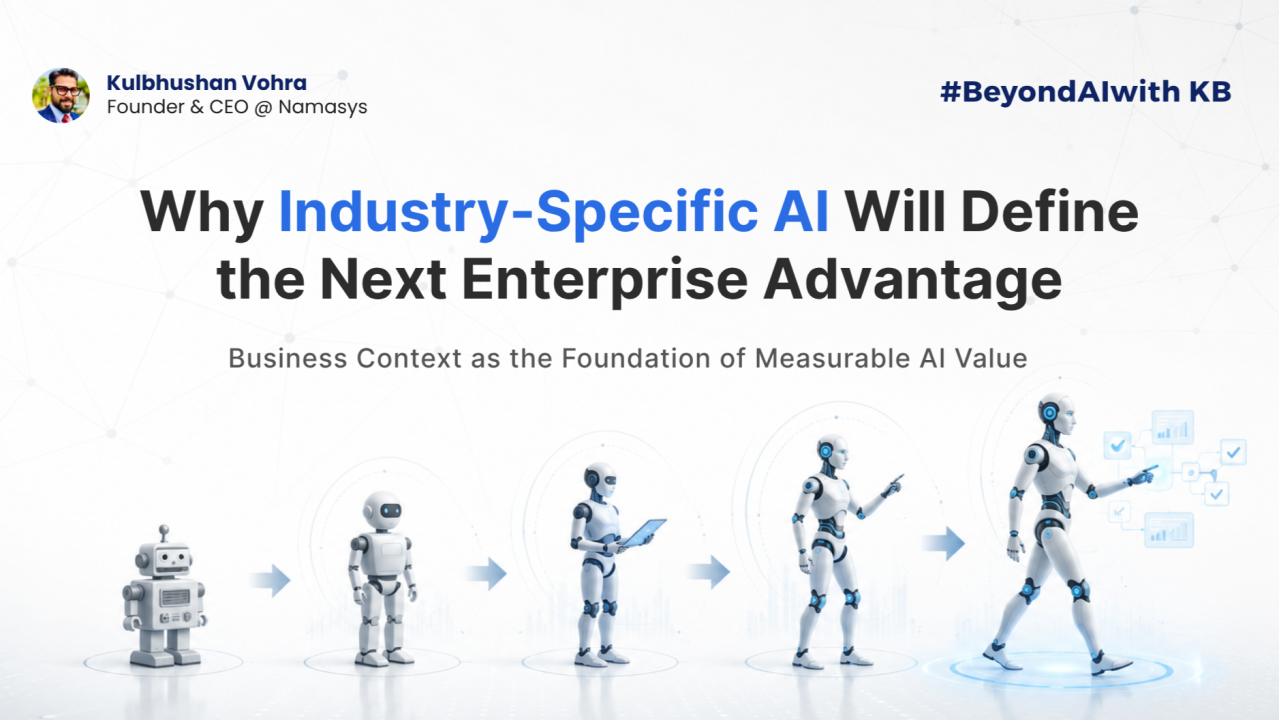
Generic AI improves productivity, but industry-specific AI creates measurable business value by combining enterprise data, workflows, governance and domain expertise. Explore why context will define the next phase of AI adoption.
Namasys Powers What’s Next for Your Enterprise
Bring clarity, efficiency, and agility to every department. With Namasys, your teams are empowered by AI that works in sync with enterprise systems and strategy.

.png)