AI Unit Economics Will Decide the Next Phase of AI
The conversation about AI has moved from “should we?” to “how fast?” But there’s a question almost no one is asking, and it’s the one that will define who actually wins the next phase:
Do we understand what it costs to run AI at scale?
Most organizations don’t. And that gap is about to become very expensive.
The Metric That Doesn’t Exist
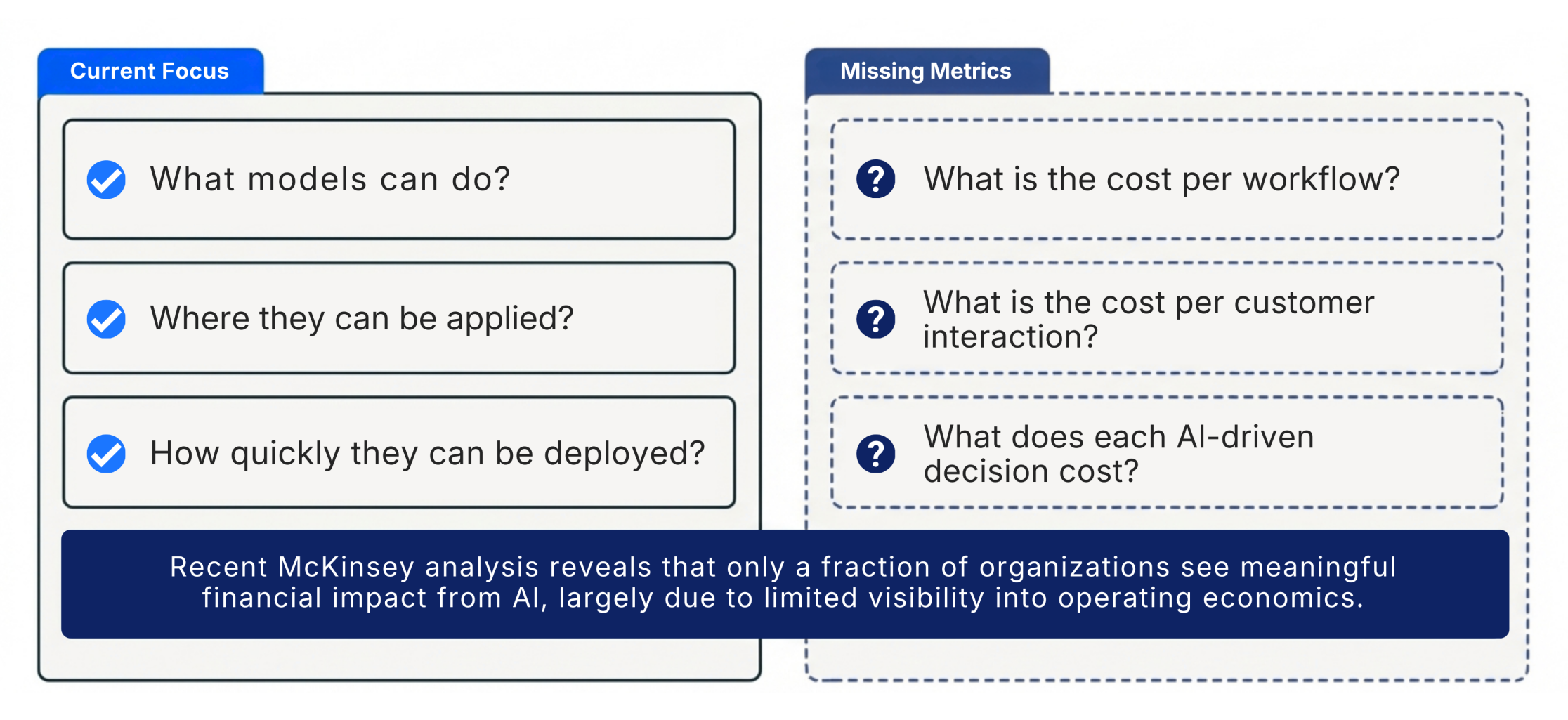
Enterprise AI discussions today are still dominated by capability, what models can do, where they can be applied, and how quickly they can be deployed.
These are not technical metrics. They are operating metrics. And in most organizations, they simply do not exist.
The Cost Structure Is Changing
The scale of infrastructure investment already signals where this is heading.
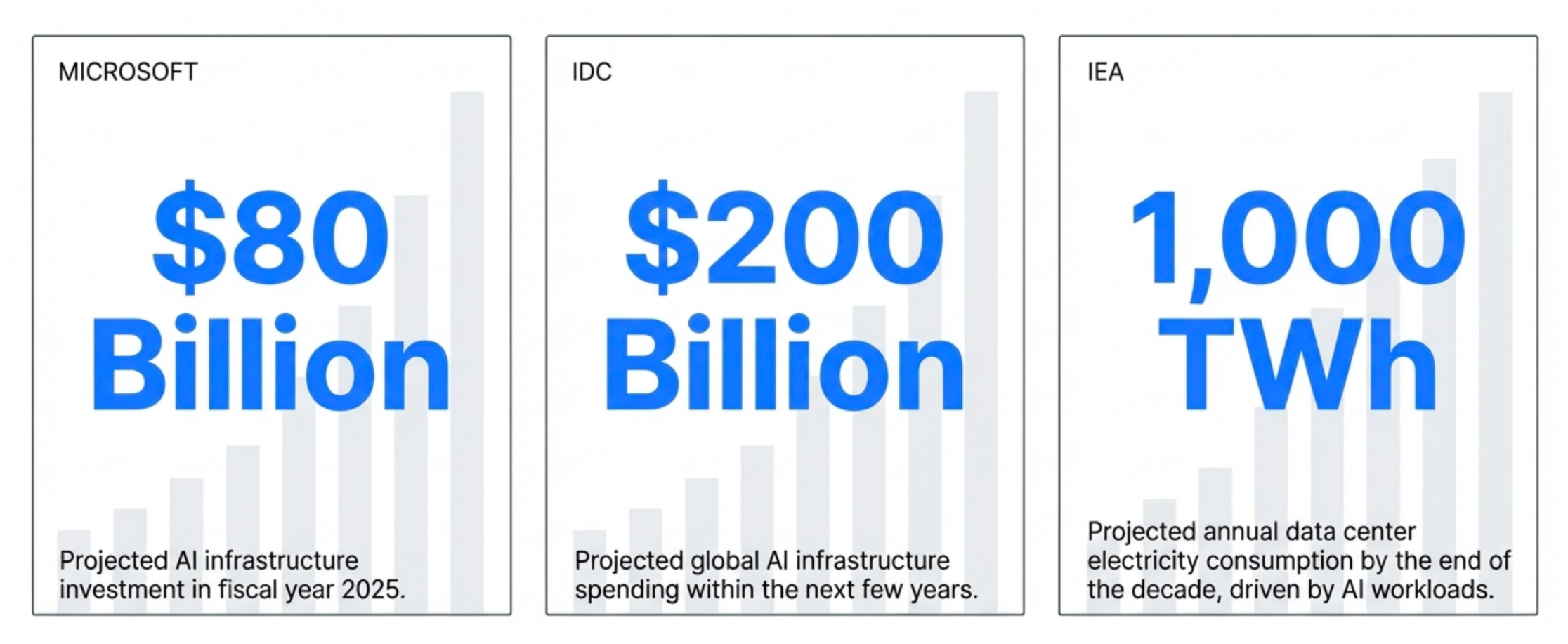
Microsoft has indicated plans to invest approximately $80 billion in AI infrastructure in fiscal year 2025, with similar expansion underway across Amazon, Google, and Meta. Industry projections from IDC suggest global AI infrastructure spending will exceed $200 billion by the next few years, reflecting a rapid shift from experimentation to production-scale systems.
At the same time, energy projections from the International Energy Agency suggest that data center electricity consumption could approach 1,000 terawatt-hours annually by the end of the decade, driven significantly by AI workloads.
These signals point to a clear shift: AI is no longer a project. It is a continuous cost system.
Where the Economics Break
The challenge becomes acute as organizations move toward more advanced AI architectures.
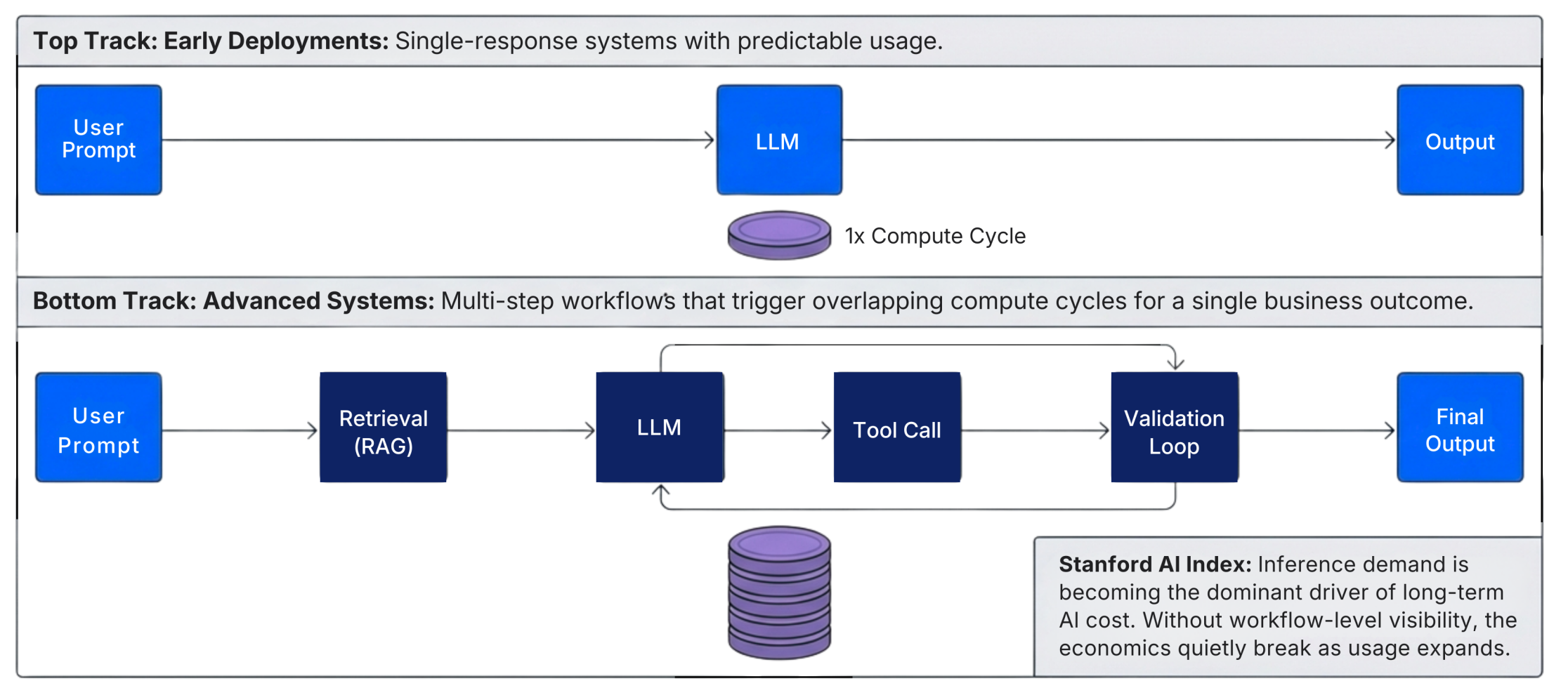
Early deployments were relatively simple, single-response systems with predictable usage patterns. That is no longer where things are heading.
More advanced systems involve multi-step processes: retrieving data, calling tools, validating outputs, and iterating. A single business workflow can trigger multiple compute cycles, each adding to the total cost.
That is where the economics break.
The Ownership Problem
Here's the question I find most leadership teams cannot answer
Who owns AI unit economics in your organization?
It doesn’t sit cleanly with engineering. It’s not fully owned by finance. It’s rarely part of product accountability.
As a result, AI systems are deployed without a clear line of sight into cost per outcome or long-term margin impact. This is not a technical limitation. It is a structural one.
What Leading Organizations Are Doing Differently
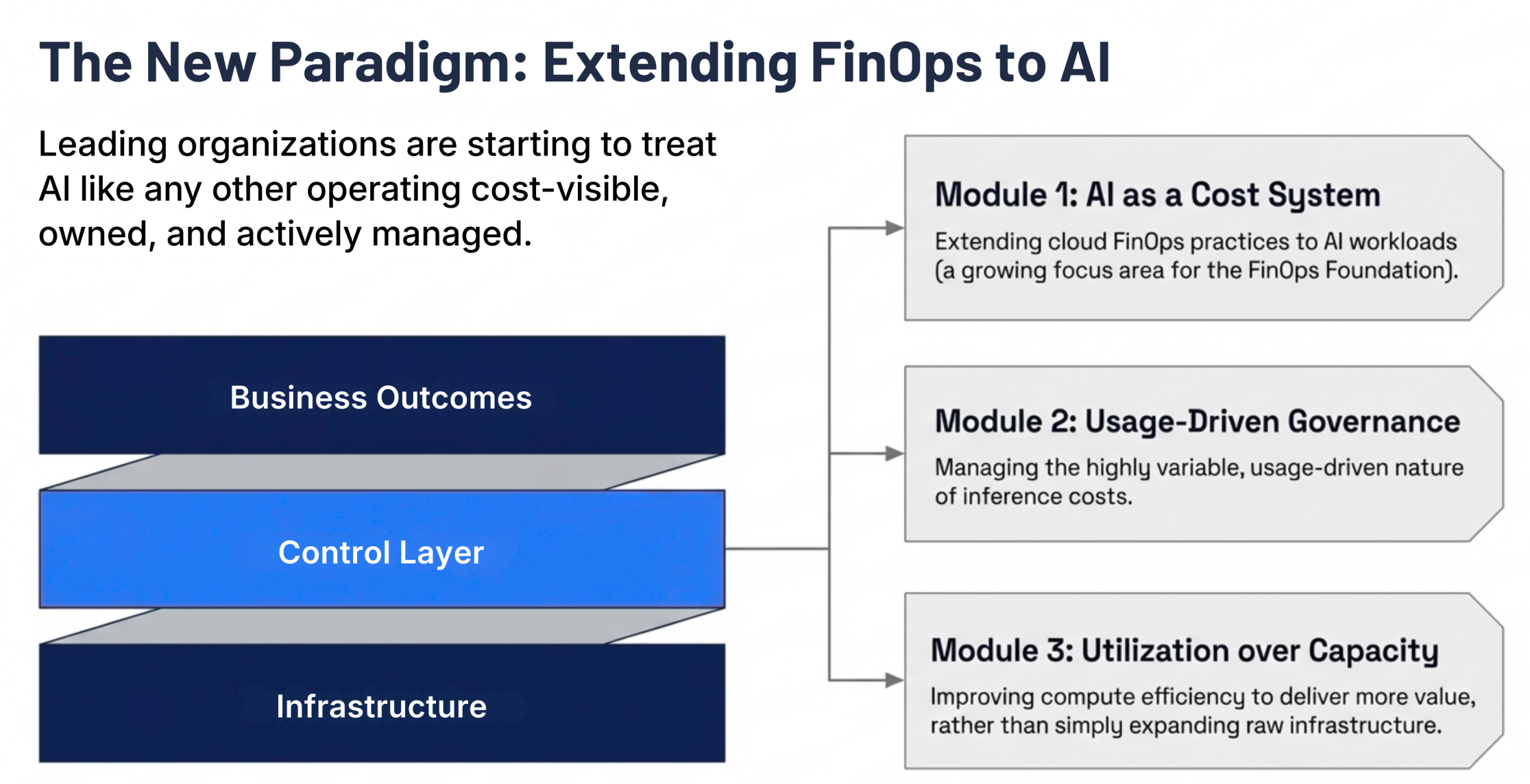
Some organizations are starting to treat AI as a cost system, not just a capability.
They are extending FinOps practices to AI workloads. The FinOps Foundation has identified AI as a growing focus area due to its usage-driven, variable cost structure.
They are measuring cost at the business level, not just infrastructure spend, but cost per transaction, case, or interaction, aligning AI spend directly with business outcomes.
And they are focusing on utilization, not just capacity. Improving compute efficiency often delivers more value than simply expanding infrastructure.
The common thread is simple: AI is treated like any other operating cost, visible, owned, and actively managed.
The Shift That Matters
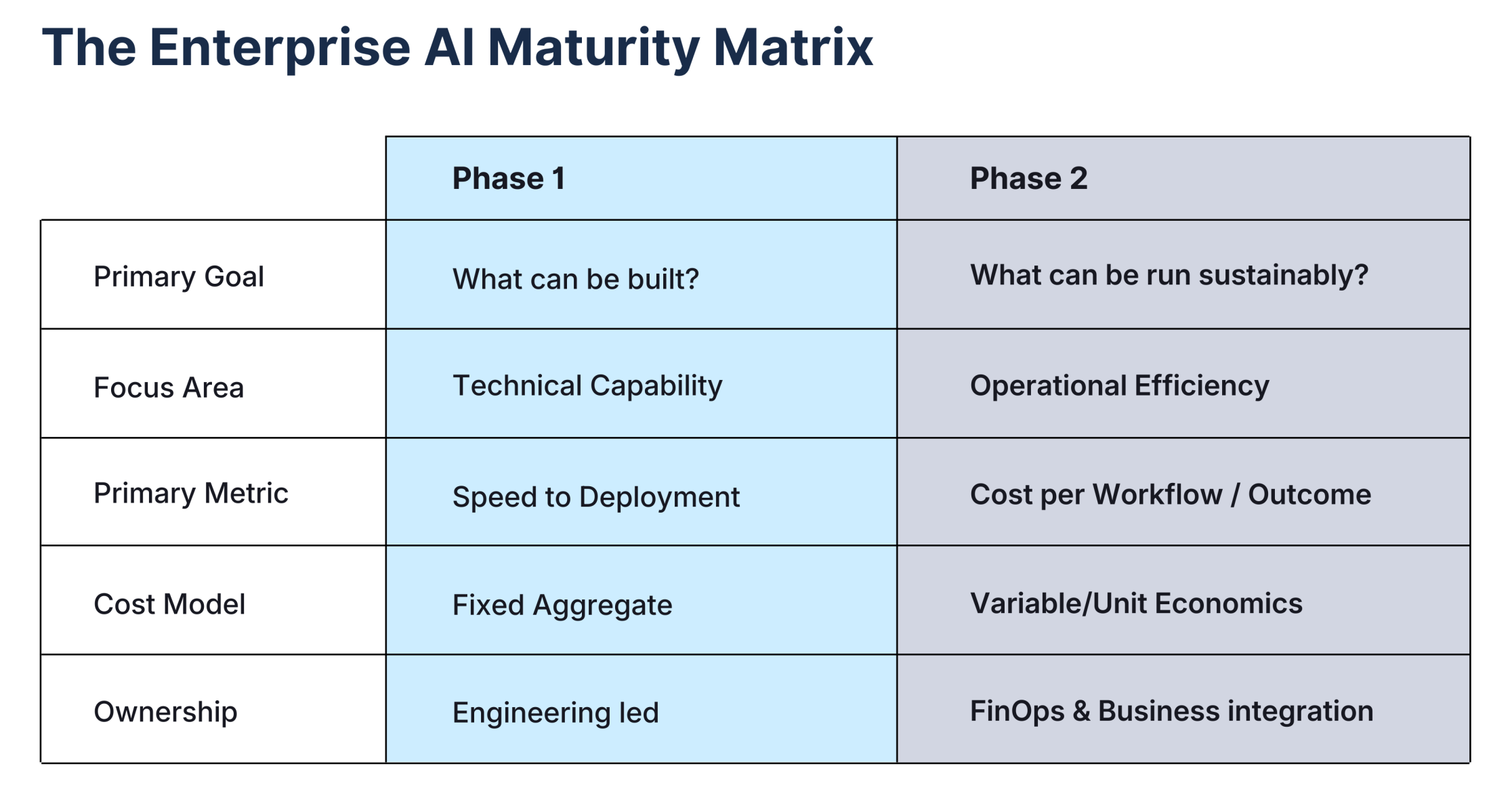
The first phase of enterprise AI was about what could be built.
The next phase will be defined by what can be run, consistently, efficiently, and predictably.
The leaders who understand that distinction won’t just scale AI. They’ll scale it sustainably, with margins to show for it.
The question is no longer “Where can we use AI?”
It is: Do we understand the cost of using it, and can we control it?
Data points referenced from Microsoft disclosures, IDC, International Energy Agency (IEA), McKinsey analysis, and the Stanford AI Index.
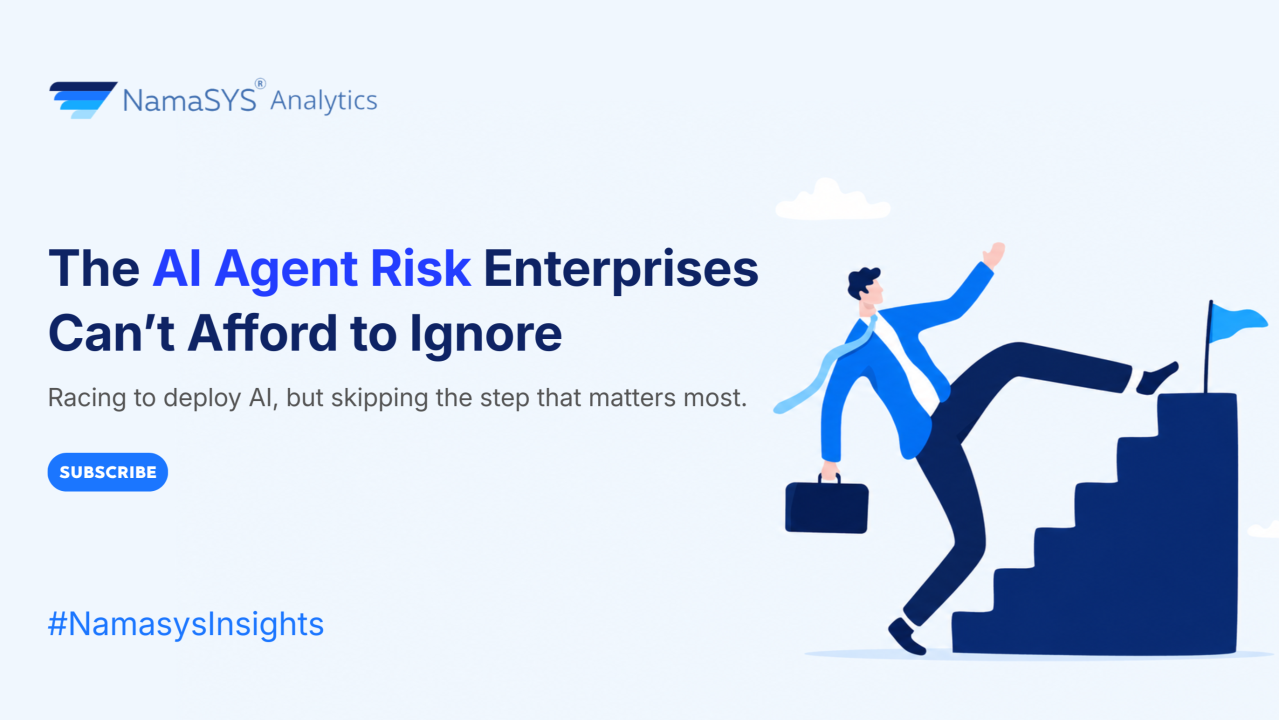
As enterprises connect AI agents to live workflows, security risks extend beyond the model. Learn how prompt injection, excessive access, weak governance and poor oversight can expose business systems—and how leaders can secure AI agents from the start.
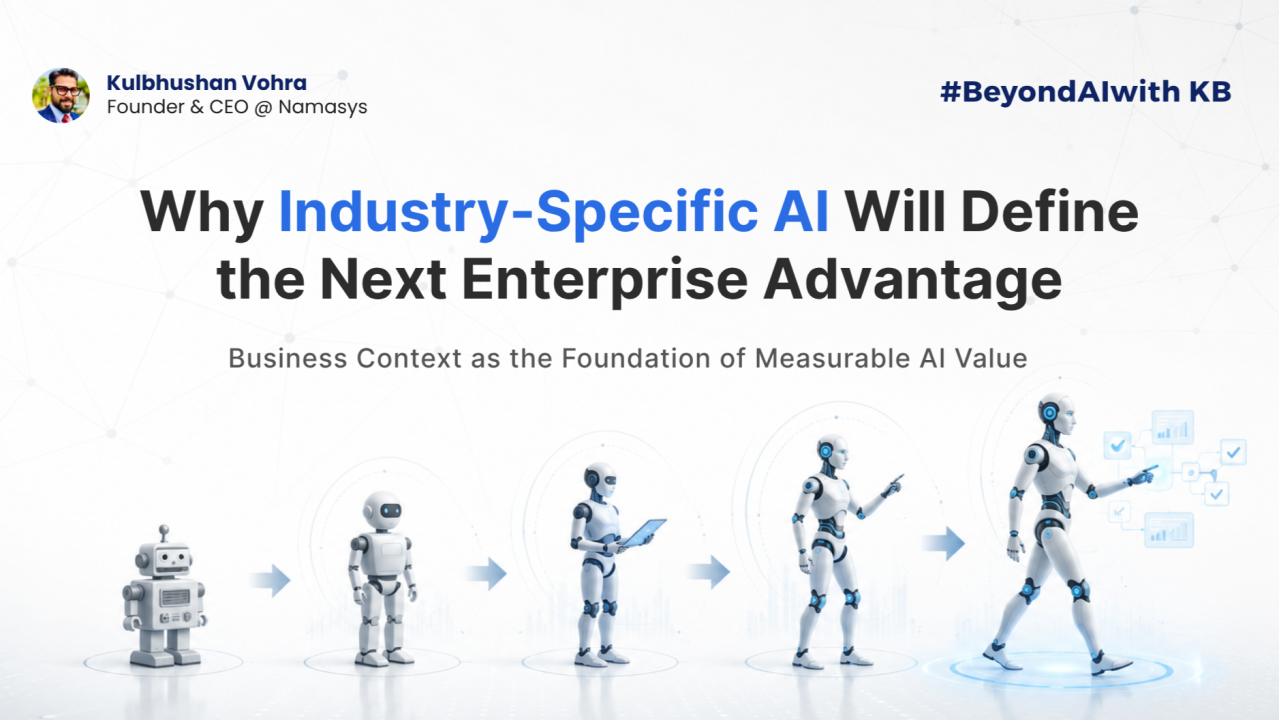
Generic AI improves productivity, but industry-specific AI creates measurable business value by combining enterprise data, workflows, governance and domain expertise. Explore why context will define the next phase of AI adoption.
Namasys Powers What’s Next for Your Enterprise
Bring clarity, efficiency, and agility to every department. With Namasys, your teams are empowered by AI that works in sync with enterprise systems and strategy.