Artificial intelligence has moved well past early adoption and hype: nearly nine in ten organizations report using AI in at least one business function, and many have begun experimenting with autonomous AI agents capable of planning and executing tasks.
But despite this widespread uptake, the transition from experimentation to measurable enterprise-wide impact remains uneven, raising a central strategic question for leaders in 2026: how can AI investments be made economically accountable?
Widespread Use, Uneven Impact
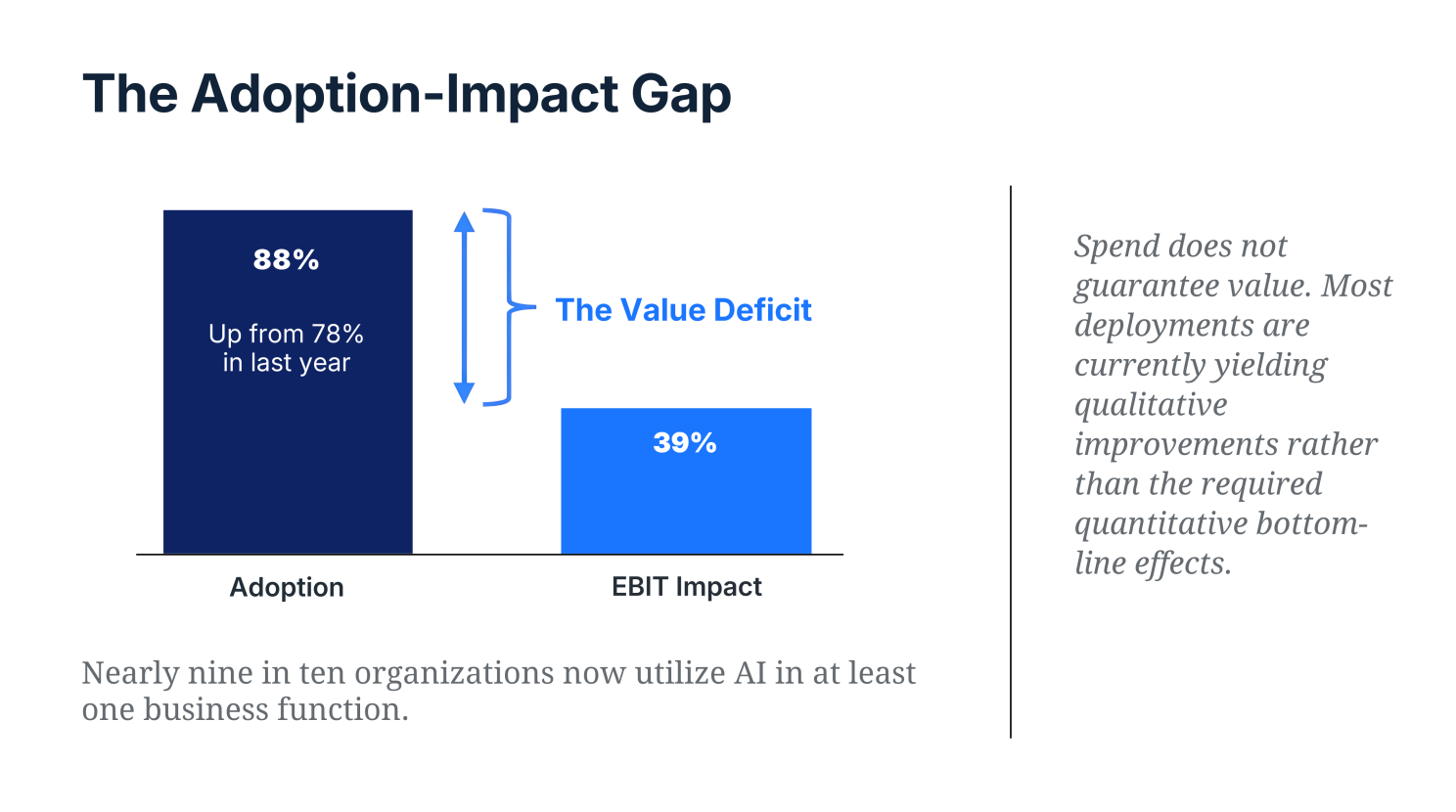
According to a 2025 survey on the state of AI, based on responses from nearly 2,000 leaders across industries, 88 % of organizations now use AI in at least one function. However, most of these efforts are still in experimentation or pilot phases, and fewer than one-third of respondents report that their companies are truly scaling AI across the enterprise.
This adoption-impact gap underscores an emerging reality: AI spend alone does not guarantee enterprise value. Organizations are investing significant budgets in models, infrastructure, and tooling, yet only about 39 % report measurable enterprise earnings-before-interest-and-tax (EBIT) impact from AI. Many respondents do note qualitative improvements, such as increased innovation or customer satisfaction, but bottom-line effects remain limited.
Why Enterprise Impact Lags Behind Adoption
1. Pilot Purposes vs. Enterprise Deployment
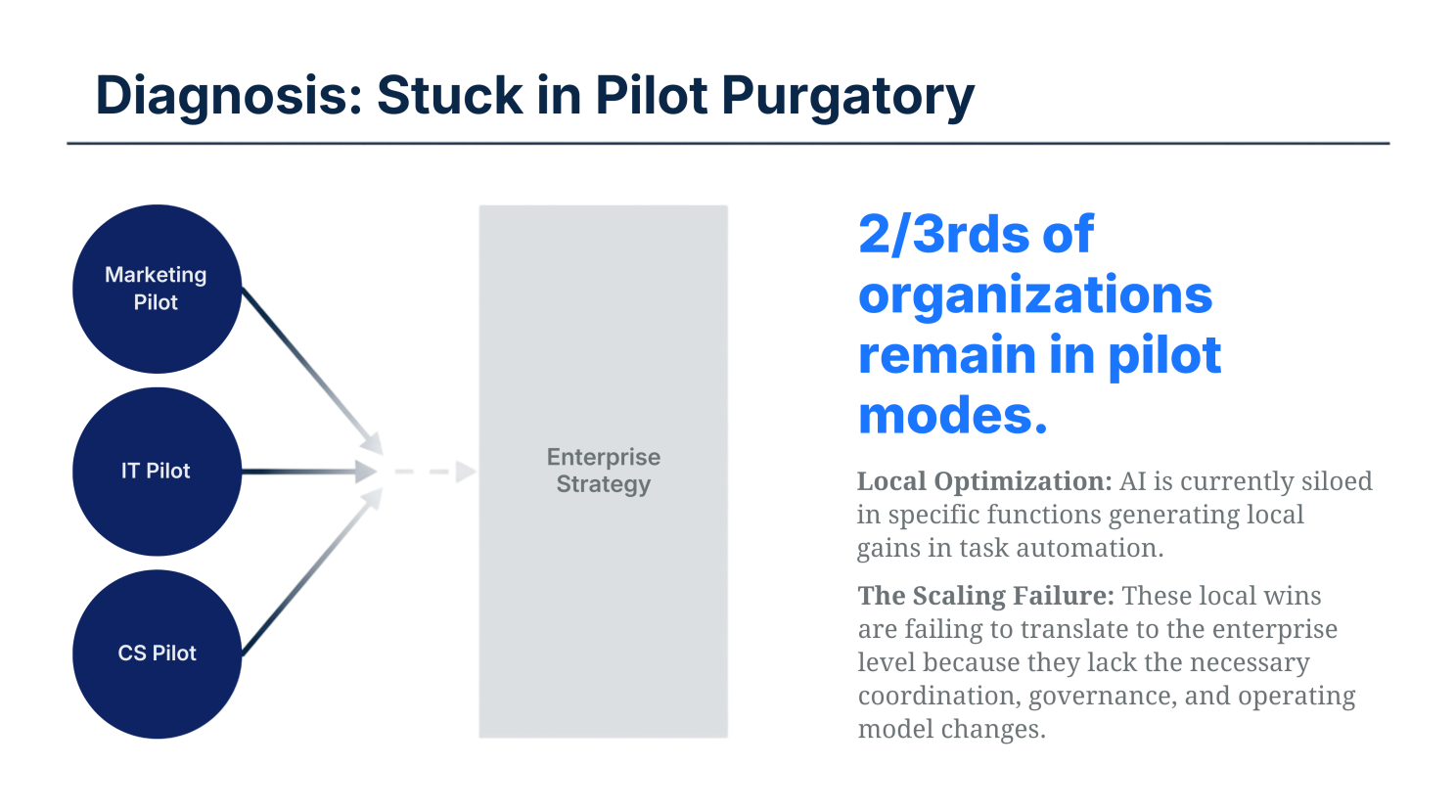
The survey finds that roughly two-thirds of organizations remain in pilot or experimentation modes, rather than enterprise-wide deployments. AI is being used in specific functions—marketing, IT, or customer service—for local gains like task automation or content generation. But organizational scale and integration lag.
This reflects a familiar pattern: technology is adopted quickly, but scaling it across processes and business units demands coordination, governance, and operating model changes that many firms still struggle to achieve.
2. Lack of Strategic Objectives Linked to Value
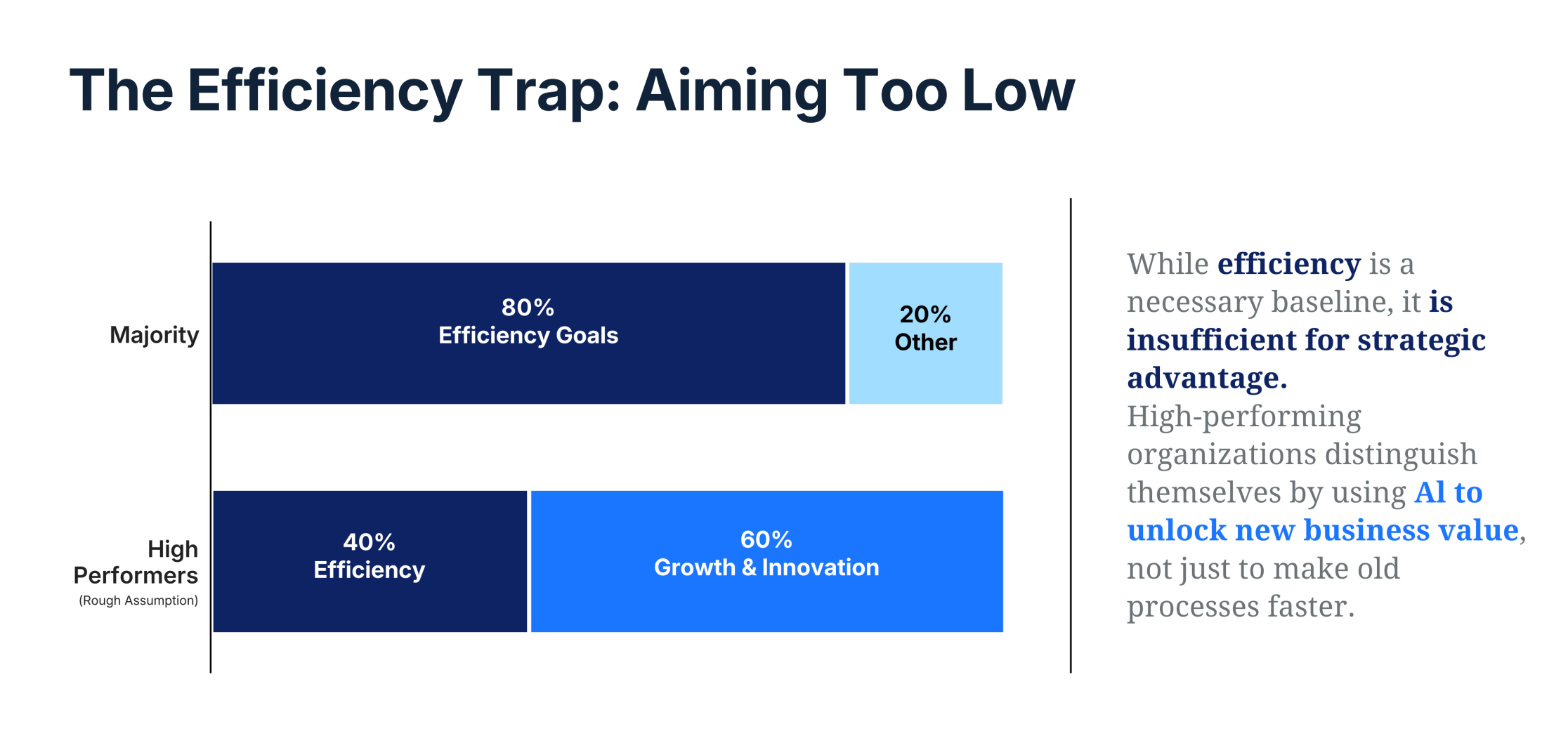
Another key finding is that while about 80 % of organizations set efficiency as an objective of their AI initiatives, those achieving tangible impact also set growth and innovation goals. High-performing organizations are leveraging AI not just to automate existing tasks, but to redesign workflows and unlock new business value.
3. Leadership and Workflow Redesign Matter
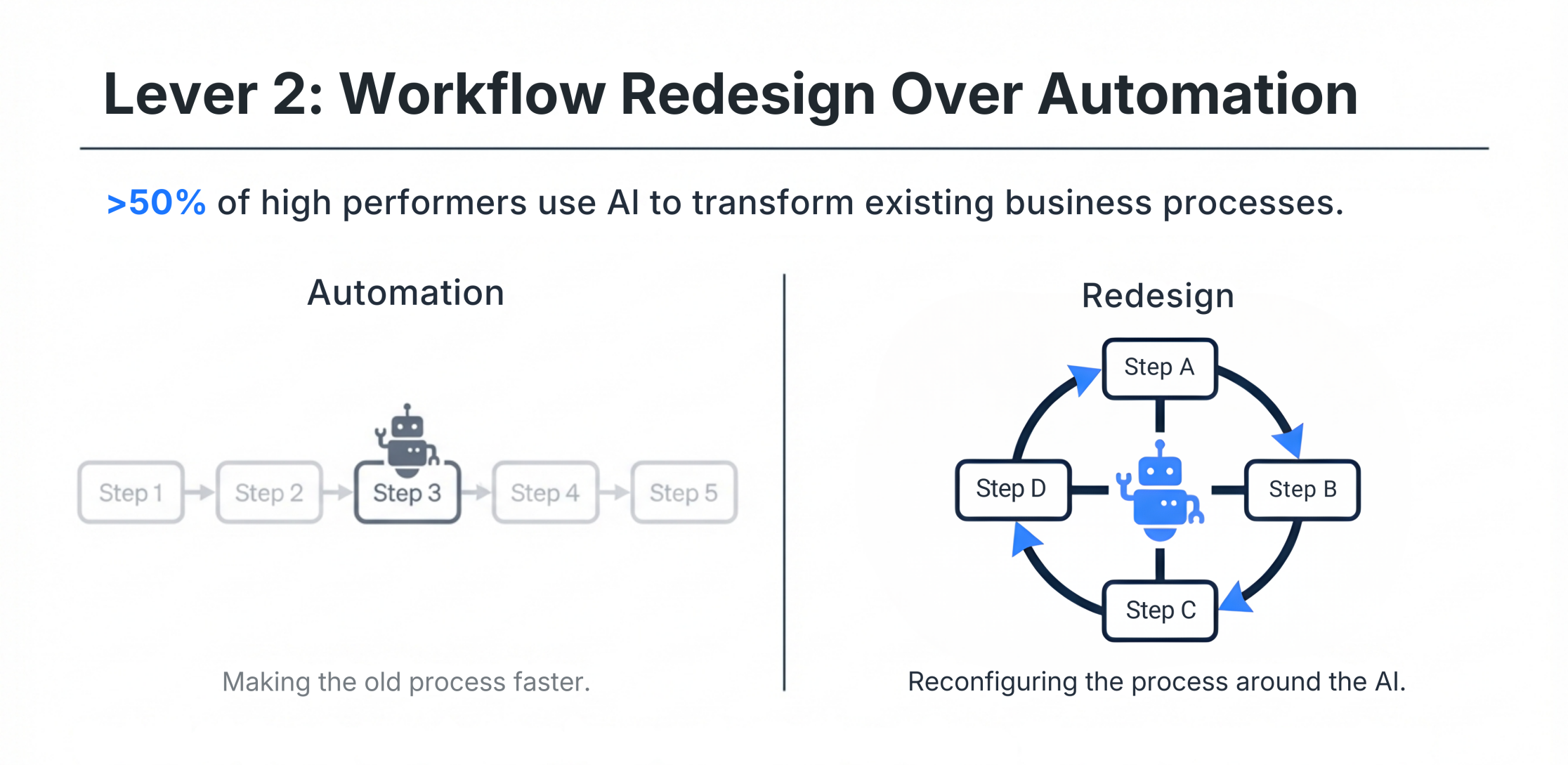
A report shows that leaders who see meaningful enterprise value are reconfiguring processes around AI, embedding it directly into workflows rather than treating it as a side project. More than half of these high performers report using AI to transform existing business processes—an essential step in moving beyond incremental efficiency toward strategic impact.
The Economic Accountability Imperative
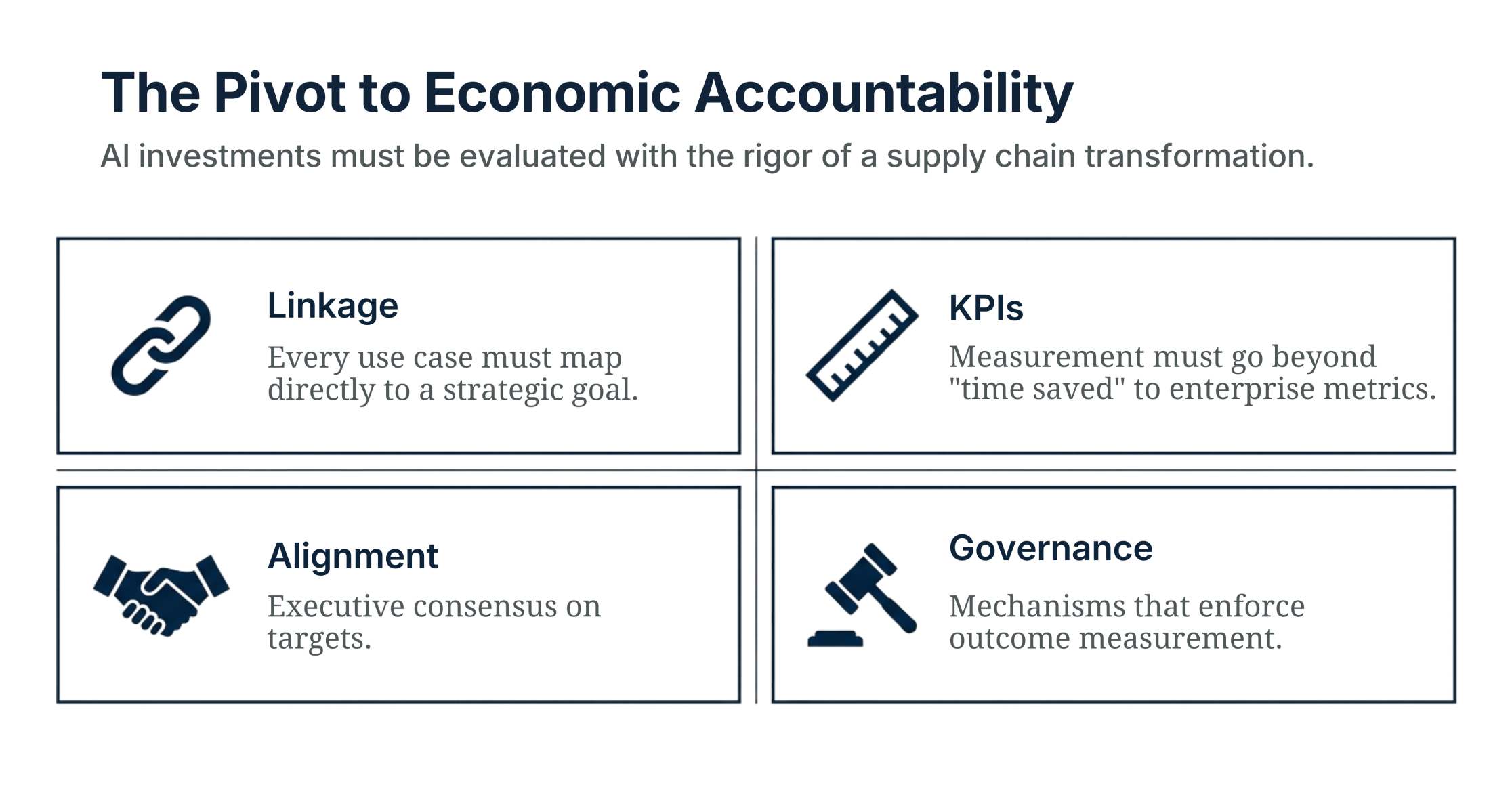
For executives, the key takeaway is clear: AI investments must be tied to clear business outcomes and economic accountability.
Spending on models, tooling, and infrastructure is necessary, but insufficient unless it drives measurable results. Organizations that treat AI as a series of disconnected pilots or isolated efficiency projects are unlikely to justify growing budgets or sustain leadership support.
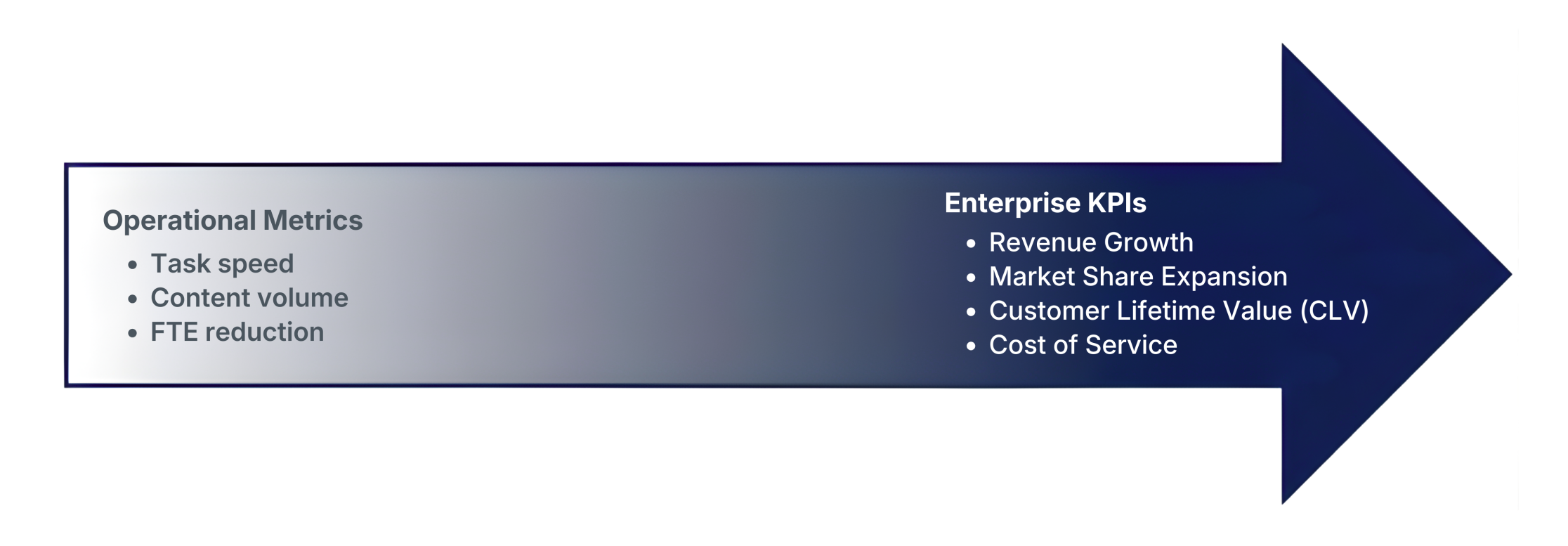
Instead, AI programs need to be evaluated in terms of their impact on enterprise KPIs, such as revenue growth, market share expansion, customer lifetime value, and cost of service delivery. This requires:
When spend is tied to outcomes, rather than simply to experiments or technologies, AI begins to take on a role akin to other strategic investments like supply chain transformation or CRM modernization.
What High-Performing Organizations Do Differently
A recent survey highlights practices that distinguish high performers from the rest:
✦ Networked Leadership and Ownership
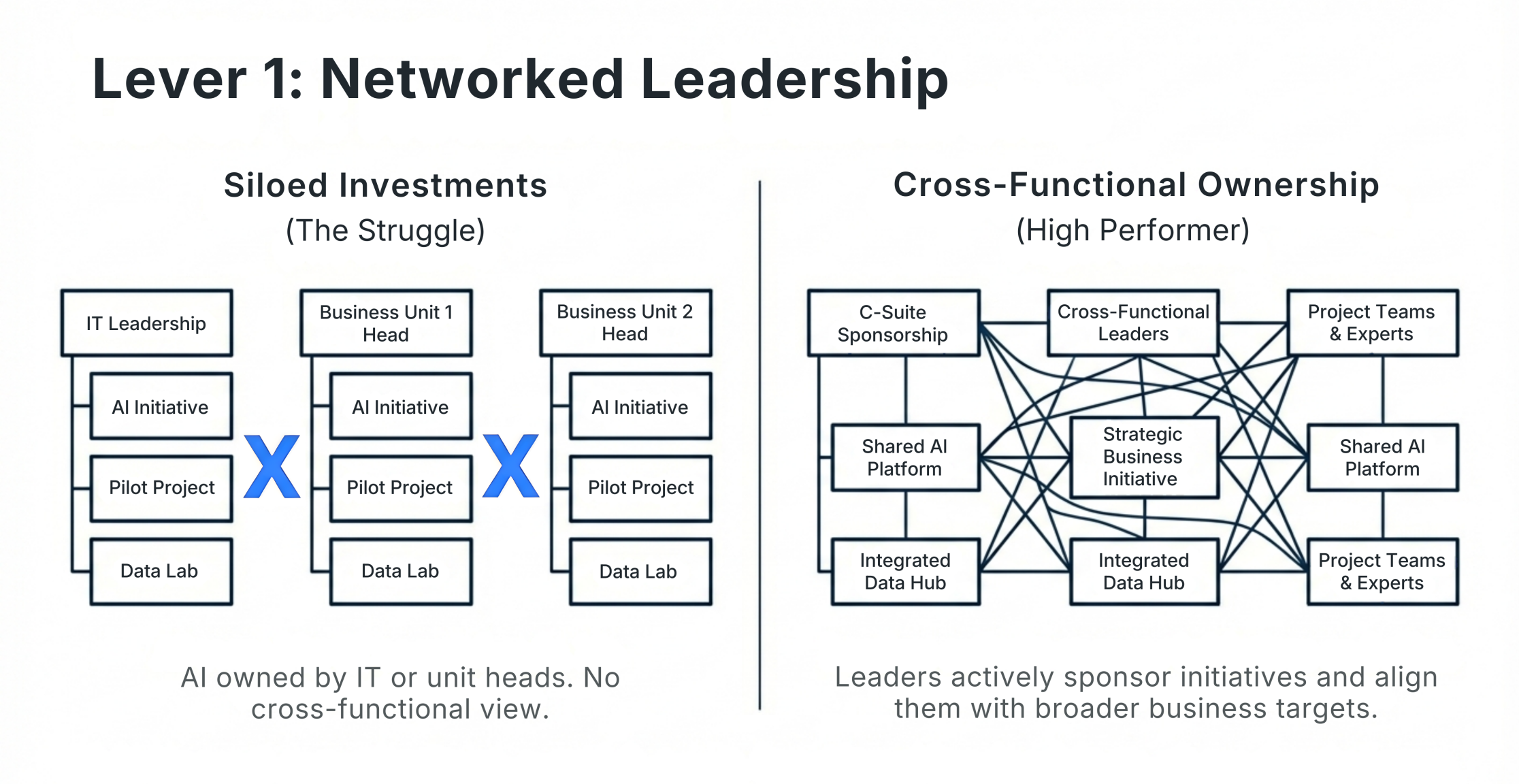
Leaders in high-impact organizations actively sponsor AI initiatives and ensure alignment with business targets. They avoid siloed investments and instead commit cross-functional leadership to shared outcomes.
✦ Workflow Redesign Over Incremental Automation
High performers use AI as a catalyst for reimagining workflows—not merely automating existing ones. They integrate AI into decision loops and critical business processes, enabling faster, data-informed actions.
✦ Scale Ambitions Beyond Cost Savings
While efficiency remains a near-universal objective, leaders who set growth and innovation goals alongside efficiency are more likely to see enterprise-wide impact.
Closing the Gap Between Spend and Impact
The current AI landscape, widespread adoption with uneven impact, presents both a challenge and an opportunity for enterprises in 2026. The challenge is no longer whether an organization uses AI; it is whether AI is designed, governed, and measured in a way that delivers clear economic value.
To close the gap between spend and enterprise impact, organizations must evolve from experimentation to outcome-oriented deployment, integrating AI into core business processes, tying investments to measurable KPIs, and holding leaders accountable for results.
When AI initiatives are aligned with business strategy, and when success is defined in terms of measurable enterprise outcomes, AI ceases to be a technical experiment and becomes a strategic lever.
Final Thought
AI’s promise is real, but capturing enterprise-wide impact requires more than adoption. It demands accountability, aligned leadership, and a disciplined approach to turning spend into results.
As enterprises connect AI agents to live workflows, security risks extend beyond the model. Learn how prompt injection, excessive access, weak governance and poor oversight can expose business systems—and how leaders can secure AI agents from the start.
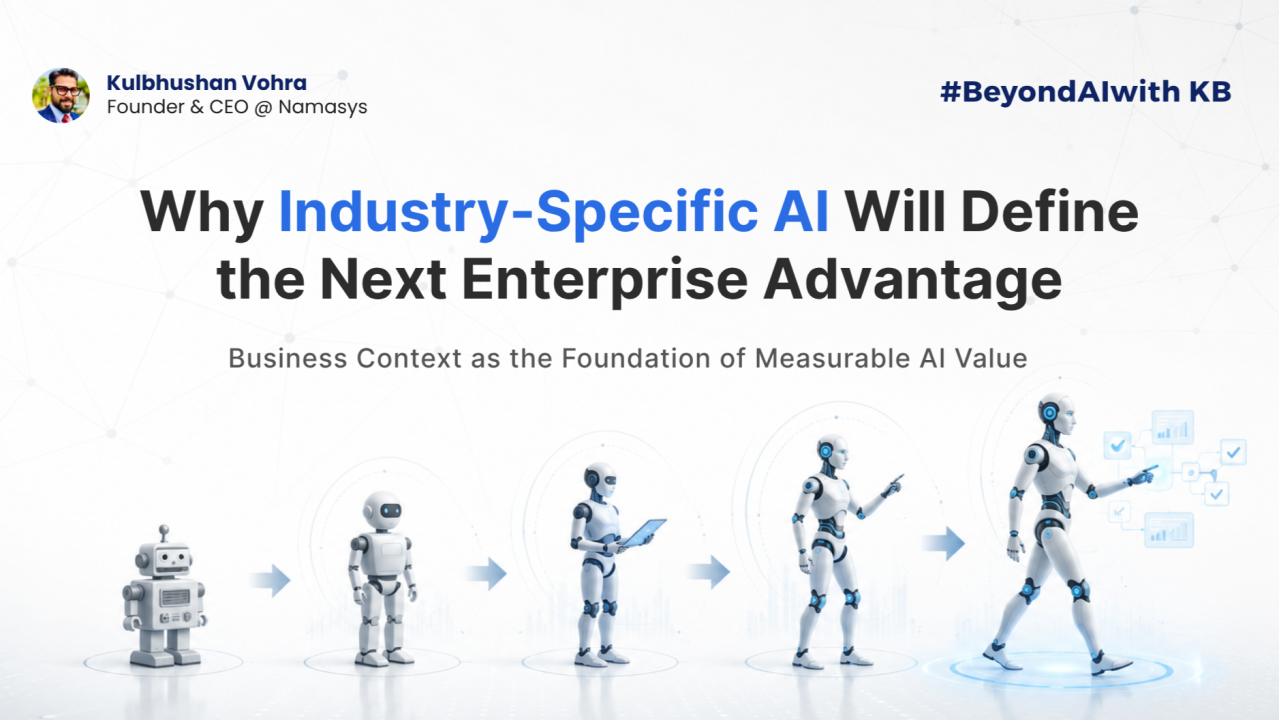
Generic AI improves productivity, but industry-specific AI creates measurable business value by combining enterprise data, workflows, governance and domain expertise. Explore why context will define the next phase of AI adoption.
Namasys Powers What’s Next for Your Enterprise
Bring clarity, efficiency, and agility to every department. With Namasys, your teams are empowered by AI that works in sync with enterprise systems and strategy.