If you are a CXO or board member, there is a critical blind spot emerging: AI is breaking the SaaS margin model, and most leaders haven't noticed yet.
Most business leaders aren't asking a crucial question. It will define who wins the next phase of AI: do we truly know the cost to run AI at scale?
AI is no longer a project. For most large organizations, it is becoming a continuous operating cost, and the economics are fundamentally different from anything that came before it.
The Margin Problem Nobody Is Talking About
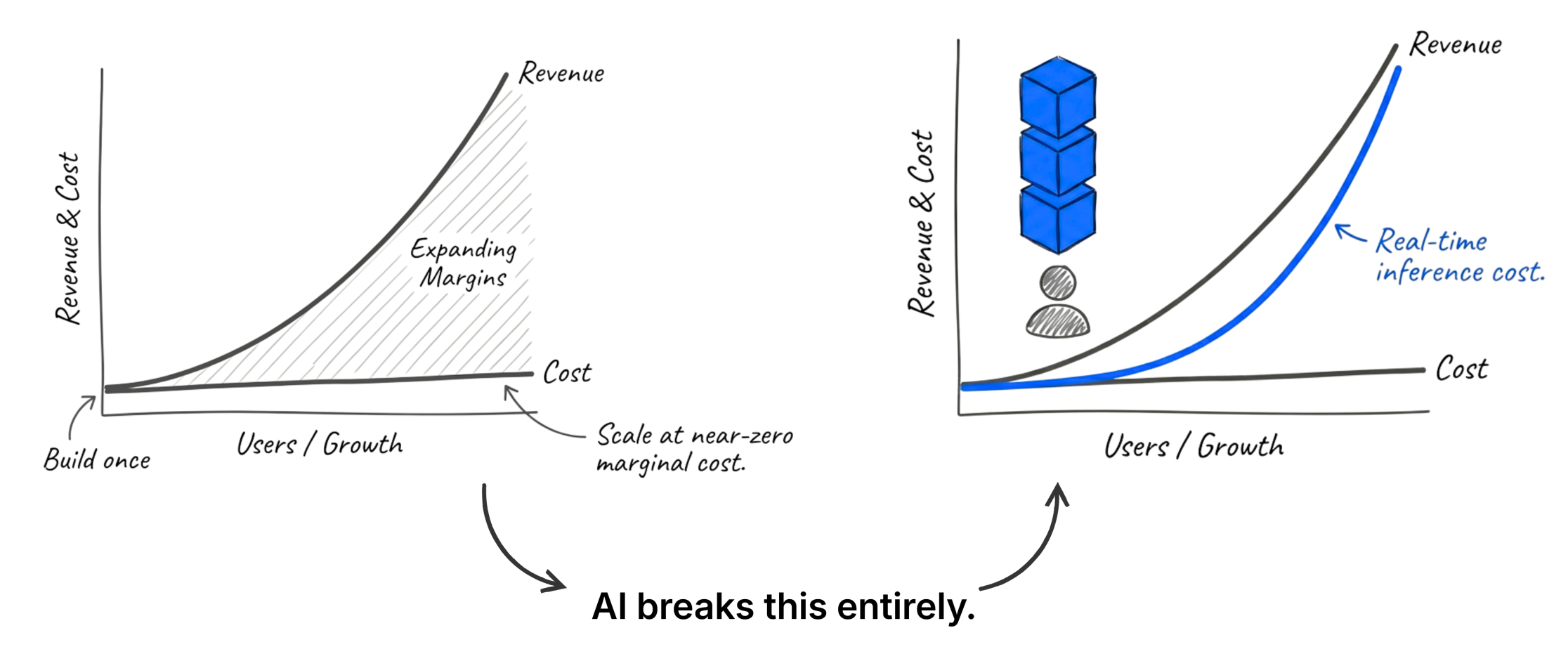
Traditional software has a beautiful economic property: once built, it scales at near-zero marginal cost. An additional user costs almost nothing. Margins expand as revenue grows.
AI breaks this entirely.
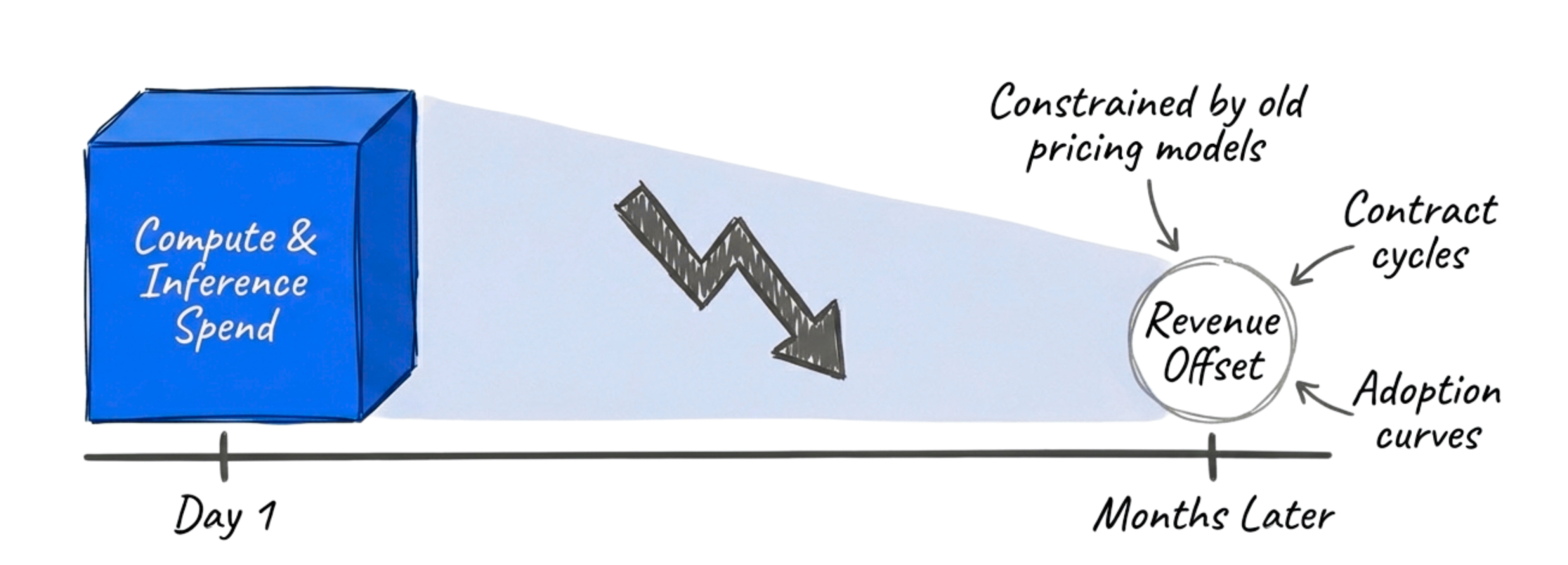
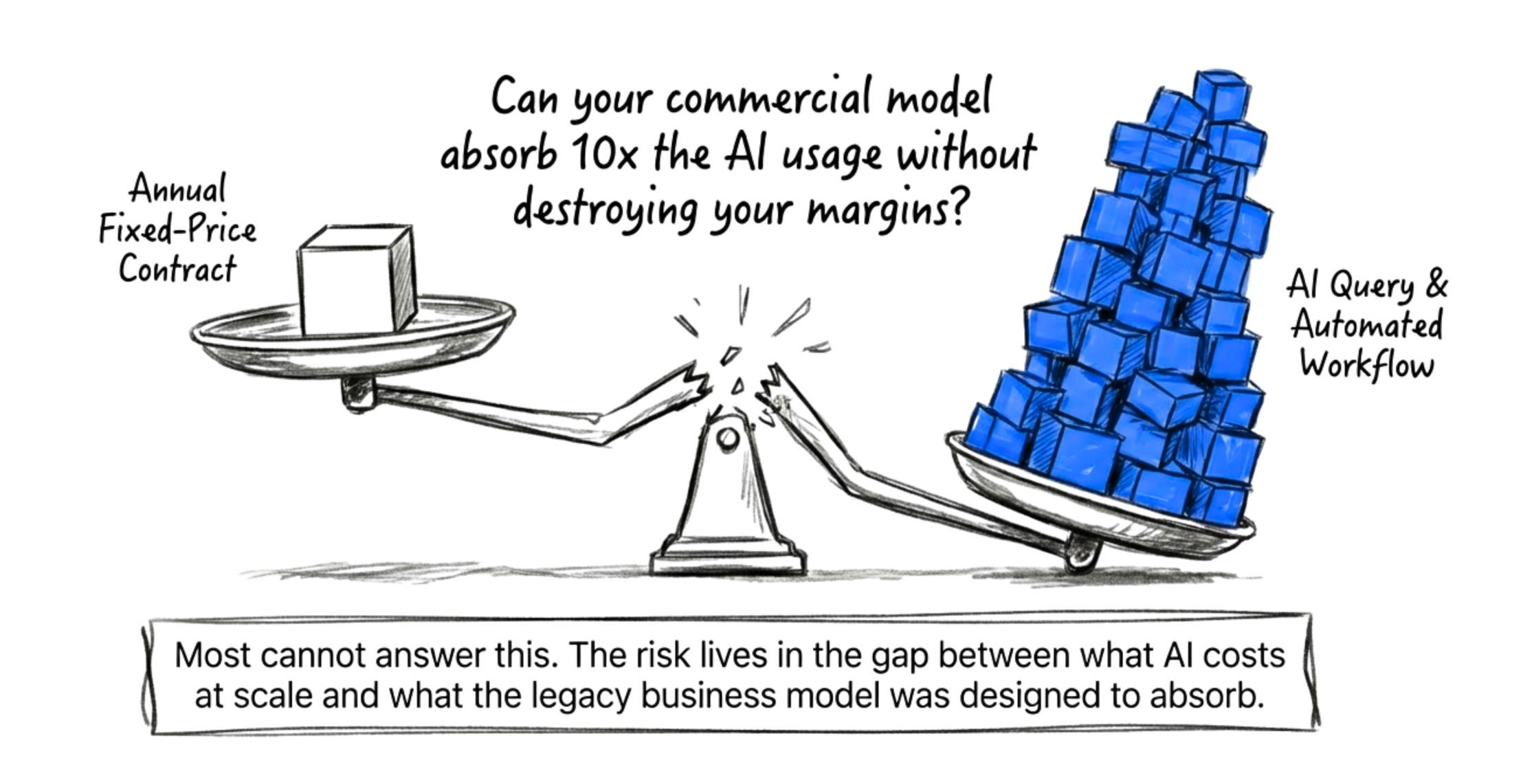
Every AI-driven interaction, every decision, transaction, query, or workflow carries a real-time inference cost. The compute runs whether the outcome generates revenue or not. And crucially, cost appears on day one. Revenue takes months, constrained by pricing models designed for a different era, contract cycles, and customer adoption curves that don't move at the speed of infrastructure spend.
The gap in between is where margins quietly get destroyed.
This isn't theoretical. It's already showing up in enterprise financials, cost of revenue growing faster than revenue itself, post-AI deployment. Organizations that scaled AI aggressively without a cost model are discovering that efficiency gains don't automatically translate into margin improvement. They translate into higher operating costs with a delayed revenue offset.
The first phase of AI rewarded boldness. The next phase will reward discipline.
Why the Standard Playbook Isn't Enough
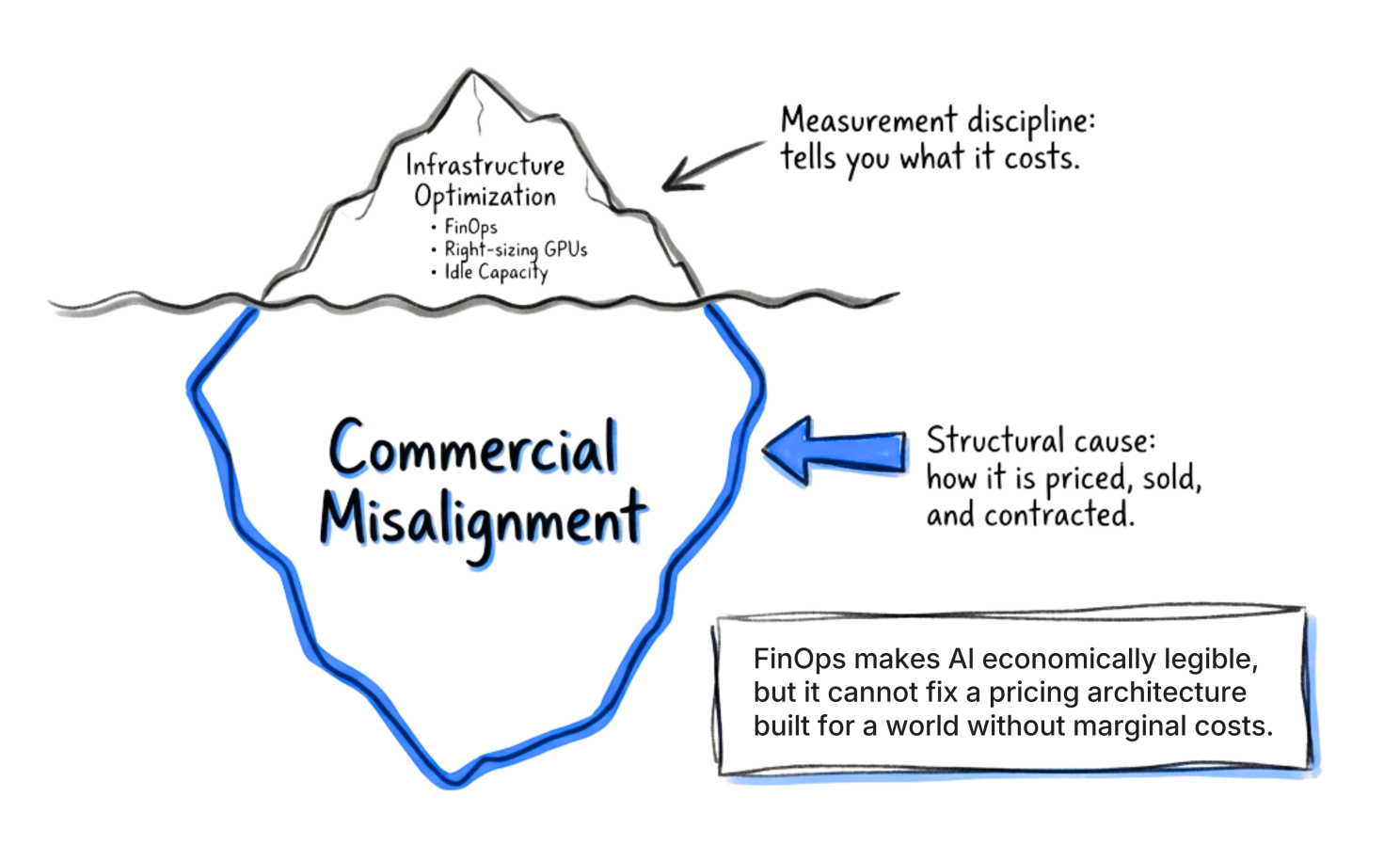
The instinctive response from most organizations is to reach for infrastructure optimization, right-size the GPUs, reduce idle capacity, improve utilization rates. These are not wrong moves. However, in my experience advising organizations on AI scaling decisions, they often address the symptom rather than the cause.
The cause is structural: AI costs are usage-driven and real-time, but most organizational systems, including pricing, contracts, financial reporting, and accountability, were built for a world where marginal costs were negligible.
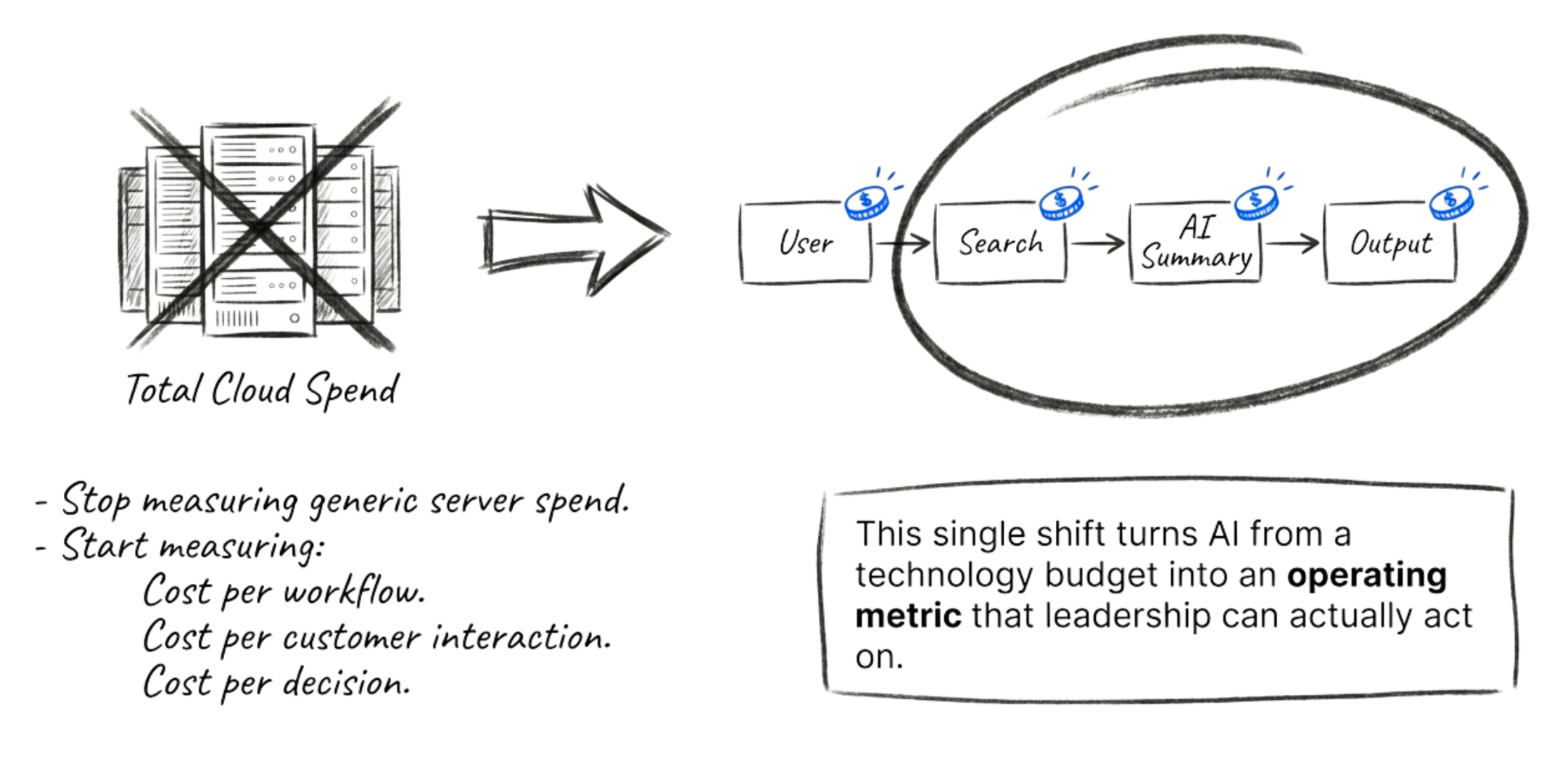
FinOps, extended to AI workloads, is a genuine step forward. Aligning financial accountability with AI usage, giving both engineering and finance real-time visibility into cost per workflow, cost per transaction, cost per interaction, this changes the conversation at the leadership level.
But even FinOps is a measurement discipline. It tells you what AI costs. It doesn't automatically fix the deeper misalignment between how AI is priced, sold, and contracted versus how it actually generates cost.
What I Tell Leaders Who Are Navigating This
Here is how the organizations getting this right are approaching it:
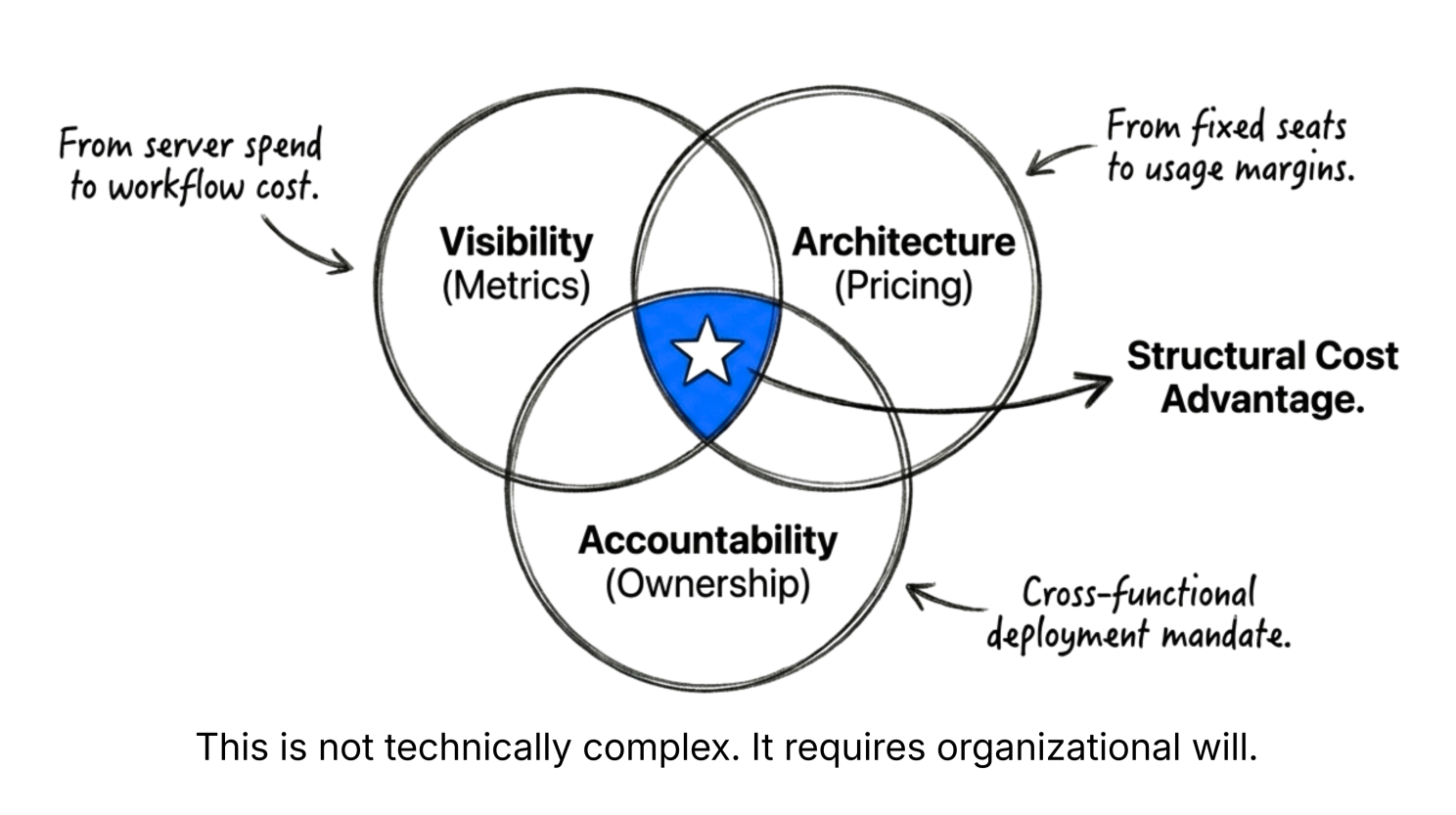
They start by making AI costs visible at the business level, not just the infrastructure level. Not server spend, cost per workflow, cost per customer interaction, cost per decision.
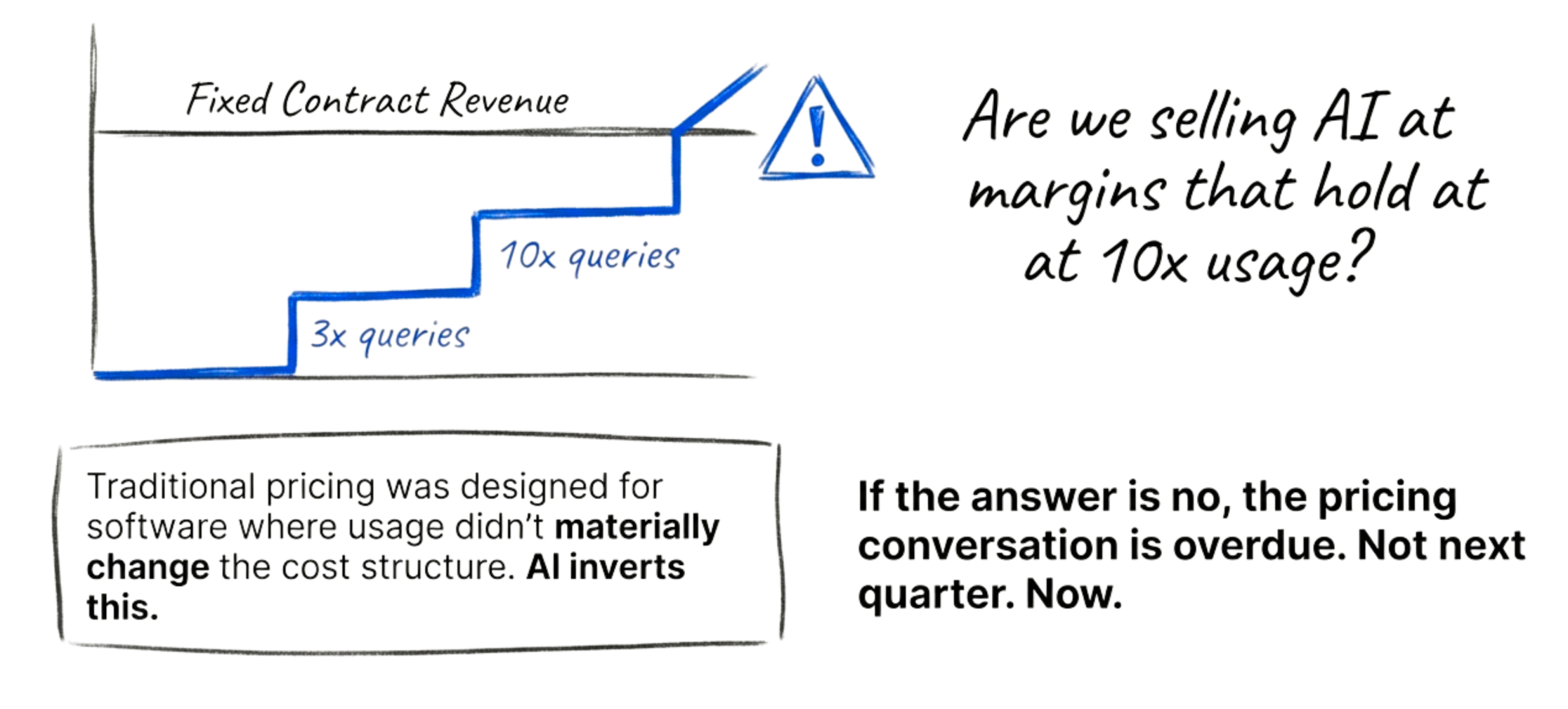
They then interrogate their pricing architecture.A customer who sends ten times more queries generate ten times the inference cost, in real time, against revenue that was fixed at contract signing.
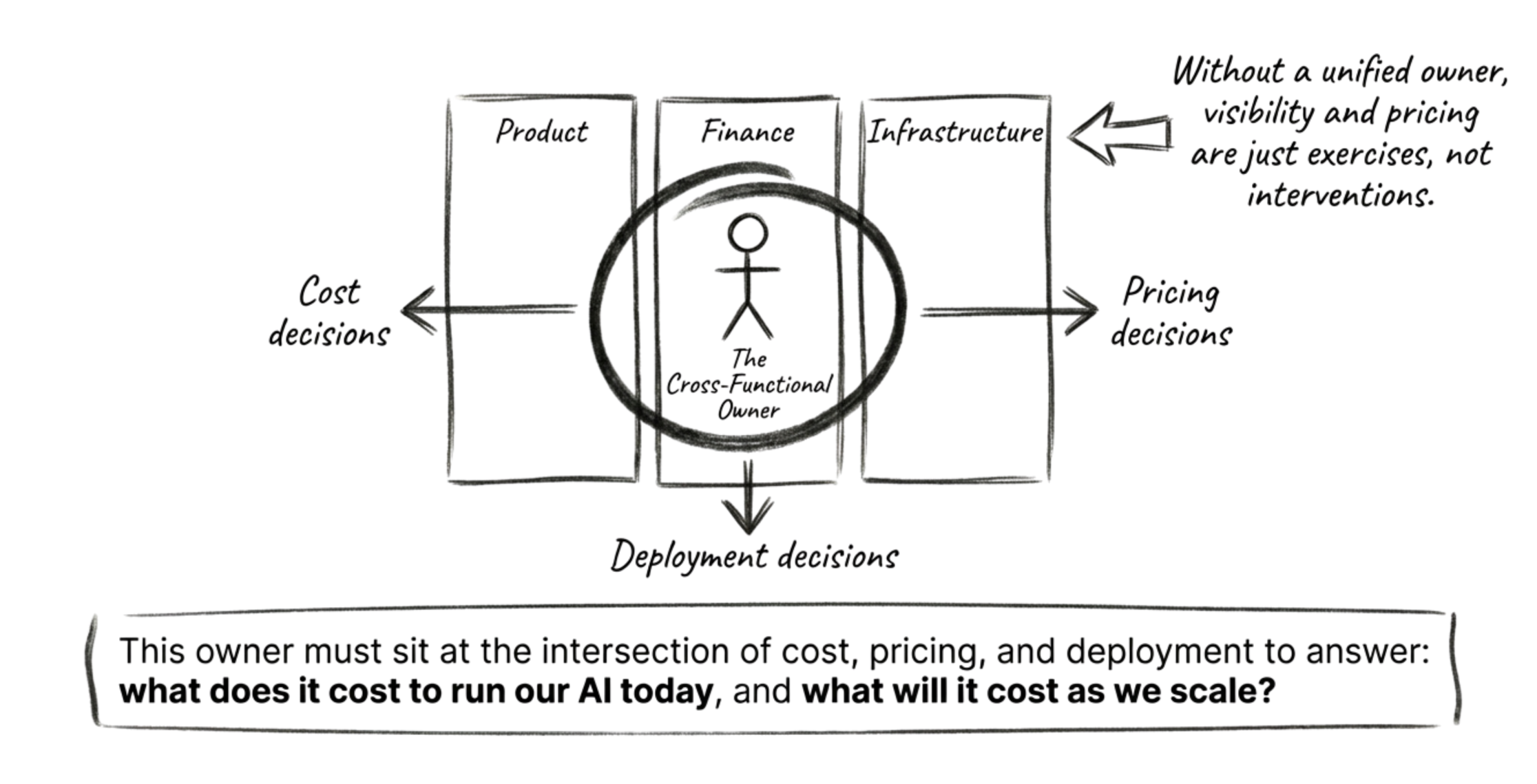
Finally, they assign a clear owner. Not infrastructure. Not finance. Not product. Without that owner, the first two steps are exercises, not interventions.
None of this is technically complex. All of it requires organizational will that most leadership teams have not yet summoned.
The Shift That Matters
Scaling AI is no longer the hard part. The hard part is building the organizational discipline to run it at margins that actually make the investment worthwhile.
The businesses that figure this out first won't just have better AI. They'll have a structural cost advantage that compounds over time, because their competitors are still treating AI as a capability while they're running it as an operating system.
Decide today, will your organization proactively update its pricing and commercial models to match AI’s cost dynamics, or will you wait and risk falling behind competitors who act with urgency? Take initiative, start this critical conversation now.
As enterprises connect AI agents to live workflows, security risks extend beyond the model. Learn how prompt injection, excessive access, weak governance and poor oversight can expose business systems—and how leaders can secure AI agents from the start.
Generic AI improves productivity, but industry-specific AI creates measurable business value by combining enterprise data, workflows, governance and domain expertise. Explore why context will define the next phase of AI adoption.
Namasys Powers What’s Next for Your Enterprise
Bring clarity, efficiency, and agility to every department. With Namasys, your teams are empowered by AI that works in sync with enterprise systems and strategy.