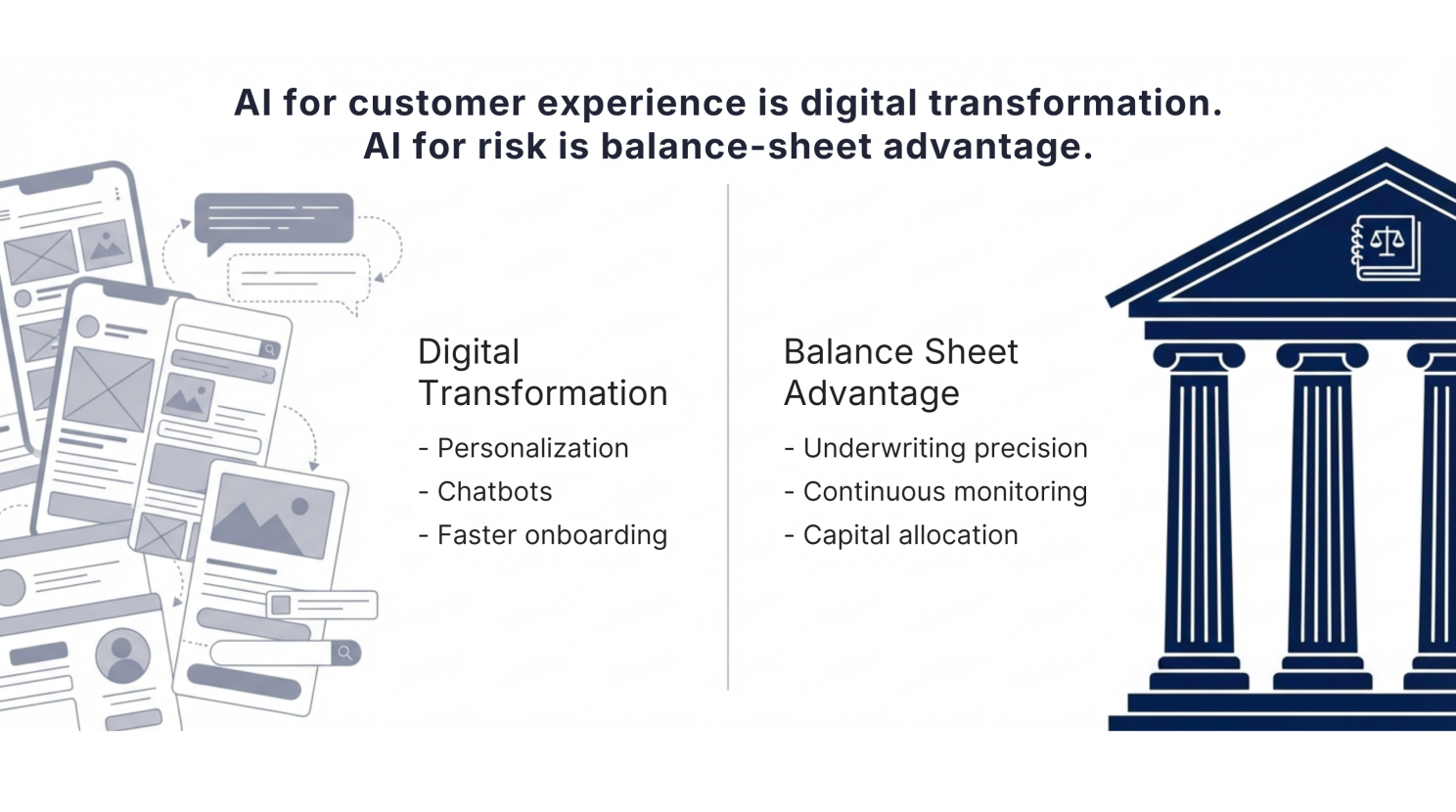
Most banking AI conversations are still front-office conversations.
Personalization. Chatbots. Faster onboarding.
But the institutions beginning to pull away in 2025–2026 are doing something different.
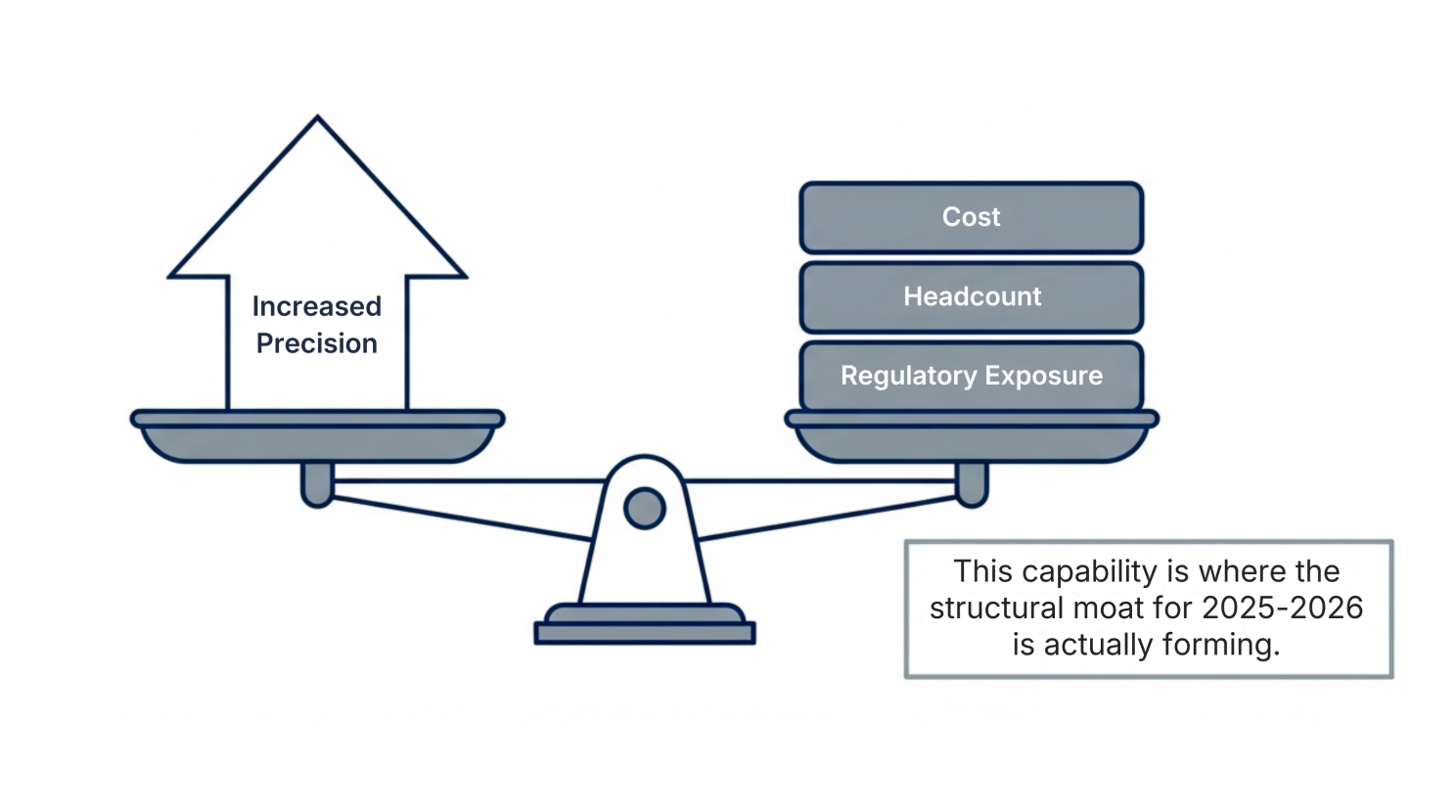
They are using AI to create risk operating leverage, the ability to underwrite, monitor, and allocate capital with greater precision without proportionally increasing cost, headcount, or regulatory exposure.
That is not digital transformation. That is balance-sheet advantage. And that is where the advantage is
AI Is Moving From Models to the Risk Decision System
In many banks, AI started as a model story:
“Here’s a better fraud model.”
“Here’s a better credit score.”
The center of gravity is now shifting.
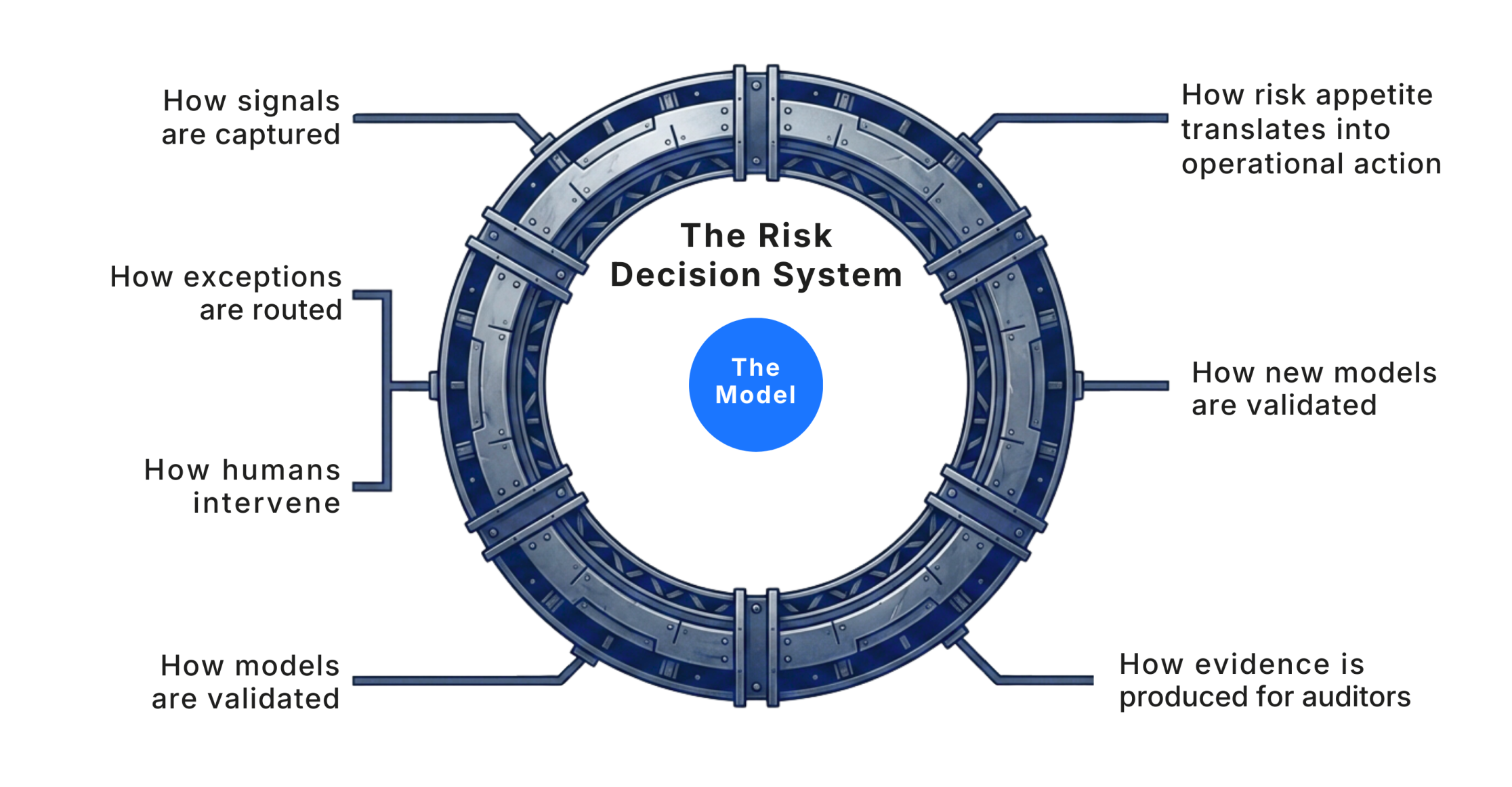
Leading institutions are embedding AI into the risk decision system itself:
A Global AI Survey makes this clear indirectly: AI value in financial services correlates less with isolated models and more with management practices and operating discipline that scale those models into outcomes.
The model is not the advantage. The system around the model is.
Regulation Is Becoming a Competitive Filter
Many executives still frame regulation as a constraint on AI.
It is increasingly a selection mechanism.
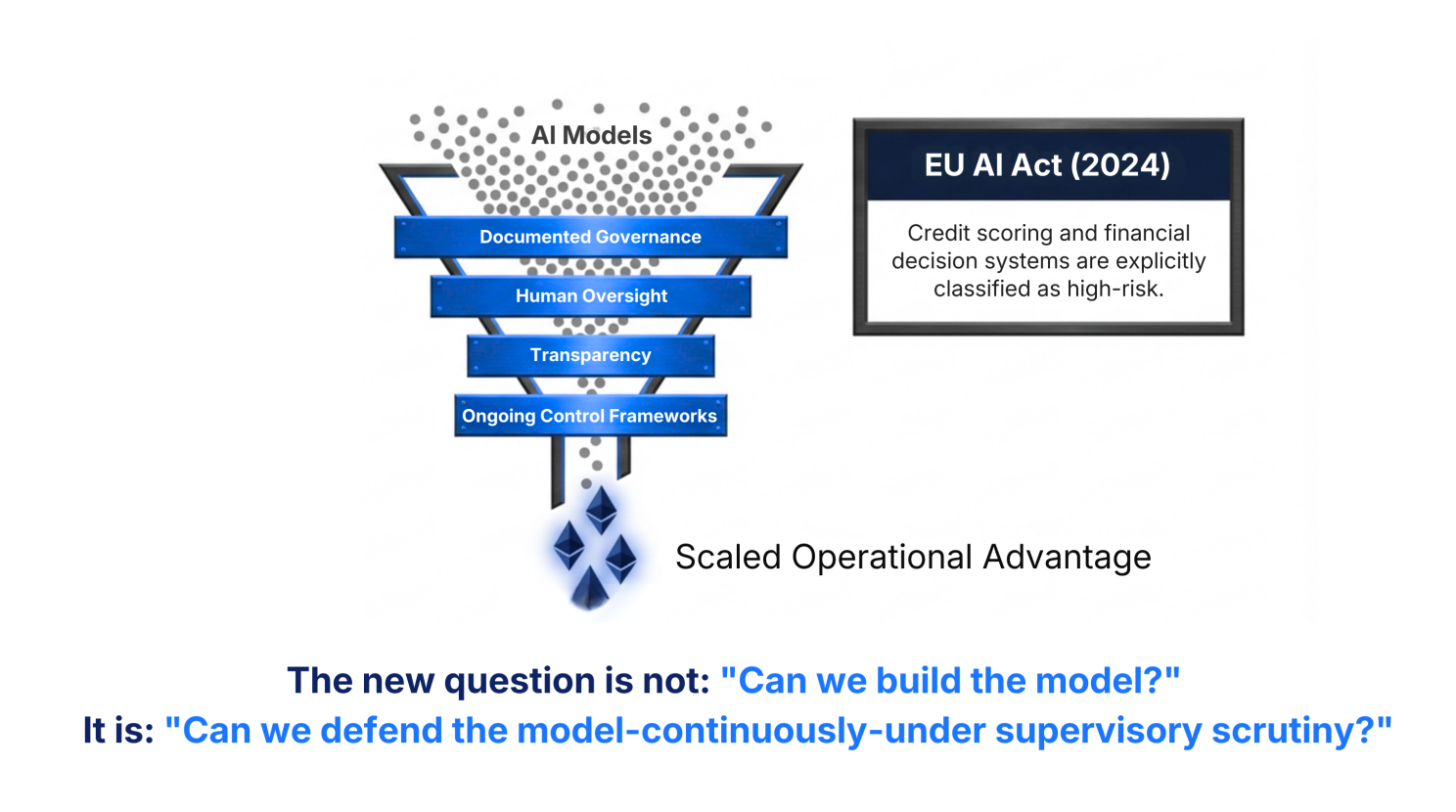
Under the EU AI Act, credit scoring and similar financial decision systems are classified as high-risk, requiring documented governance, human oversight, transparency, and ongoing control frameworks.
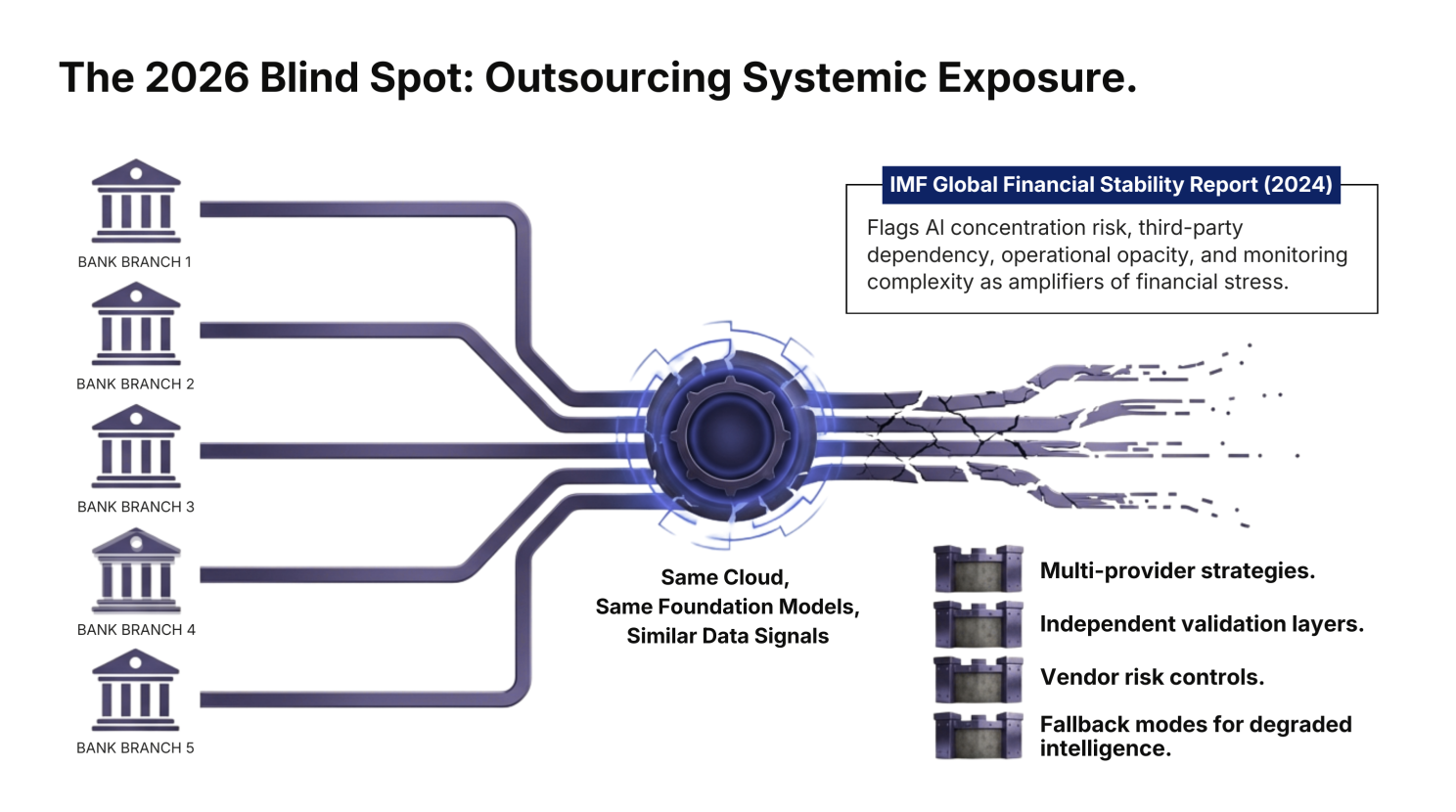
The IMF’s Global Financial Stability Report explicitly flags AI concentration risk, third-party dependency, operational opacity, and monitoring complexity as potential amplifiers of financial stress.
The new question is not: “Can we build the model?”
It is: “Can we defend the model, continuously, under supervisory scrutiny?”
That capability will not be evenly distributed.
And it will determine who scales confidently.
The Underappreciated Shift: Evidence Velocity
Modern BFSI risk is not just measured.
It is explained. And explanation has a cost.
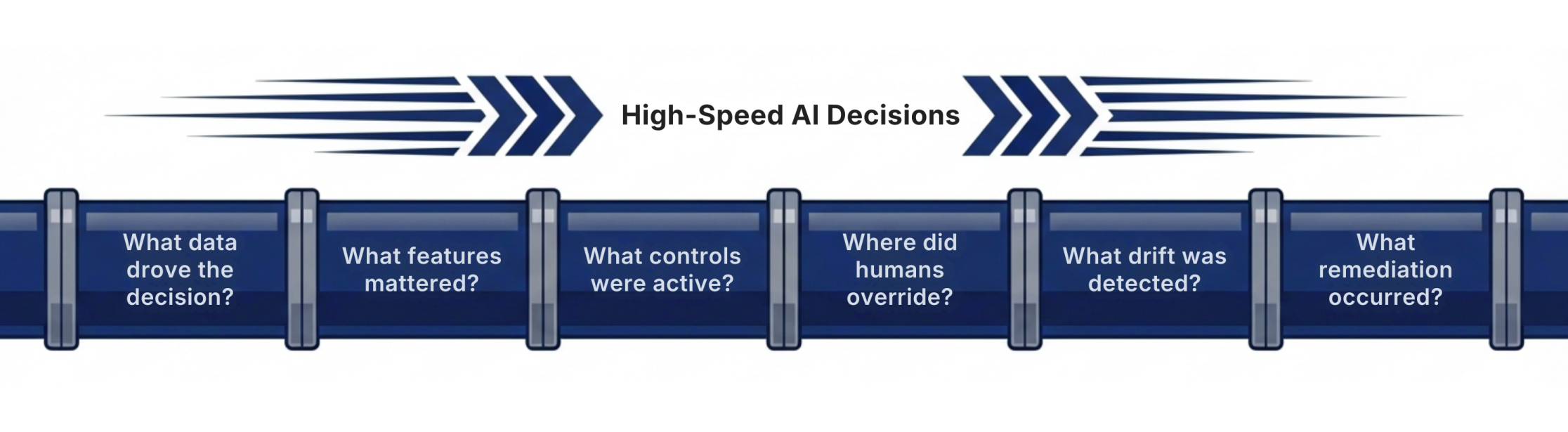
AI increases decision throughput, but it also increases the burden of evidence:
Regulators are not approving your accuracy.
They are approving your control environment.
Institutions that industrialize this evidence pipeline create what I call risk operating leverage, precision at scale, with defensibility built in.
That is extremely difficult to replicate quickly.
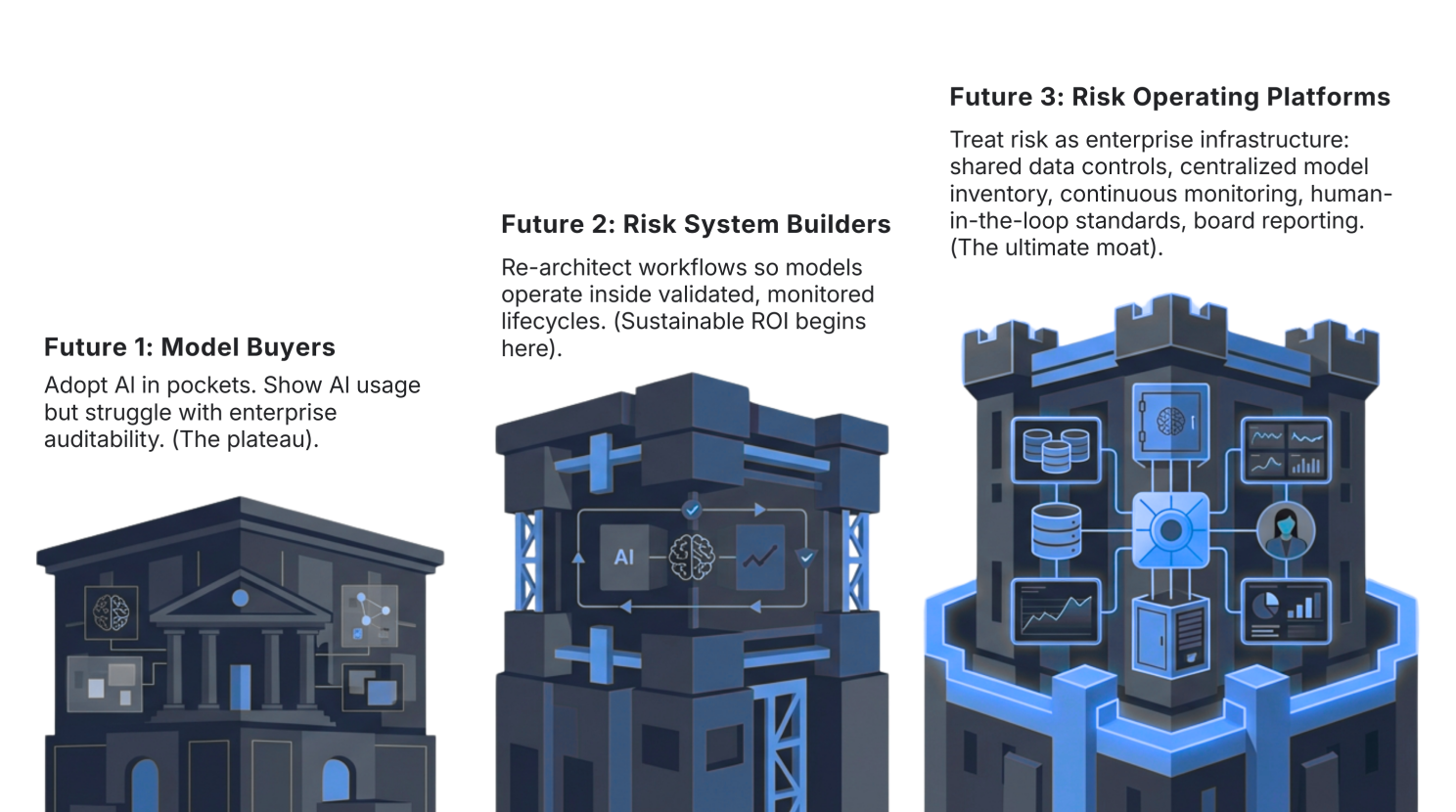
Three Futures, Not One
The market is splitting.
In hindsight, this third category will look like the advantage.
Because operating discipline compounds.
Concentration Risk: The 2026 Blind Spot
A structural issue is emerging.
If institutions rely on the same cloud providers, the same foundation models, the same vendors, and similar data signals, diversification assumptions weaken.
The IMF has explicitly highlighted concentration and third-party dependency risks in AI-enabled financial systems.
The question becomes:
Are we building intelligence, or outsourcing systemic exposure?
Resilient institutions are already designing for:
This is not technology strategy. It is systemic resilience.
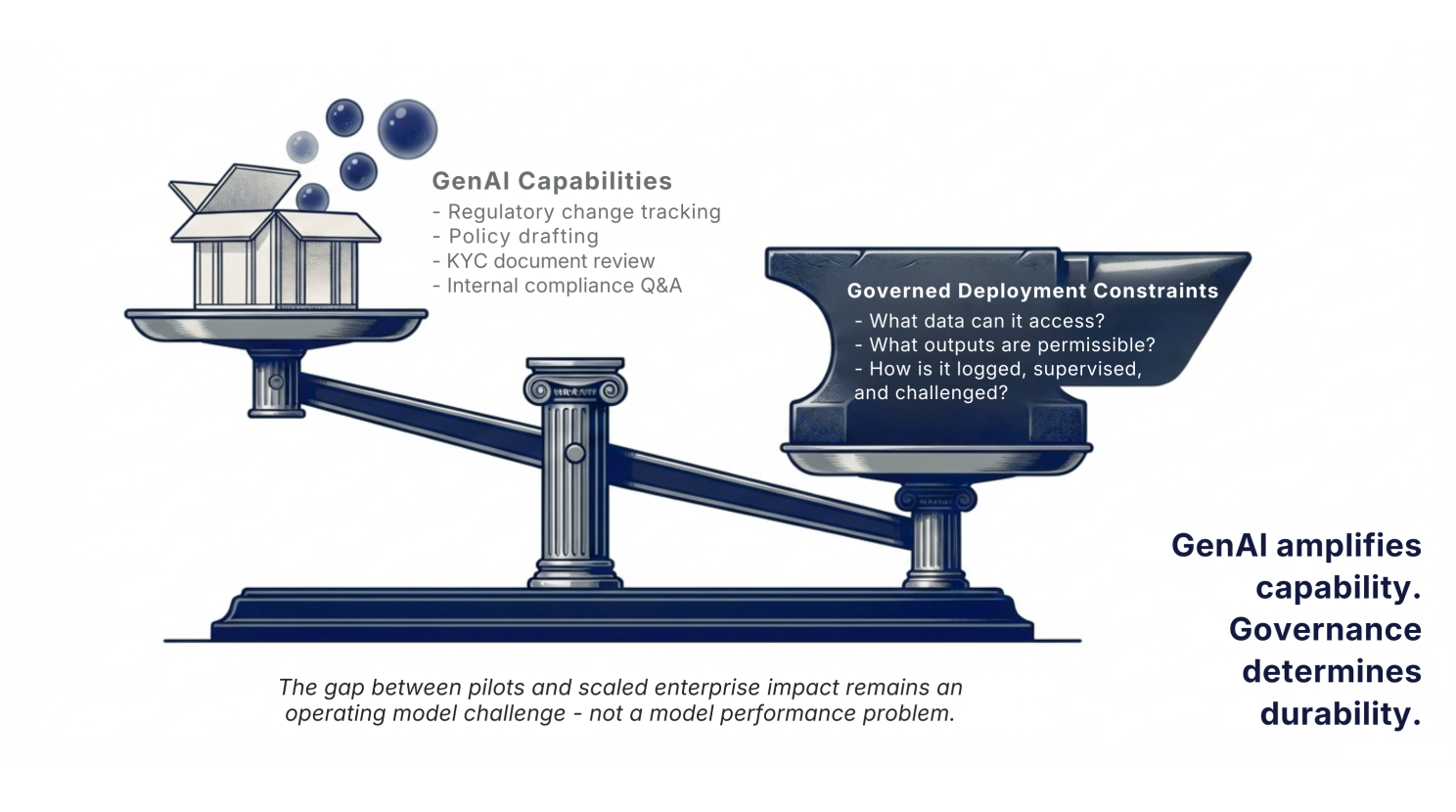
GenAI in Risk: Value Constrained by Governance
But the scaling constraint is not model capability.
It is governed deployment:
What data can it access? What outputs are permissible? How is it logged, supervised, and challenged?
The gap between pilots and scaled enterprise impact remains an operating model challenge, not a model performance problem.
GenAI amplifies capability. but governance determines durability.
NamaSYS Perspective
The next BFSI advantage will not be “who uses AI.”
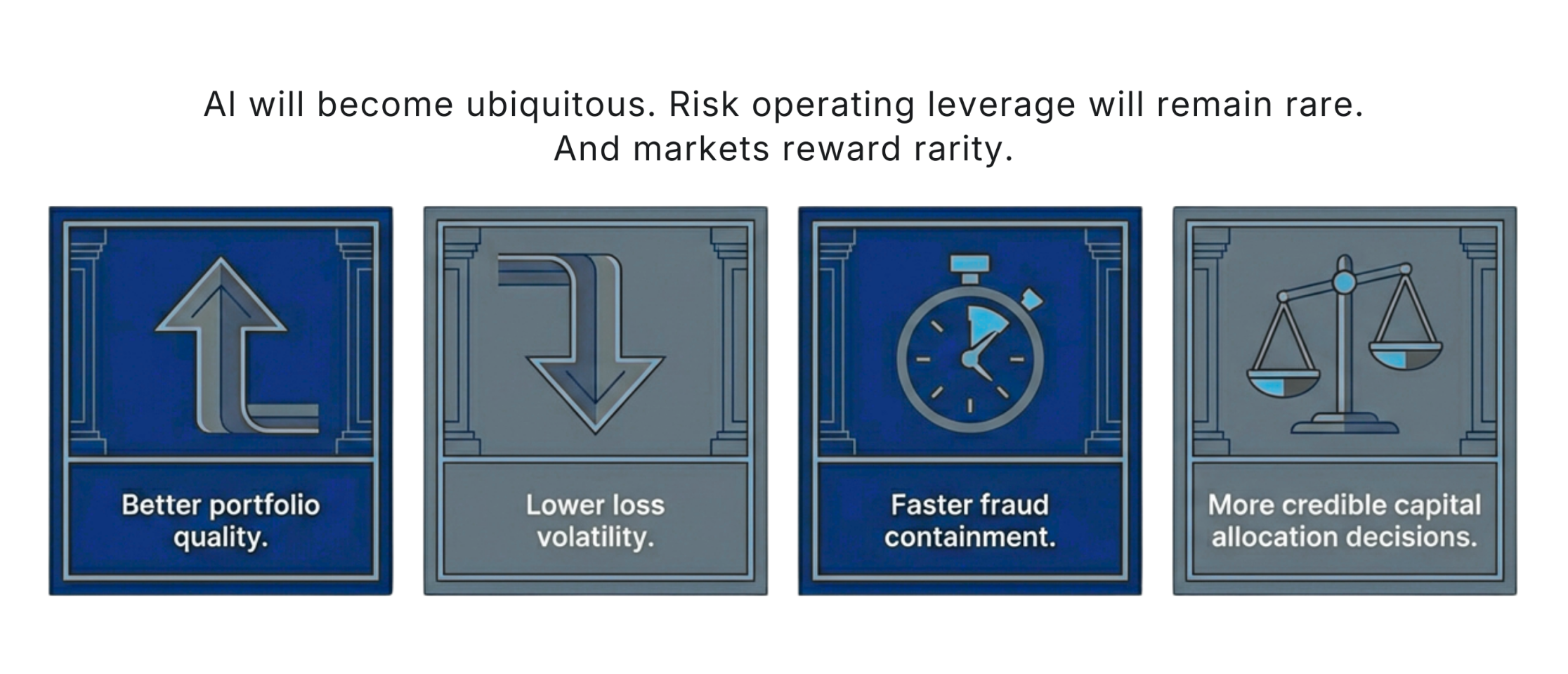
It will be who can operate AI inside risk, at scale, with auditable control, under regulatory pressure, while translating it into:
AI will become ubiquitous. Risk operating leverage will remain rare. And markets reward rarity.
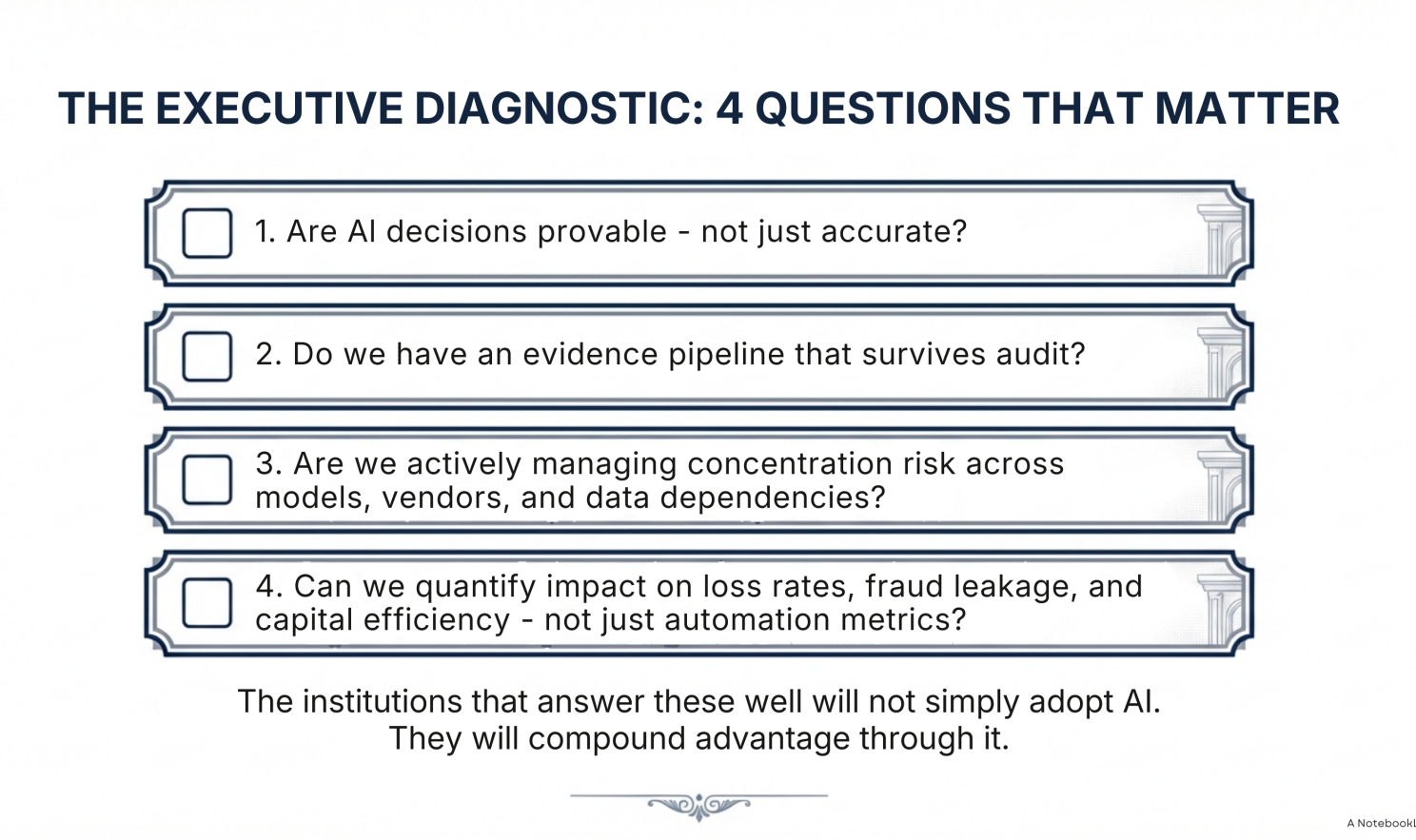
Only Questions That Matter
The institutions that answer these well will not simply adopt AI.
As enterprises connect AI agents to live workflows, security risks extend beyond the model. Learn how prompt injection, excessive access, weak governance and poor oversight can expose business systems—and how leaders can secure AI agents from the start.
Generic AI improves productivity, but industry-specific AI creates measurable business value by combining enterprise data, workflows, governance and domain expertise. Explore why context will define the next phase of AI adoption.
Namasys Powers What’s Next for Your Enterprise
Bring clarity, efficiency, and agility to every department. With Namasys, your teams are empowered by AI that works in sync with enterprise systems and strategy.