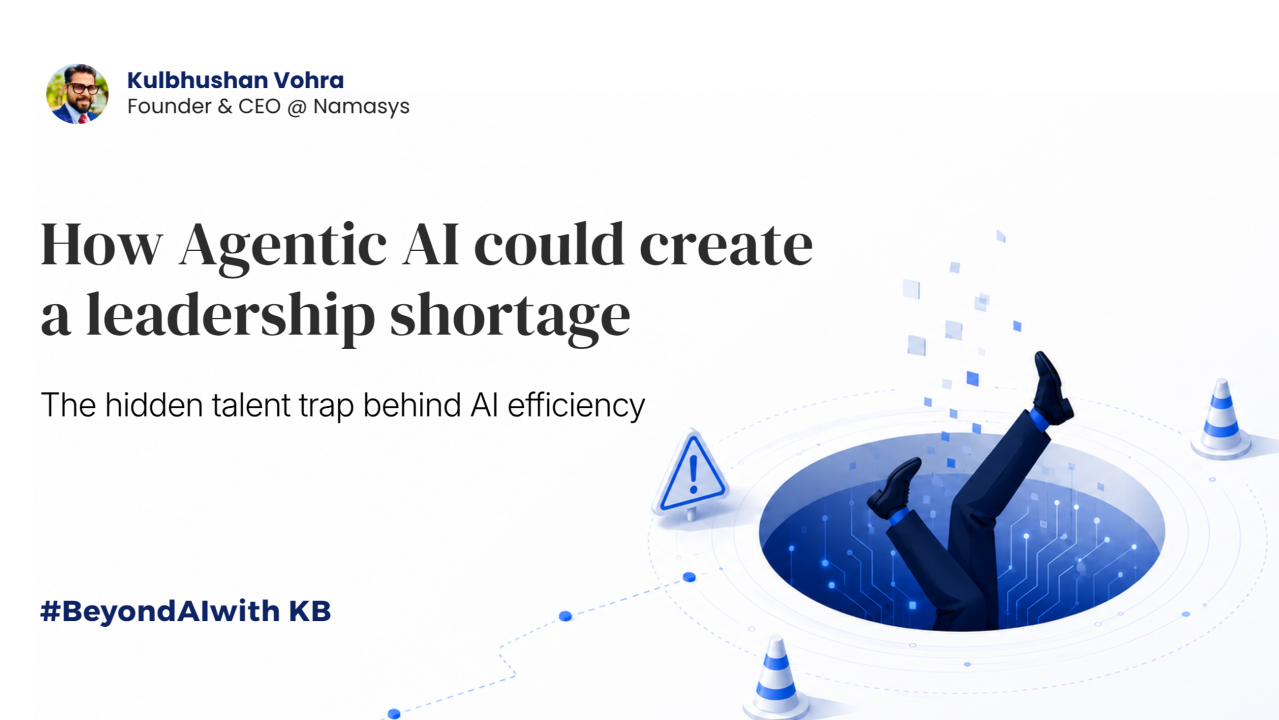
A billion job ads say the hiring bar is rising. The same trend is draining the bench you will need in five years.
An executive at a large multinational bank told Harvard researchers that three years ago, nobody in his department used generative AI. Today the whole team uses it for hours, every day.
Most leaders read that and think about productivity. The effect that matters more is on who they will be able to promote in 2031.
Start with what the market asks for now. On 8 July, Harvard Business Review published research from Jim Doucette, a former partner at EY-Parthenon and McKinsey, and Vishal Gaur, a dean at Cornell's Johnson School.
Across the three sectors that hire the most MBA graduates, the bar for new hires has risen. The strong candidates take on wider roles that AI opens up, pull knowledge across functions, and rebuild their own workflows around AI agents.
PwC read the same shift in more than a billion job ads across 27 countries. Junior postings in the most AI-exposed jobs are now seven times more likely to demand skills once reserved for senior people.
More than half the new requirements on those junior ads used to sit in experienced job descriptions. The market is asking a 22-year-old to arrive with what a 35-year-old once offered.
The consequence runs deeper than a tougher hiring bar.
Entry-level roles carry the highest AI exposure of any tier, so they are the first place cost pressure lands.
Across the market, leaders are making the same call at the same time. Automate the junior tasks, run leaner, defer the graduate intake. Each decision is rational on its own. Together they strip out the ground that used to grow mid-level and senior talent.
You cannot buy your way out of that later. The talent you do not train becomes talent you have to poach, from a pool your competitors are also draining.
A leadership shortage you helped build is structural, and it arrives on a five-year delay.
The advantage sits with the firms willing to break from the crowd.
Two moves matter.
First, redesign the role around what AI agents now do, rather than bolting them onto a job written in 2019. A rewritten role is where a junior person can still learn something worth learning.
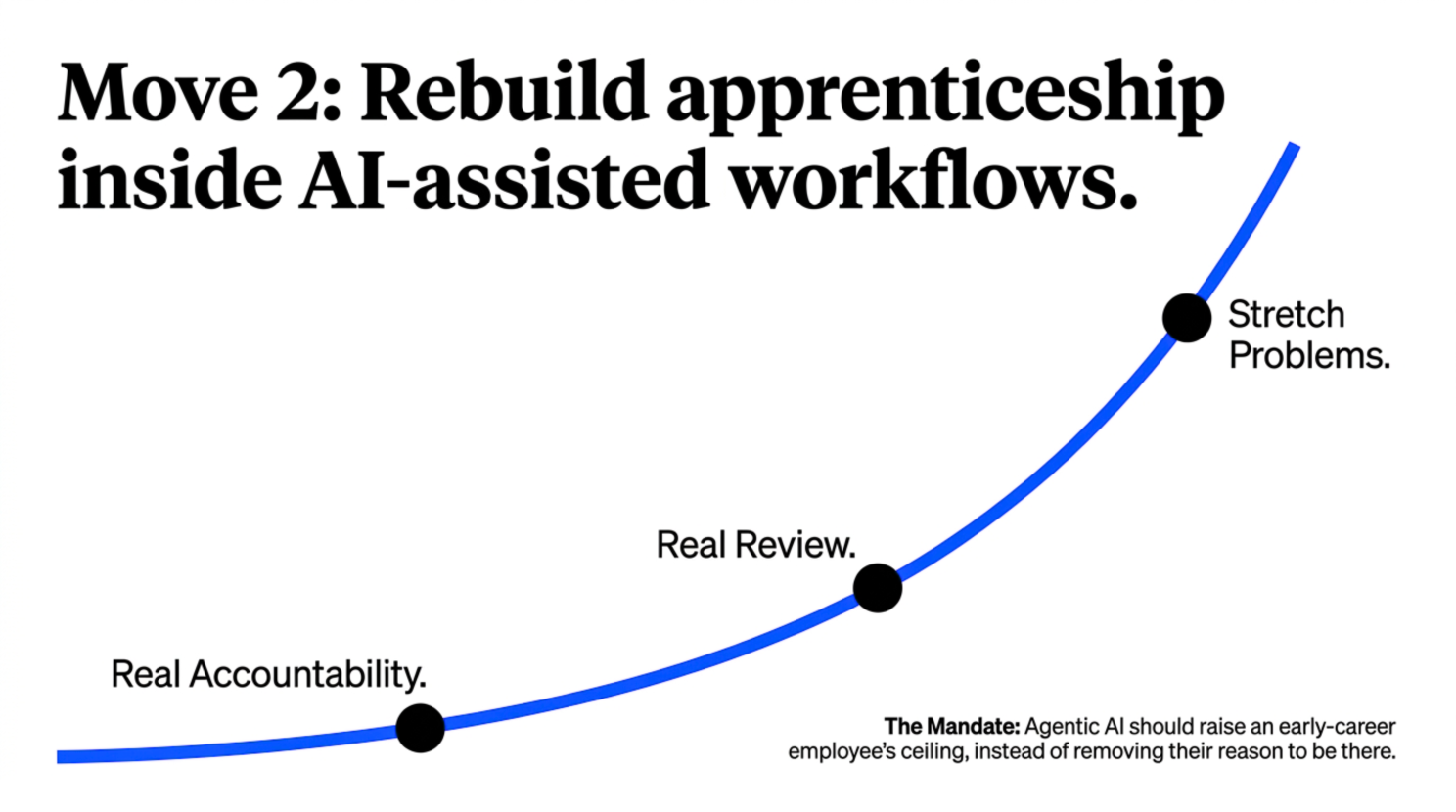
Second, rebuild the apprenticeship inside AI-assisted workflows. Give early-career people real accountability, real review, and problems that stretch them, so agentic AI raises their ceiling instead of removing their reason to be there.
The companies stripping the bottom rung will look efficient this year. The ones keeping it and rebuilding it around agentic AI will own the mid-level bench the rest go shopping for in 2030.
The junior you decline to hire in 2026 is the director you cannot promote in 2031.
As enterprises connect AI agents to live workflows, security risks extend beyond the model. Learn how prompt injection, excessive access, weak governance and poor oversight can expose business systems—and how leaders can secure AI agents from the start.
Generic AI improves productivity, but industry-specific AI creates measurable business value by combining enterprise data, workflows, governance and domain expertise. Explore why context will define the next phase of AI adoption.
Namasys Powers What’s Next for Your Enterprise
Bring clarity, efficiency, and agility to every department. With Namasys, your teams are empowered by AI that works in sync with enterprise systems and strategy.