Aug 19, 2026

Generic AI improves productivity, but industry-specific AI creates measurable business value by combining enterprise data, workflows, governance and domain expertise. Explore why context will define the next phase of AI adoption.


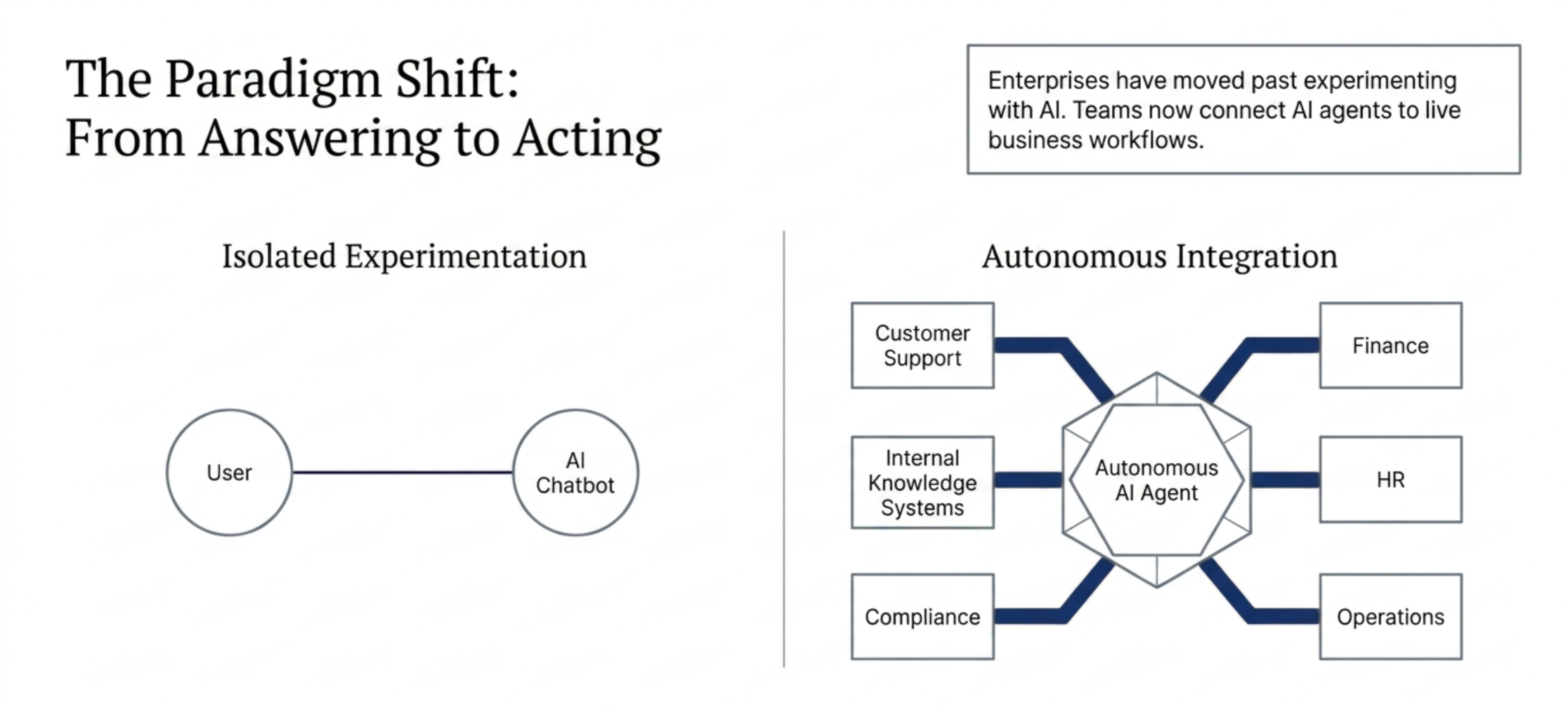
Enterprises have moved past experimenting with AI. Teams now connect AI agents to live business workflows: customer support, finance, HR, operations, compliance, data analysis, and internal knowledge systems.
That creates a real advantage. It also brings a leadership risk that did not exist before.
An AI agent does more than answer questions. It reads information, makes decisions, retrieves documents, connects to business tools, and in some setups takes action on its own. That makes AI agent security a question about the whole business environment the agent works inside, well beyond the model itself.
Many enterprises are still closing that gap.
The common security risks for autonomous AI agents
OWASP’s 2025 Top 10 for LLM and generative AI applications highlights risks such as prompt injection, sensitive information disclosure, supply-chain exposure, data and model poisoning, excessive agency, and weaknesses in the systems AI agents use to search and retrieve internal information.
OWASP’s Top 10 for Agentic Applications 2026 further focuses on risks unique to agents that plan, act, and make decisions across workflows.
Two of these deserve a board's attention.
Prompt injection: Someone hides harmful instructions inside content the agent reads: an email, a document, a webpage, a tool response. If the agent is wired into internal systems, that buried instruction can shape what it retrieves, shares, or does.

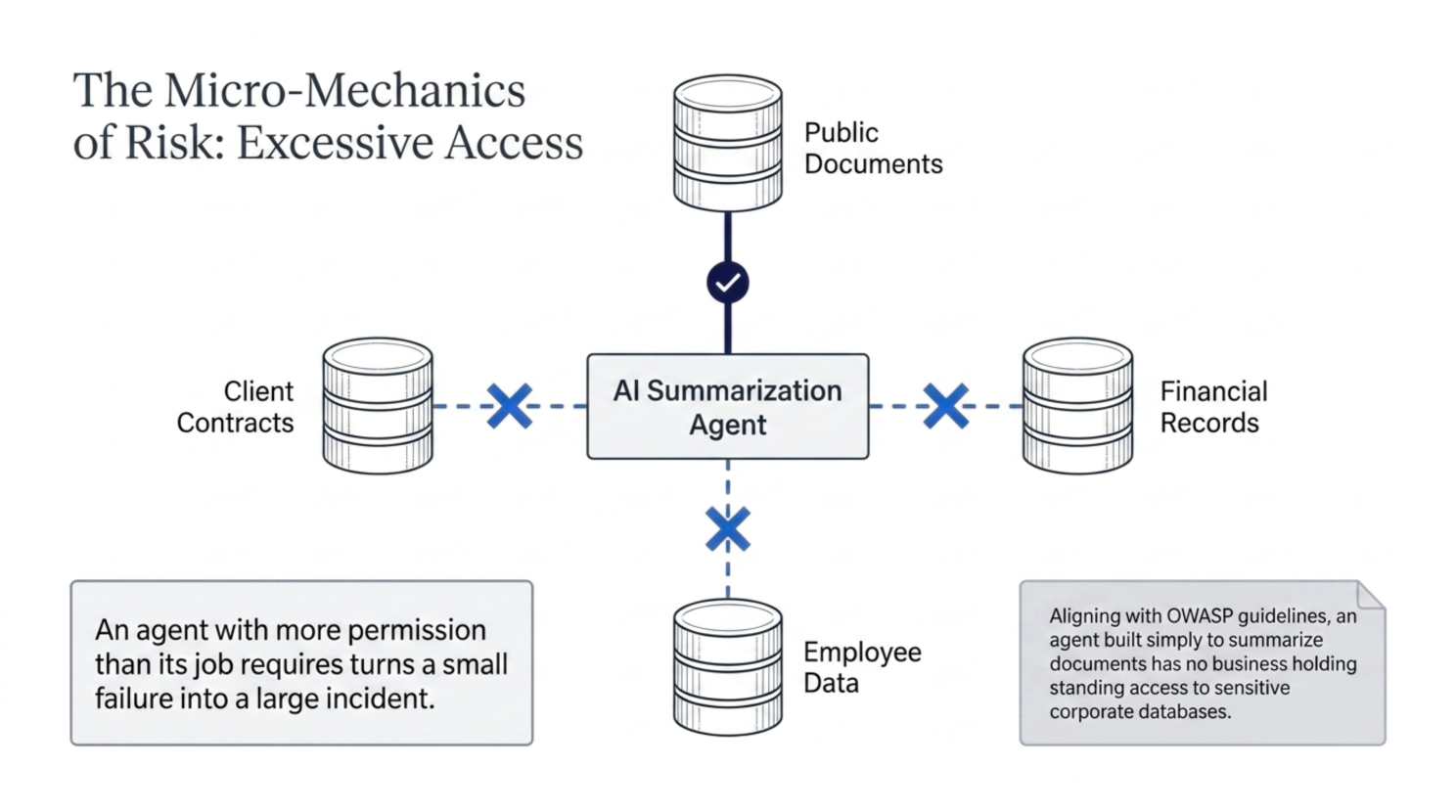
Excessive access: An agent with more permission than its job requires turns a small failure into a large incident. An agent built to summarise documents has no reason to hold standing access to financial records, employee data, or client contracts.
Why this belongs on the board agenda
The numbers make the case. IBM's 2025 Cost of a Data Breach Report puts the global average breach at USD 4.4 million, down 9% on the year. Among organisations that reported an AI-related security incident, 97% lacked proper AI access controls, and 63% lacked an AI governance policy. Ungoverned "shadow AI" added a further USD 670,000 to the average breach where it played a part.

Each of these risks lands somewhere concrete: customer data, intellectual property, compliance obligations, and the operational trust your business runs on.
How to secure AI agents against cyber threats

An AI agent security framework is the coordinated set of controls you put around an agent: access scoped to least privilege, approval workflows for high-impact actions, data classification, continuous monitoring, audit trails, third-party and supply-chain checks, and human oversight where the stakes justify it.
Five questions every board should be able to answer:
This mirrors how NIST frames the problem. Its AI Risk Management Framework builds trust and risk management into the design, development, use, and evaluation of AI systems, instead of bolting them on as a final sign-off.
Security as a growth decision
At Namasys Analytics, we design AI agents for security, governance, and accountability alongside speed and scale. The two sets of goals reinforce each other.
The enterprises that win with AI will be the ones that can prove their systems are controlled, auditable, and trusted. That proof is what moves AI out of low-stakes pilots and into the regulated, high-value work where it pays off. Secure the agent from the first design decision. That is what lets you scale AI with confidence.

Aug 19, 2026
Generic AI improves productivity, but industry-specific AI creates measurable business value by combining enterprise data, workflows, governance and domain expertise. Explore why context will define the next phase of AI adoption.
Jul 22, 2026
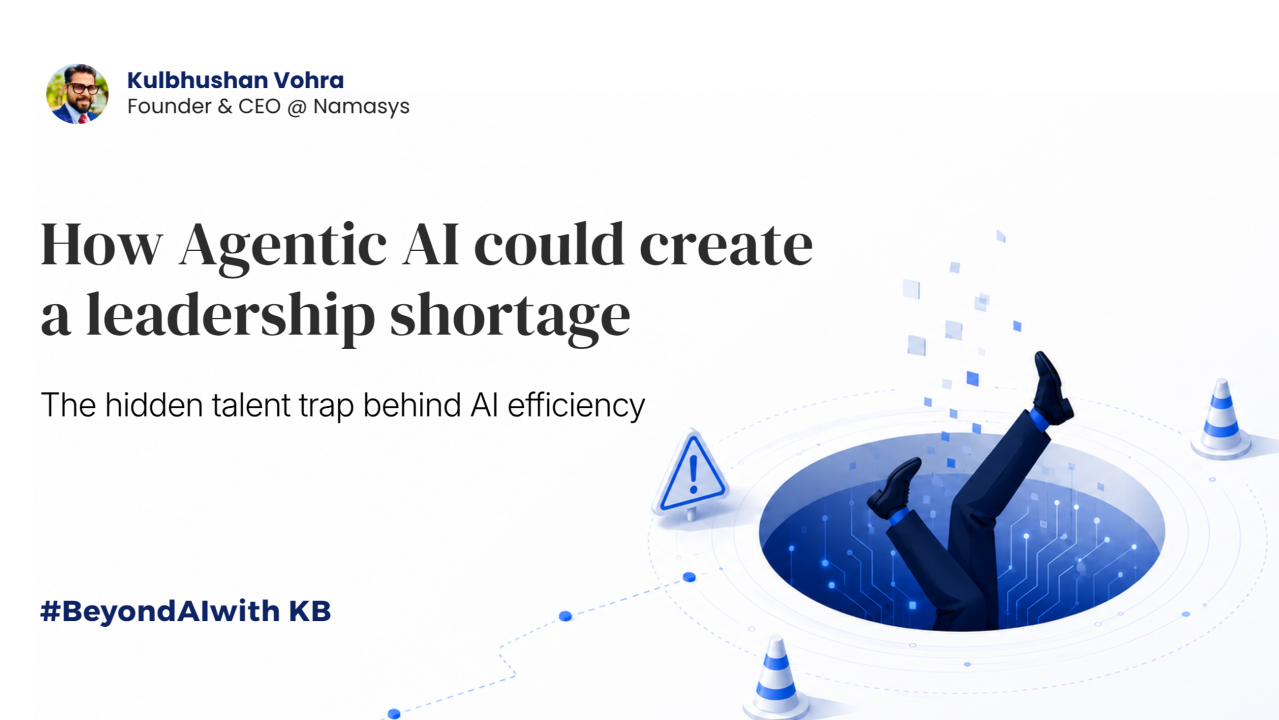
AI is raising expectations for entry-level talent while automating junior work. Explore how this shift could weaken leadership pipelines and why companies must redesign early-career roles around agentic AI.
Bring clarity, efficiency, and agility to every department. With Namasys, your teams are empowered by AI that works in sync with enterprise systems and strategy.


Namasys Technologies LLC © 2025 All Rights Reserved


