Why Industry-Specific AI Will Define the Next Enterprise Advantage
AI is becoming widely available. Competitive advantage is not.
Most organisations can now use AI to summarise documents, draft content, answer questions and support routine work. These tools improve productivity, but they rarely create a capability competitors cannot access.
The next stage of enterprise AI will be shaped by a more demanding question: can the technology understand how a particular business operates well enough to improve a measurable outcome?
This is where industry-specific AI becomes strategically important.
From AI Access to Business Relevance
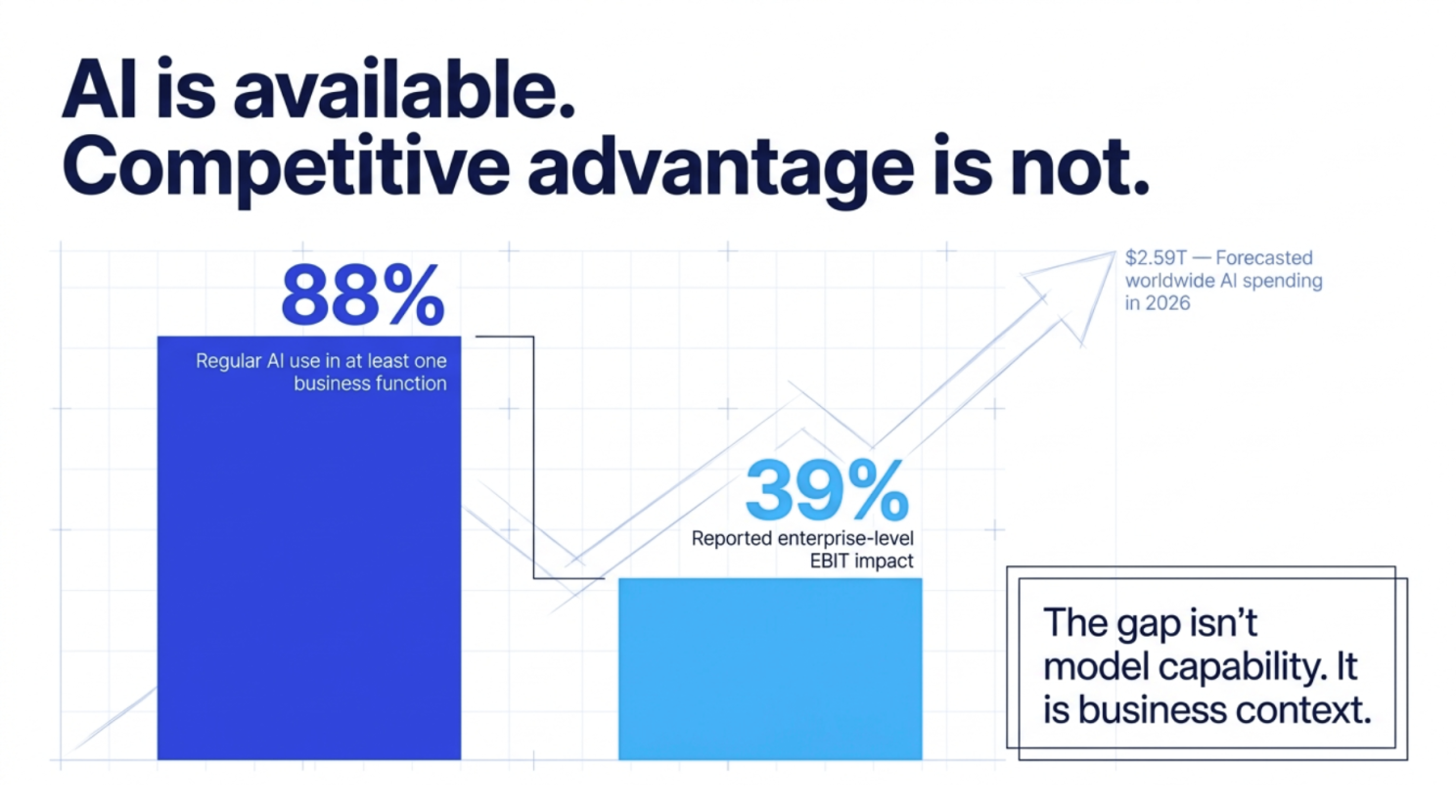
According to Gartner, worldwide AI spending is forecast to reach $2.59 trillion in 2026, an increase of 47 percent year over year. McKinsey’s 2025 global survey found that 88 percent of respondents reported regular AI use in at least one business function, but only 39 percent reported an enterprise-level EBIT impact.
The gap is not primarily about model capability. It is about business context.
A general AI assistant may explain predictive maintenance, but it cannot automatically understand which machine affects a production commitment, when maintenance can be scheduled, or what disruption is acceptable.
Similarly, a generic system may summarise a medical report, but a healthcare solution must also understand clinical terminology, patient privacy, safety protocols and professional judgement.
Every industry has its own language, workflows, regulations, risk thresholds and customer expectations. AI becomes valuable only when these realities are built into how it supports work.
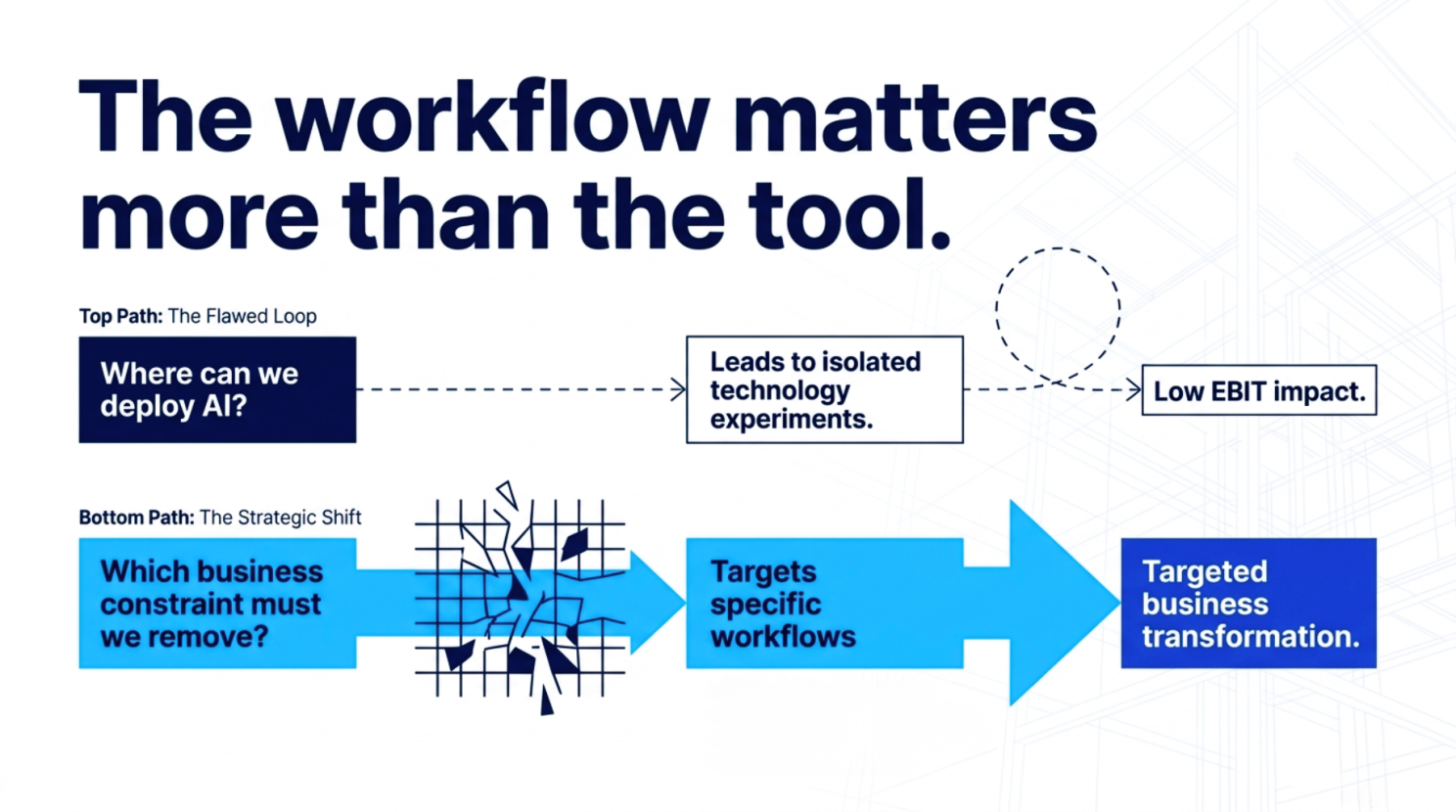
Many organisations begin with the wrong question: Where can we deploy AI?
A better question is: Which business constraint should we remove?
That constraint may be slow claims processing, inaccurate demand planning, repeated compliance reviews, production downtime or inconsistent customer service. Once the problem is clear, leaders can define the required data, decisions, safeguards and success measures.
Real-world results show why this matters. Amazon reported that its AI-powered demand forecasting improved regional forecast accuracy by 20 percent, helping position inventory closer to demand.
Siemens reported that an AI-supported predictive maintenance system helped Sachsenmilch identify a pump failure early and avoid a low six-figure loss.
In both cases, the value came not from AI in isolation, but from its connection to an operating process.
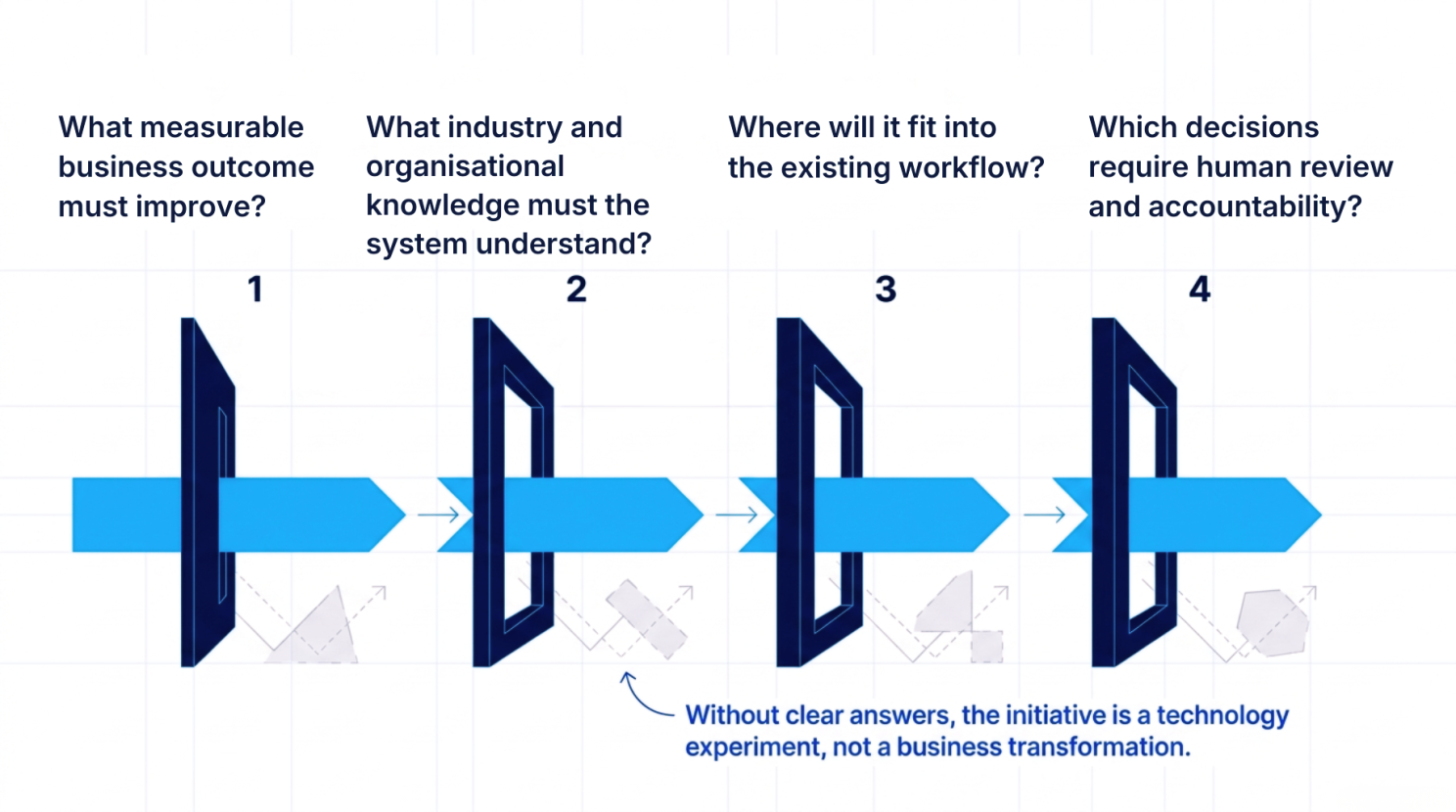
Before approving an industry AI initiative, leadership teams should answer four questions:
Preparing for Agentic AI
The move towards Agentic AI makes industry context even more important. Systems are beginning to move beyond generating answers and towards completing multi-step tasks.
An assistant that drafts a recommendation can be reviewed. A system that updates records, initiates actions or advances a workflow can directly affect customers and operations. Greater autonomy therefore requires stronger data, permissions, monitoring and human oversight.
The Lasting Advantage
Most enterprises will eventually access similar AI models. What competitors cannot easily replicate is the system around the model: proprietary data, process knowledge, decision rules, integrations and governance.
The opportunity is not to deploy AI everywhere. It is to apply it where industry knowledge and operational context can create a meaningful difference.
Generic AI will remain useful. Industry-specific AI will become valuable because it understands not only what the business is asking, but why the decision matters.
As enterprises connect AI agents to live workflows, security risks extend beyond the model. Learn how prompt injection, excessive access, weak governance and poor oversight can expose business systems—and how leaders can secure AI agents from the start.
AI is raising expectations for entry-level talent while automating junior work. Explore how this shift could weaken leadership pipelines and why companies must redesign early-career roles around agentic AI.
Namasys Powers What’s Next for Your Enterprise
Bring clarity, efficiency, and agility to every department. With Namasys, your teams are empowered by AI that works in sync with enterprise systems and strategy.