Quantum Computing: The Next Frontier in the AI Revolution
In the current technological epoch, we stand at the crossroads of two extraordinary computing paradigms: Artificial Intelligence (AI) and Quantum Computing.
Each has independently reshaped how we conceive of data, computation, and decision-making. Together, they promise to redefine the frontier of what’s computationally possible.
Why AI Alone Is Hitting Limits
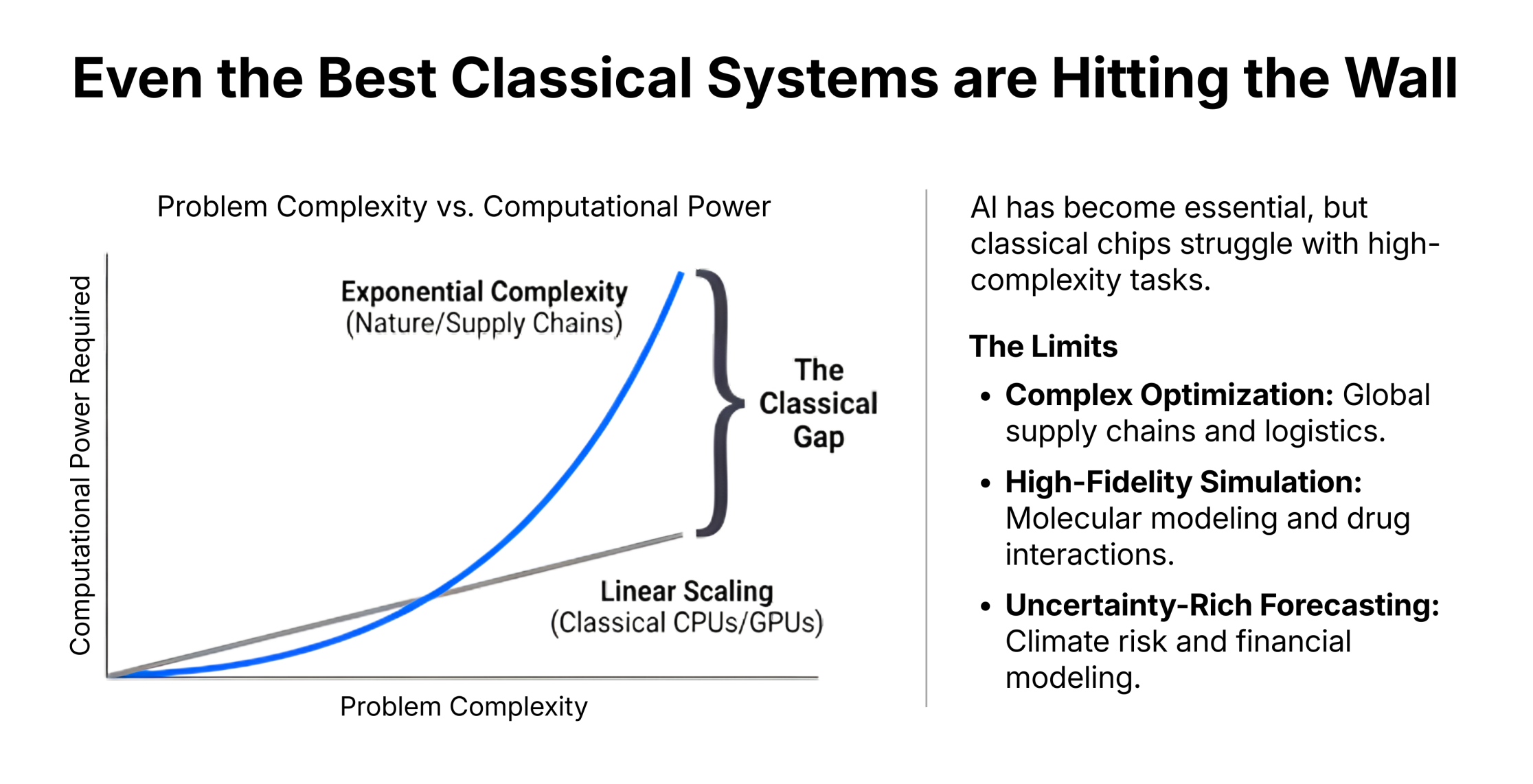
AI has become essential, from personalized medicine to predictive logistics. But even the best classical systems are starting to buckle under:
Classical chips (CPUs, GPUs) scale linearly. Quantum computing is built for exponential complexity.
What Quantum Brings to AI
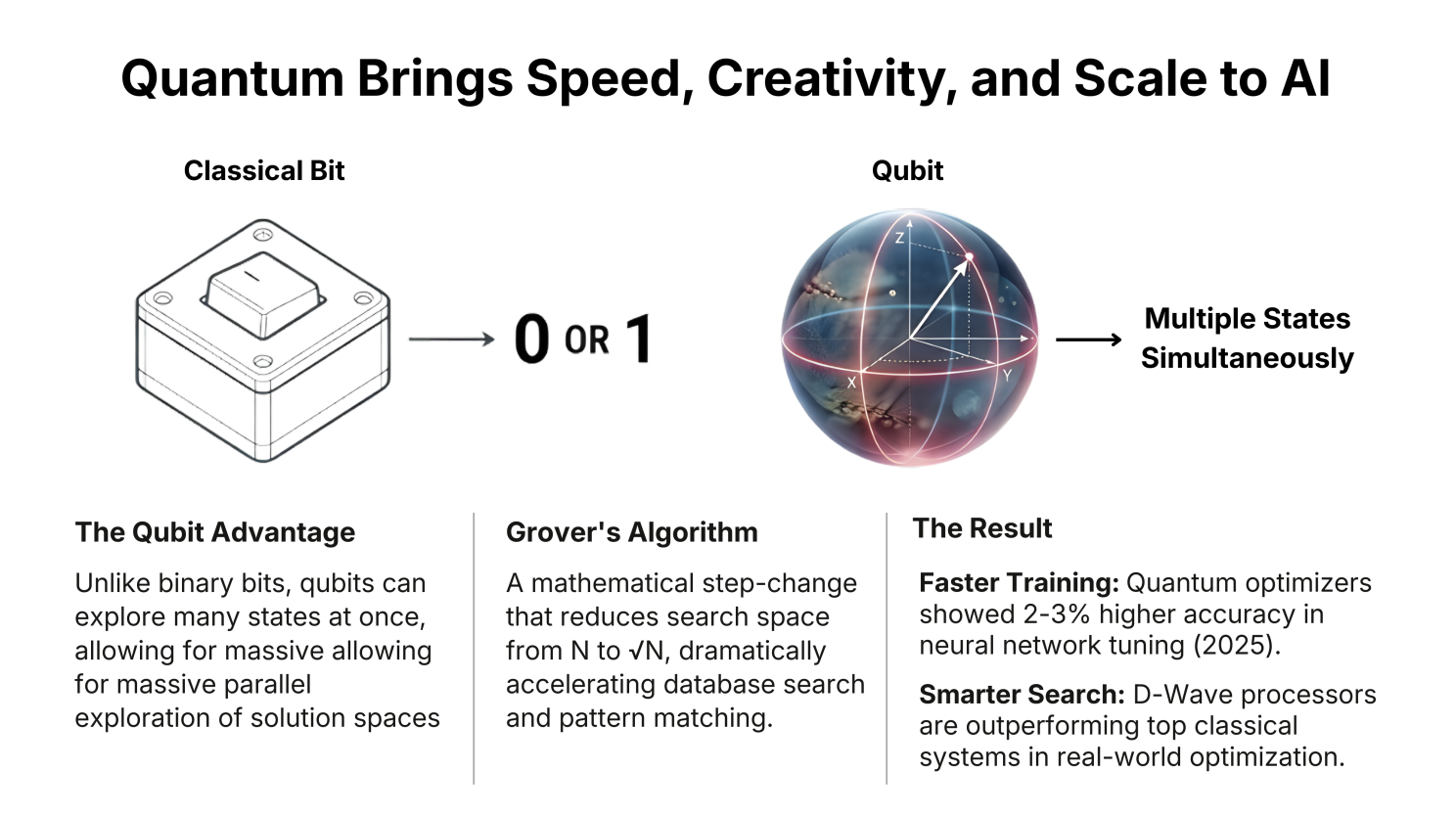
Quantum computers use qubits, which can explore many states at once. That means speed, creativity, and scale for the problems AI struggles with.
Faster AI Training + Smarter Search
Grover's algorithm = search space reduced from N to √N
Quantum optimizers in 2025 showed 2–3% higher accuracy than classical methods in neural network tuning
D-Wave's quantum processor outperformed top classical systems in real-world optimization
Richer Data for Better Predictions
In 2024, a quantum-enhanced ML model generated 2,331 unique molecules for drug discovery, 99% never seen in training
MIT's 16-qubit chip simulated electron transport in new materials, beyond classical reach
Quantum-enhanced models are improving climate simulation inputs (e.g. for solar and weather forecasting)
Entirely New AI Paradigms
Quantum neural networks model probabilities natively
Quantum models outperform classical ones on data generalization
Quantum-inspired AI can reason across scenarios, not just data points
We're in the NISQ Era
Yes, quantum systems today are noisy and mid-scale. But the pace is real—and accelerating:
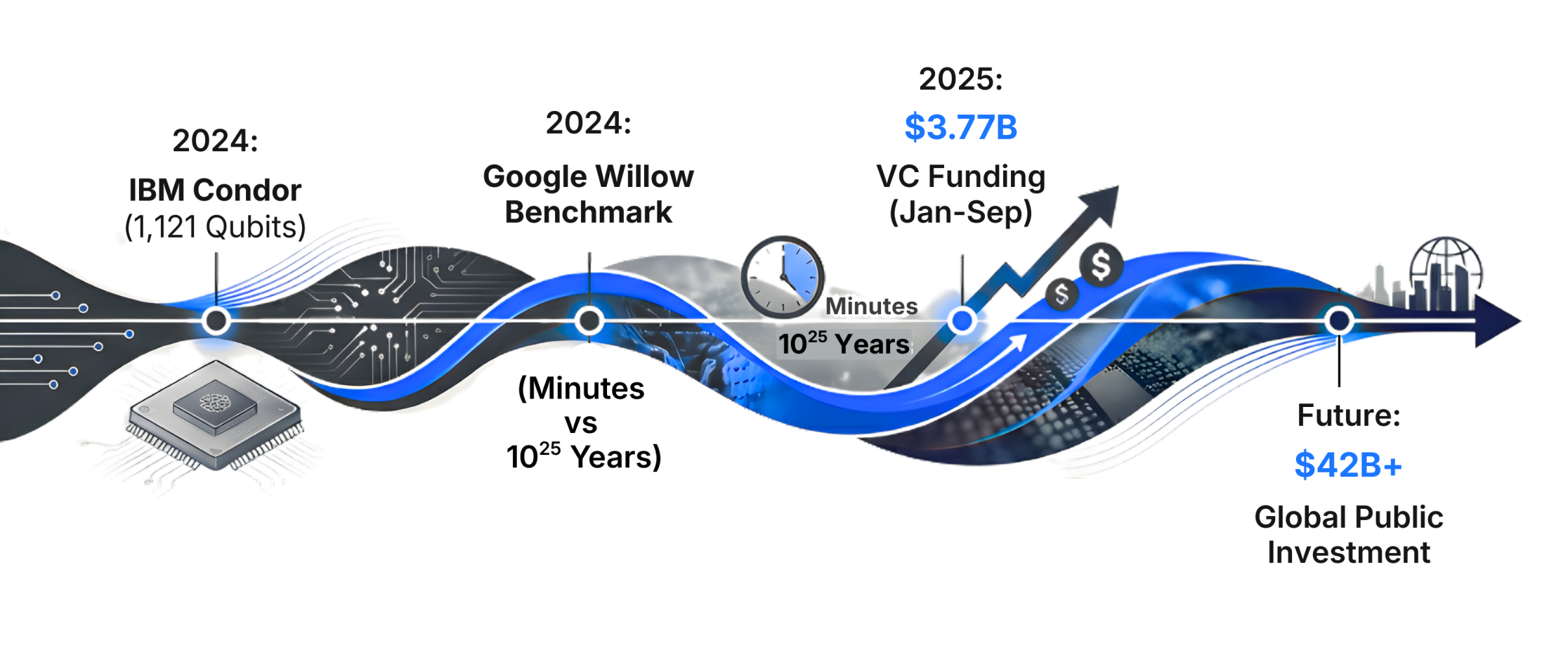
IBM Condor (2024): 1,121 qubits
Google Willow: Completed a benchmark task in minutes that would take classical systems 10²⁵ years (though this is a specialized benchmark, not yet a practical business problem)
$2 billion in VC for quantum startups (2024), with 2025 already exceeding $3.77 billion by September
$42B+ in global public investment over the next decade
Cloud access now available (IBM, AWS, Azure, more)
Hybrid quantum-classical workflows are already delivering value.
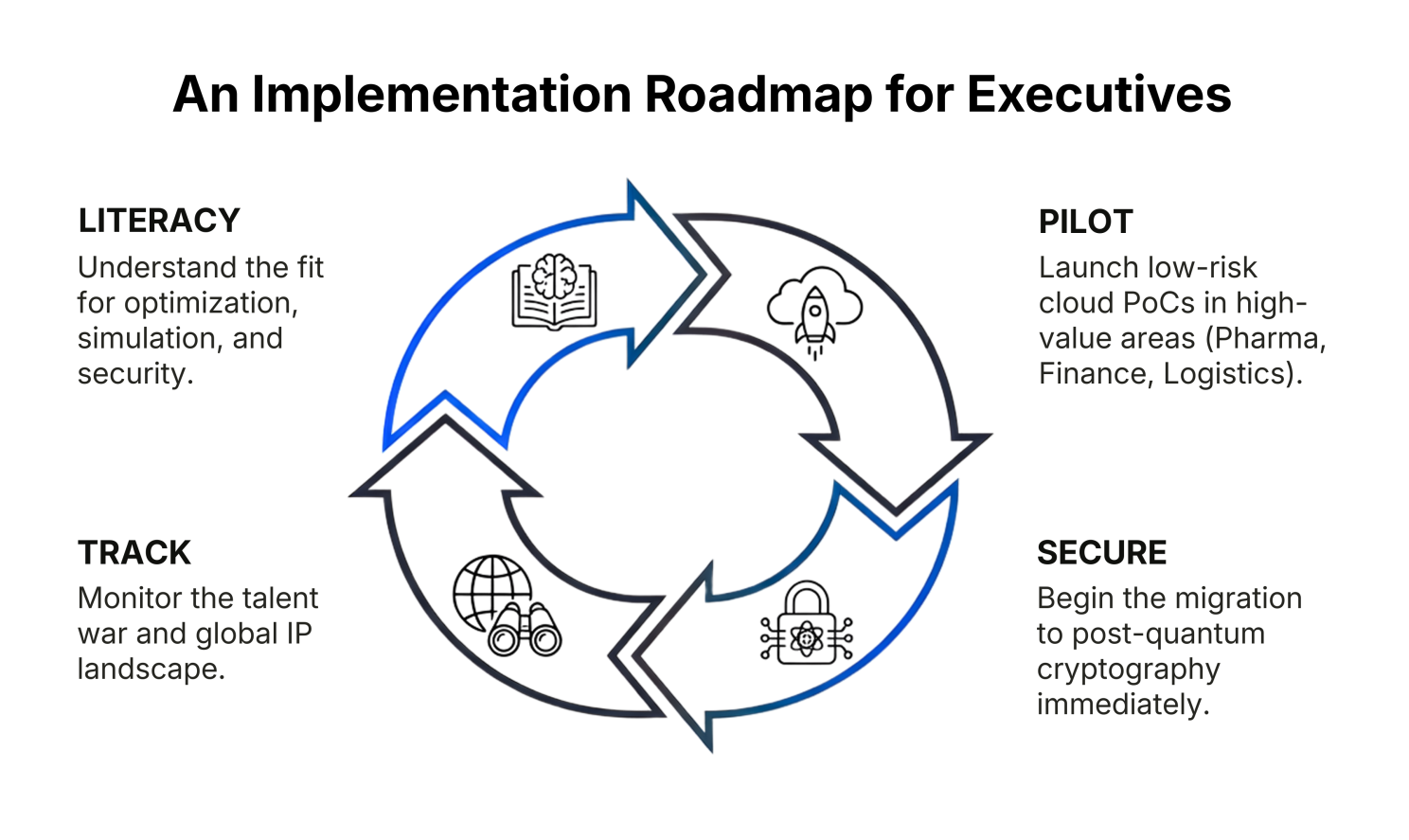
What Executives Should Do Now
Build Quantum Literacy
Start Quantum-AI Pilots
Secure Against Quantum Risk
Track Global Talent + IP
Leading Enterprises Are Already Moving
While comprehensive industry-wide statistics are still emerging, evidence shows momentum:
JPMorgan Chase: Announced up to $10 billion investment initiative specifically naming quantum computing as a strategic priority
BMW Group: Collaborated with Airbus on 2024 Quantum Computing Challenge, attracting 400+ teams globally; actively piloting supply chain optimization
Pharmaceutical sector: Merck, Biogen, Boehringer Ingelheim partnering with quantum startups on drug discovery acceleration
A 2025 survey of 500 business leaders found approximately 3 in 5 enterprises are exploring quantum opportunities, particularly in quantum-AI applications
Early movers gain 3–5 year learning curve advantage as the technology matures.
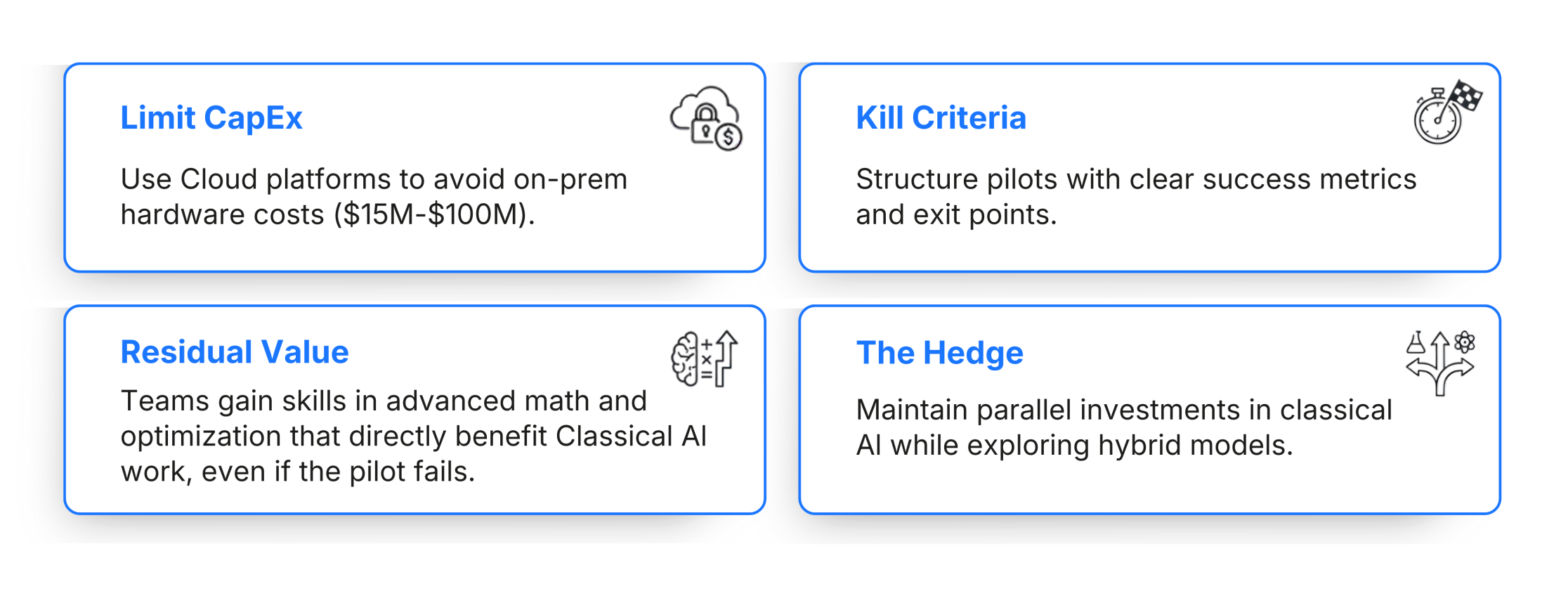
What if quantum doesn't deliver in your timeframe?
Structure pilots with clear success metrics and kill criteria
Quantum cloud platforms minimize capital risk vs. on-premises hardware (which can cost $15M–$100M)
Even if quantum advantage takes longer than expected, teams gain valuable skills in advanced optimization, hybrid computing, and post-quantum security, capabilities with residual value regardless of quantum trajectory
Hedge with parallel classical AI investments and hybrid approaches
The Future Is Hybrid
Quantum won't replace AI. It will amplify it, by solving what classical AI can't.
From simulating the body before clinical trial, to optimizing global logistics in real time, or creating AI that reasons across uncertainty.
This isn't a distant vision. It's a strategic frontier already unfolding.
The quantum-AI convergence is moving from research to reality. Organizations that build literacy, start pilots, address security risks, and track competitive dynamics now will have significant advantage over those that wait.
Will your organization be positioned to capitalize when quantum-AI scales, or will you be scrambling to catch up?
As enterprises connect AI agents to live workflows, security risks extend beyond the model. Learn how prompt injection, excessive access, weak governance and poor oversight can expose business systems—and how leaders can secure AI agents from the start.
Generic AI improves productivity, but industry-specific AI creates measurable business value by combining enterprise data, workflows, governance and domain expertise. Explore why context will define the next phase of AI adoption.
Namasys Powers What’s Next for Your Enterprise
Bring clarity, efficiency, and agility to every department. With Namasys, your teams are empowered by AI that works in sync with enterprise systems and strategy.