Microsoft and LinkedIn found that 75% of global knowledge workers already use AI at work, and 78% of AI users bring their own AI tools.
What was once a leadership discussion about future adoption has quietly become an employee-led movement.
That is where the real AI gap begins.
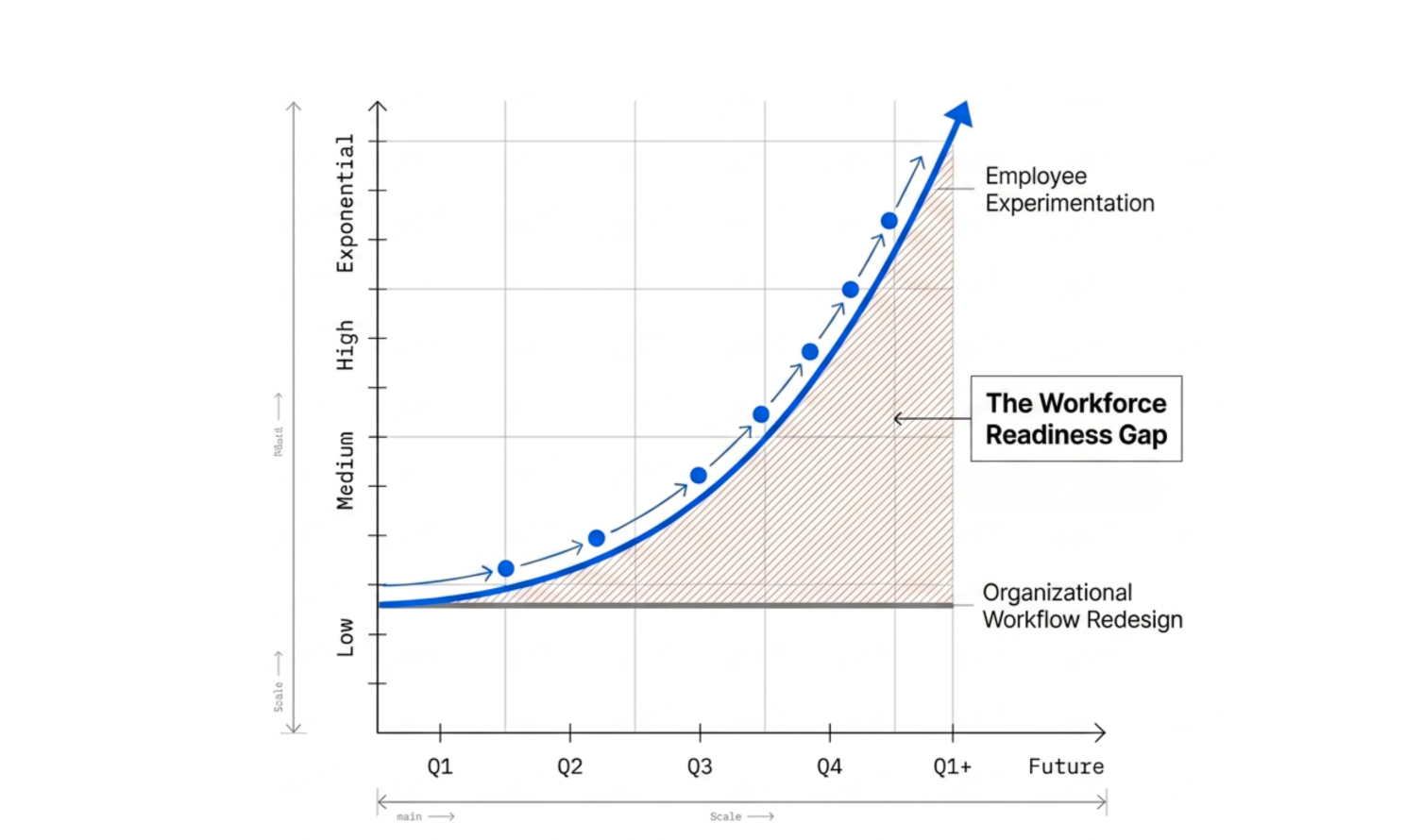
It is not about access to technology. It is about the distance between employees who are already using AI and organizations that are still learning how to adapt.
People are using AI to write, research, summarize, analyze, brainstorm, automate, and make decisions faster. They are experimenting before formal training arrives. They are changing parts of their work before organizations have redesigned workflows around it.
The workforce is moving.
The question is whether organizations are moving with it.
This is the AI workforce readiness gap.
It is not simply the gap between companies that have AI and companies that do not.
It is the gap between employees who are using AI and organizations that have not yet prepared their people, processes, governance, and managers for AI-enabled work.
For leaders, this changes the conversation.
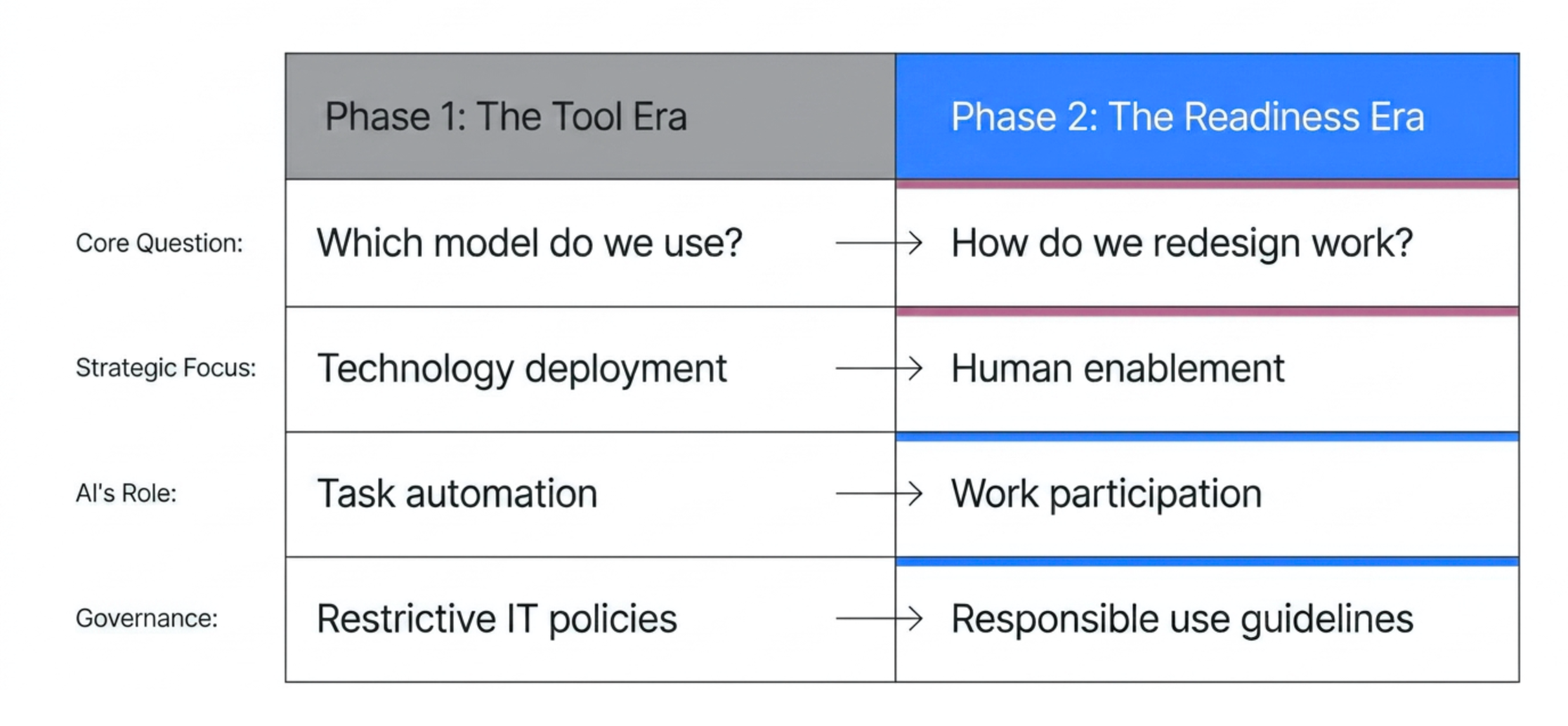
The first phase of AI adoption was about tools. Which platform should we use? Which model should we deploy? Which use cases should we prioritize?
The next phase will be about workforce readiness.
Do employees understand how to use AI responsibly? Do they know how to evaluate AI outputs? Do they understand where human judgment is still essential? Do managers know how to redesign workflows around AI-enabled teams? Do organizations have clear rules for data, privacy, accountability, and responsible use?
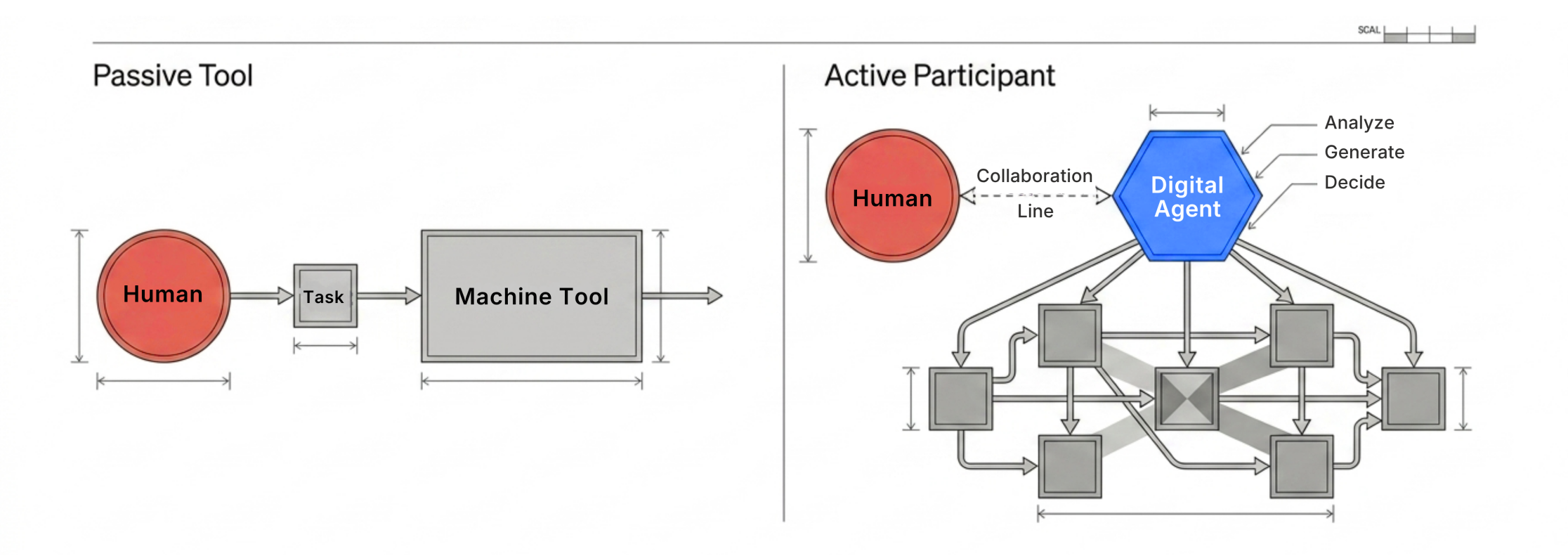
These questions matter because AI is no longer only helping people complete tasks. It is beginning to participate in the work itself.
Digital workers, copilots, and AI agents can analyze information, generate content, support decisions, and operate across systems. This does not make people less important.
It changes what makes people valuable.
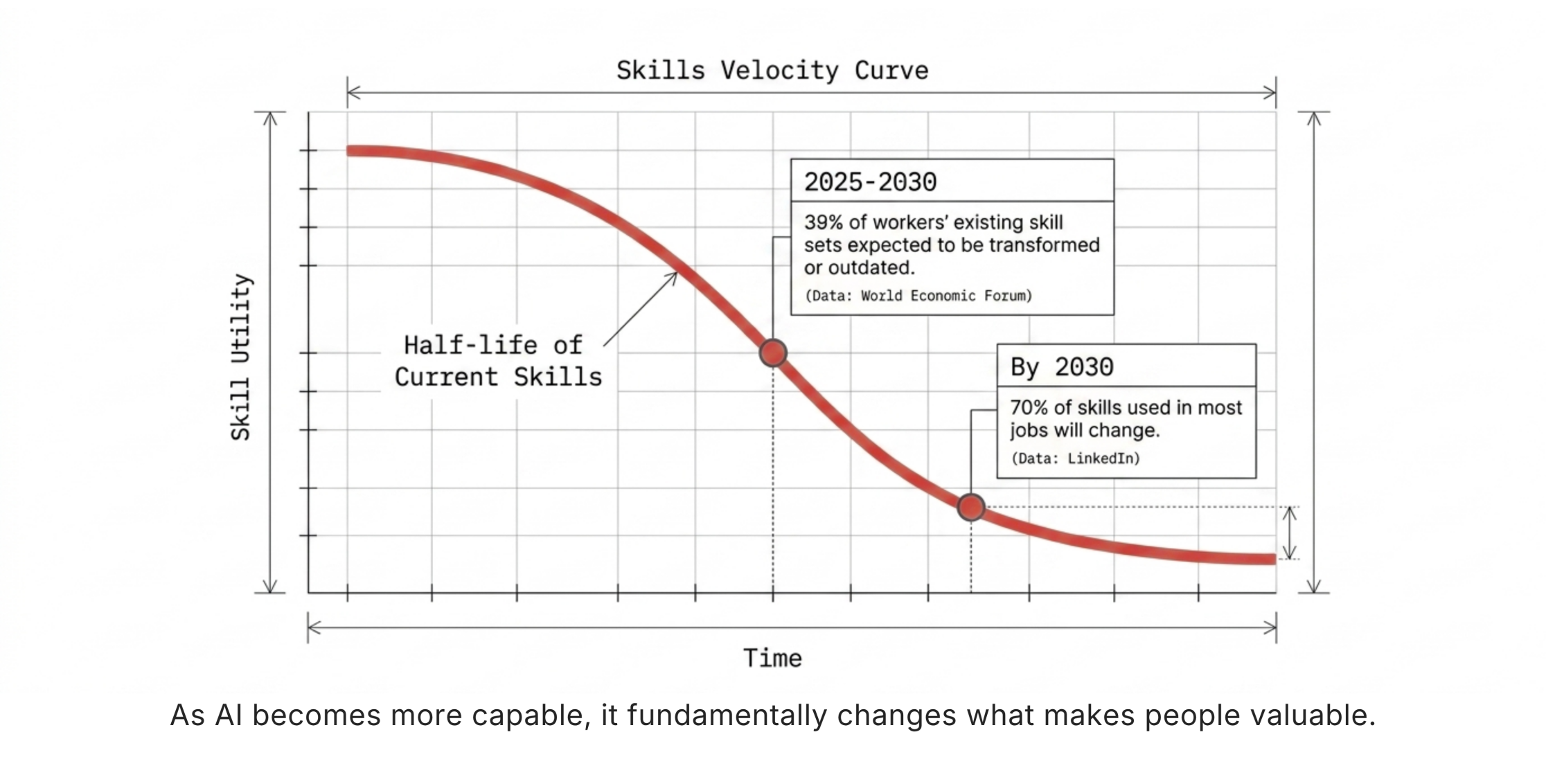
As AI becomes more capable, the skills required at work are also shifting. LinkedIn’s Work Change Report estimates that by 2030, 70% of the skills used in most jobs will change, with AI acting as a major catalyst. The World Economic Forum’s Future of Jobs Report 2025 also found that 39% of workers’ existing skill sets are expected to be transformed or become outdated between 2025 and 2030.
So, what skills are needed for an AI-ready workforce?
The answer is not only technical skills.
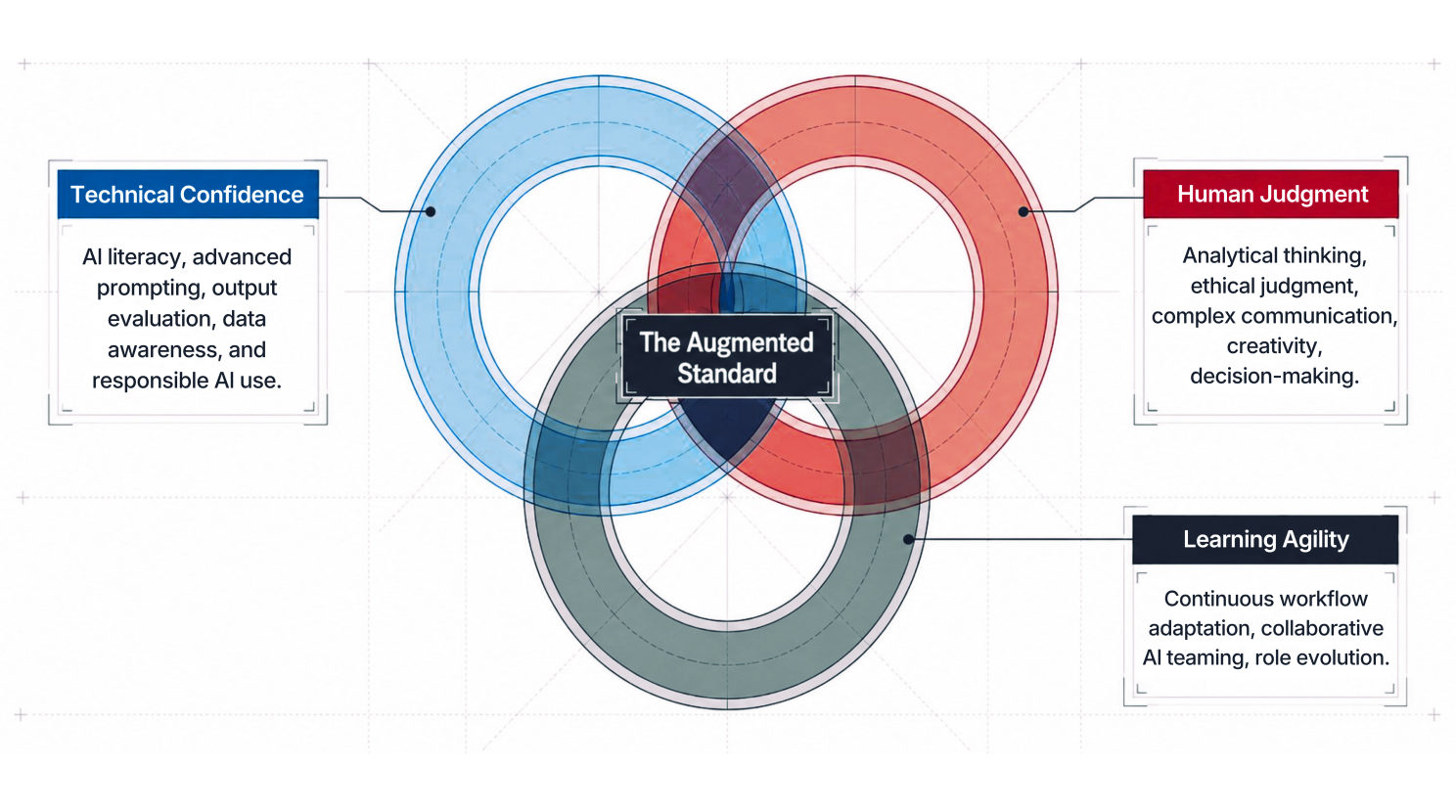
An AI-ready workforce needs three types of capability.
First, technical confidence. Employees need AI literacy, prompting skills, output evaluation, data awareness, and an understanding of responsible AI use.
Second, human judgment. As AI takes over more routine work, people will need stronger analytical thinking, communication, creativity, ethical judgment, problem-solving, and decision-making skills.
Third, learning agility. Employees and managers will need the ability to continuously learn, adapt workflows, collaborate with AI systems, and stay relevant as roles evolve.
PwC’s 2026 Global AI Jobs Barometer found that skills in the most AI-exposed jobs are changing more than twice as fast as in the least exposed jobs. It also found that AI-exposed junior roles are far more likely to demand traditionally senior skills such as leadership and strategic thinking.
This means AI is not only changing tools.
It is raising the standard of work.
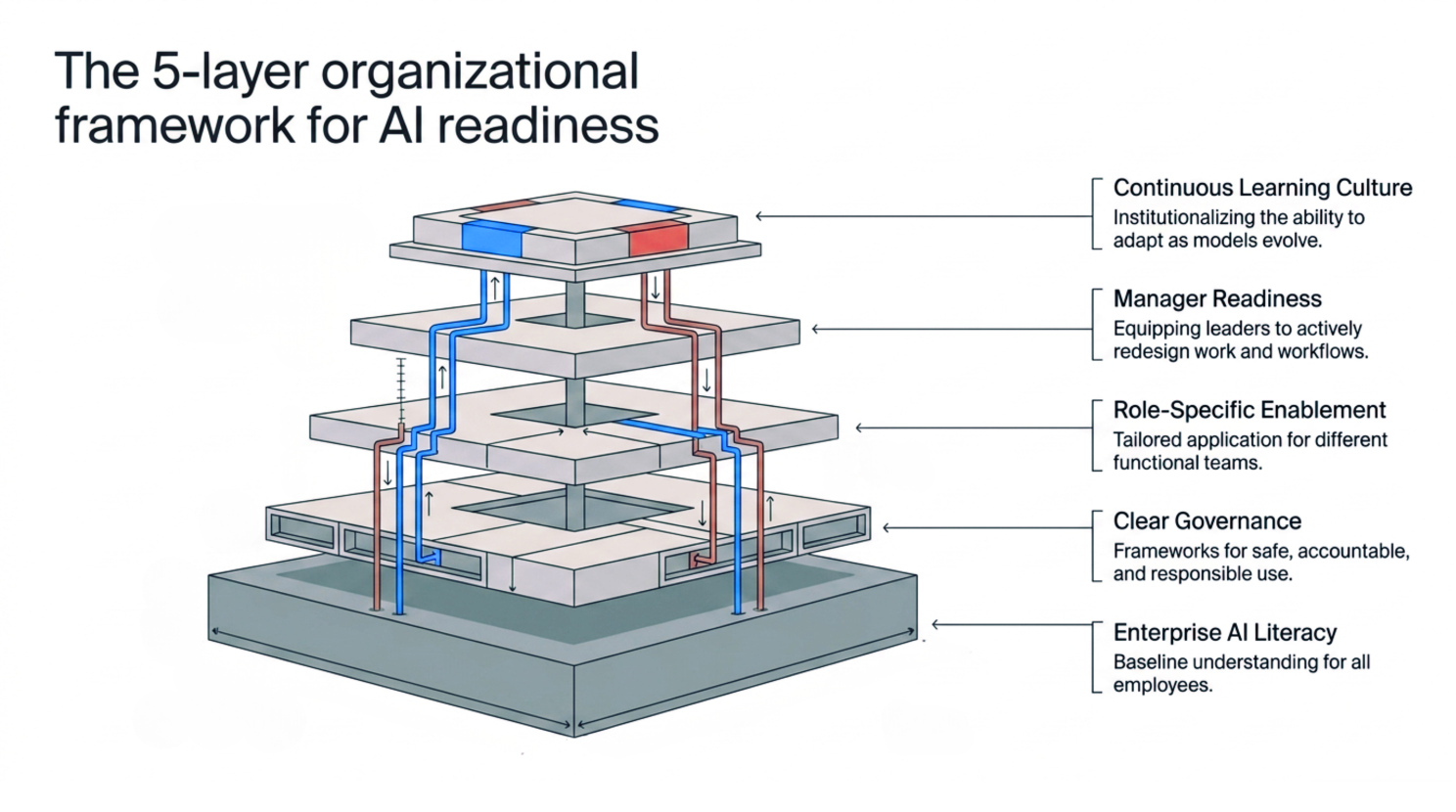
A few workshops or tool licenses will not close this gap. Organizations need a structured AI readiness framework across roles, teams, and workflows.
I believe this framework needs five layers.
This is how organizations move from scattered AI usage to structured AI capability.
The real advantage will not come from tool access alone. It will come from the literacy to use AI well, the governance to use it safely, the leadership to redesign work, and the learning culture to keep evolving.
That is the real AI gap.
The future of work will belong to organizations that prepare their people to work with AI, not around it.
As enterprises connect AI agents to live workflows, security risks extend beyond the model. Learn how prompt injection, excessive access, weak governance and poor oversight can expose business systems—and how leaders can secure AI agents from the start.
Generic AI improves productivity, but industry-specific AI creates measurable business value by combining enterprise data, workflows, governance and domain expertise. Explore why context will define the next phase of AI adoption.
Namasys Powers What’s Next for Your Enterprise
Bring clarity, efficiency, and agility to every department. With Namasys, your teams are empowered by AI that works in sync with enterprise systems and strategy.