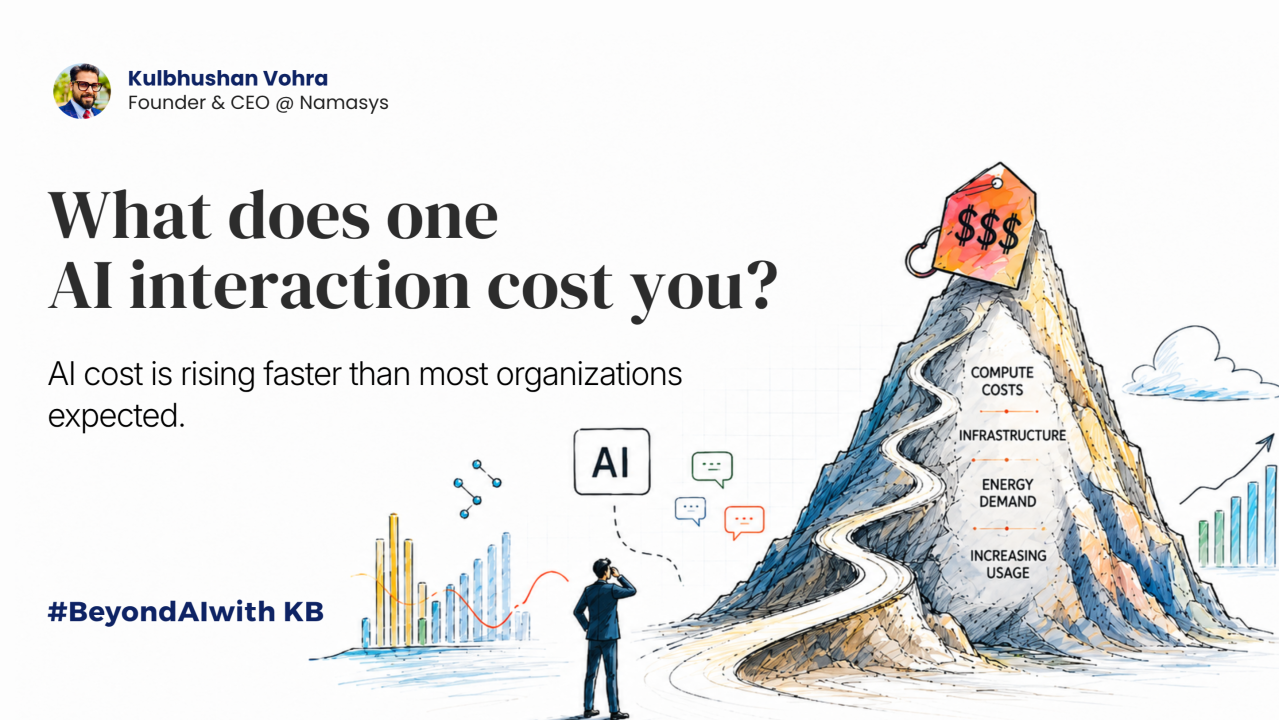
For two years, every AI conversation I've joined has centered on one question: how fast can we adopt this?
I run an AI consulting company, so I sit in those rooms. The energy is real, and the possibility is real. AI is changing how teams work and how they serve customers. None of that is in doubt.
A second question is surfacing now, and it's a harder one. Can we afford to scale AI the way we keep describing it?
I'm asking because I want what we're building to last, not to slow it down.
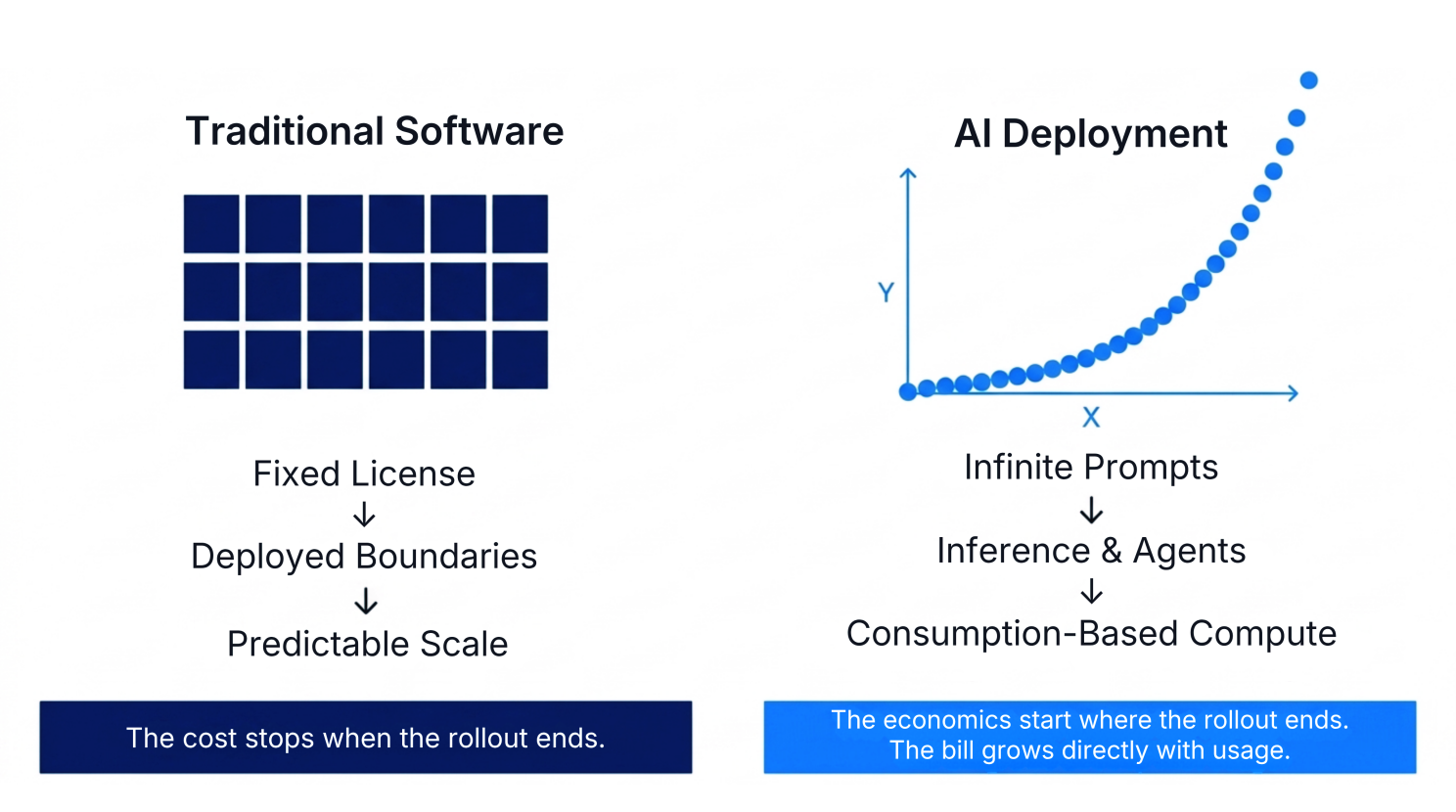
Traditional software usually comes with a more predictable cost structure. You license it, deploy it, and scale usage within clearer boundaries. AI does not work that way. Every prompt, every inference, and every agent you put to work consumes compute, and the bill grows with the usage. The economics start where the rollout ends.
The signals are getting hard to miss.
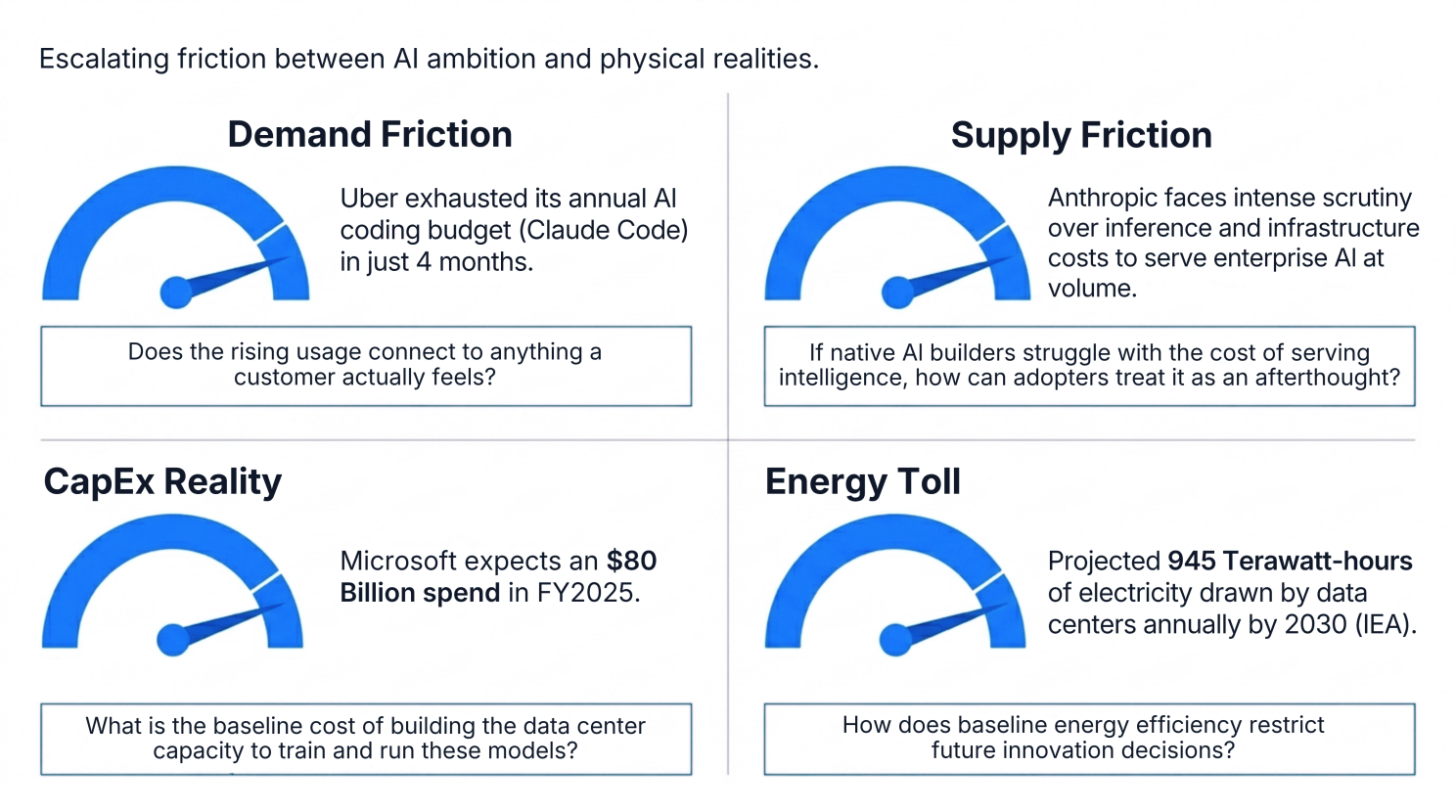
Uber reportedly exhausted its annual budget for AI coding tools in four months, driven by rapid internal adoption of tools like Claude Code. What stayed with me was the question its leadership asked next: was all that usage actually reaching the customer? Adoption climbs, usage climbs faster, and leaders still have to ask whether any of it produces value worth the spend.
The same gap shows up across the AI economy. The companies building AI are under cost scrutiny themselves. Anthropic builds AI for a living, and even it has to watch what serving intelligence costs at scale. The hyperscalers are spending at a level once reserved for national infrastructure. And the energy bill underneath all of it is climbing fast. Different corners of one problem, and each forces the question Uber's leaders asked: where is the value, and is it worth the cost?
All of it points to something bigger than budgets. The AI conversation is moving from what's possible to what's sustainable, and from how much we can deploy to what we can answer for. AI is becoming part of how the company runs.
AI creates value. That's settled. The hard part is the gap between that value and what it costs to deliver.
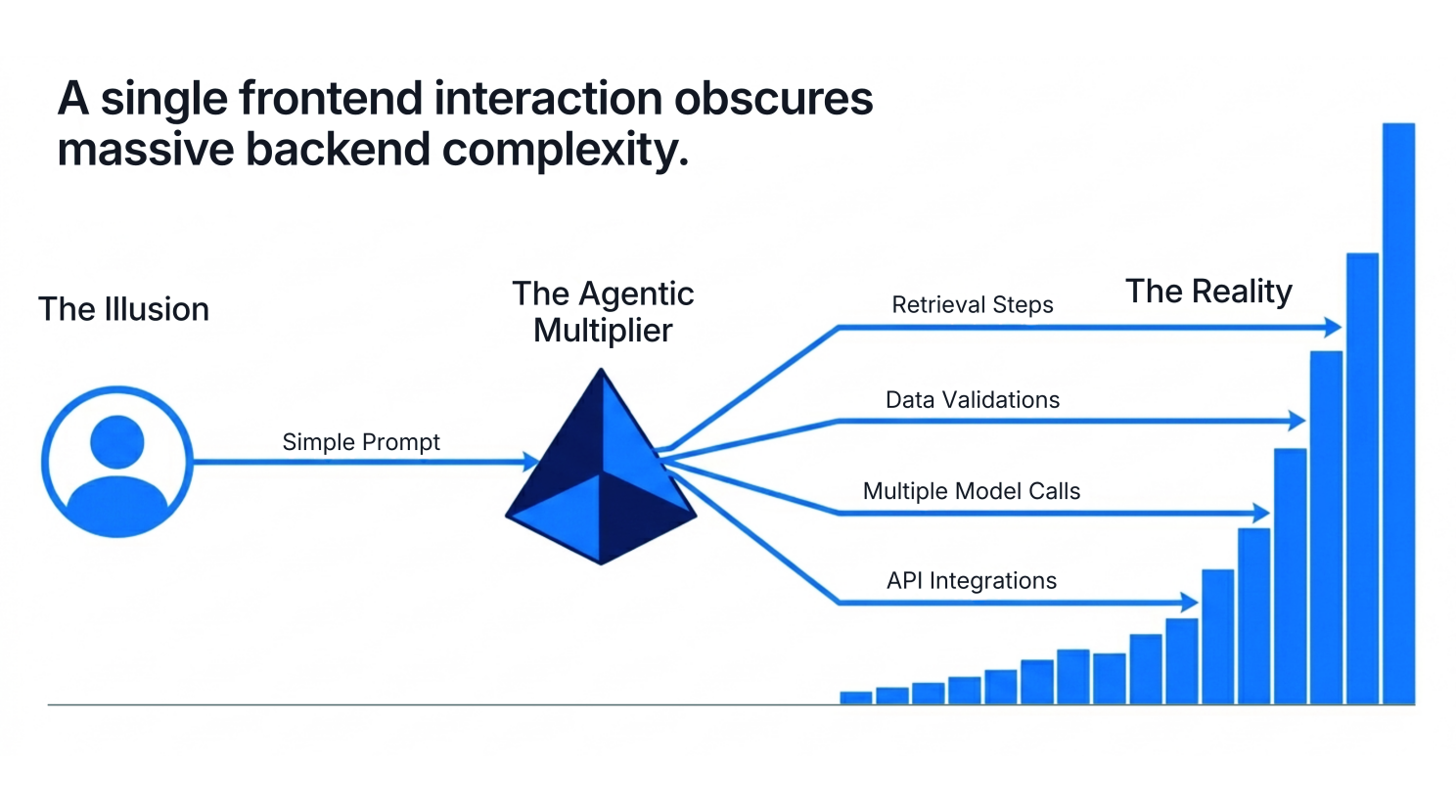
Agentic systems make the gap sharper. What looks like one simple interaction to a user can involve several models, retrieval steps, validations, and integrations running at once. That complexity buys real capability, and it runs up real cost. The numbers that make a pilot look brilliant change shape when you run that pilot across thousands of employees or millions of customers.
This is where I think leadership has to mature.
The first phase of AI rewarded curiosity. We told our teams to experiment and see what was possible. The next phase will reward discipline. Leaders will need to understand unit economics, set up governance, use infrastructure well, and own the results of what they spend.
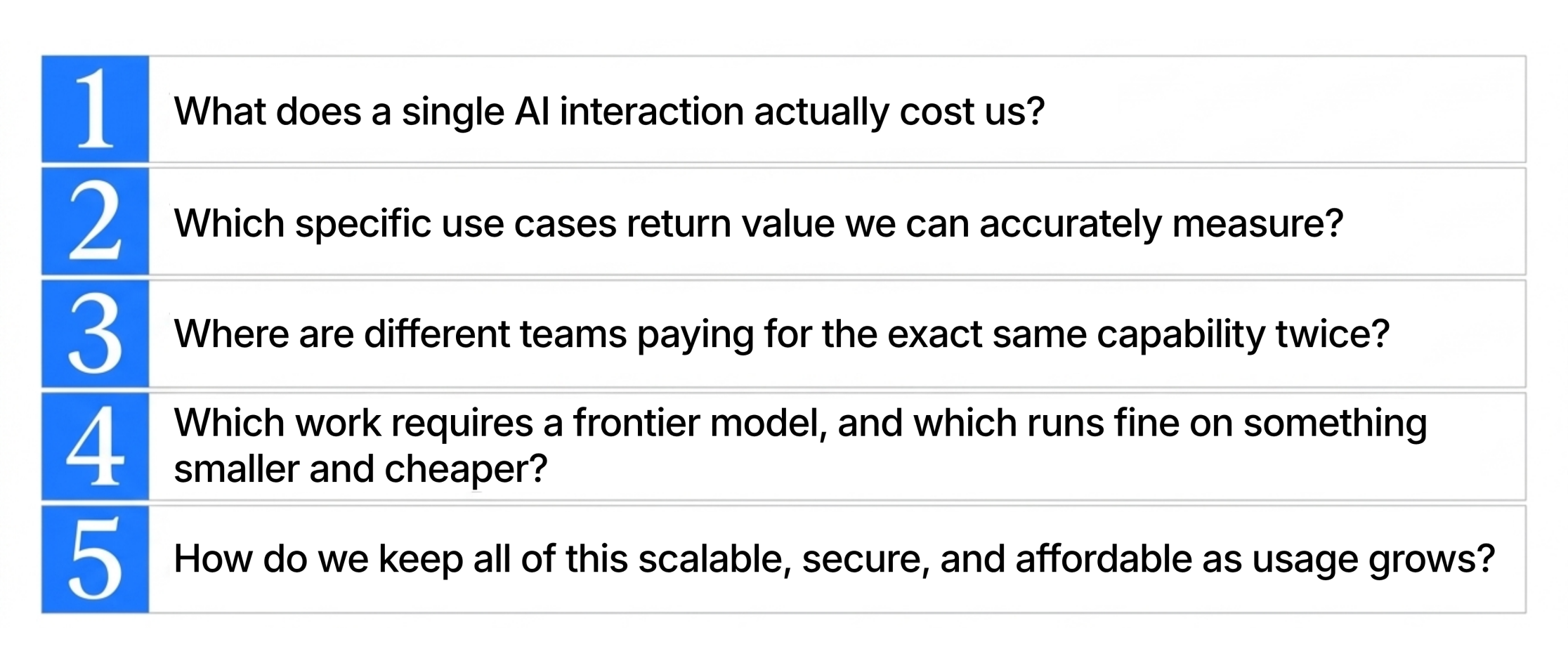
A few questions I'm asking myself, and putting to the other leaders:
We used to ask how much AI we could deploy. The more useful question now is whether each AI interaction earns its place.
Transformative technologies rarely create lasting advantage through fast adoption alone. They create it when someone integrates them with intent. AI won't be different. The companies that last will be the ones that pair ambition with the discipline to fund it.
That's the conversation I'd like us to have now, while we still have room to shape the answer.
As enterprises connect AI agents to live workflows, security risks extend beyond the model. Learn how prompt injection, excessive access, weak governance and poor oversight can expose business systems—and how leaders can secure AI agents from the start.
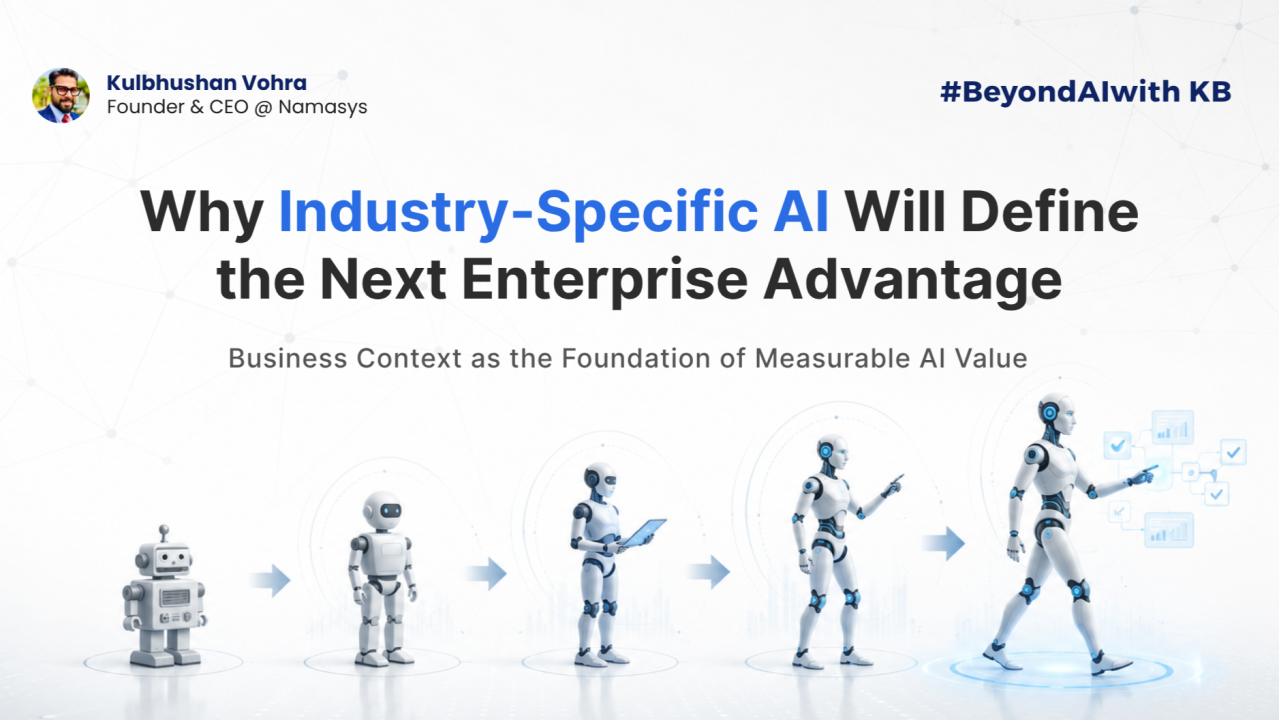
Generic AI improves productivity, but industry-specific AI creates measurable business value by combining enterprise data, workflows, governance and domain expertise. Explore why context will define the next phase of AI adoption.
Namasys Powers What’s Next for Your Enterprise
Bring clarity, efficiency, and agility to every department. With Namasys, your teams are empowered by AI that works in sync with enterprise systems and strategy.