The Execution Gap in AI: Why Pilots Stall Before They Scale
A pilot proves the technology runs. It says nothing about whether you can run it in production. That is where most enterprises lose the thread, and where the few that don't pull ahead of everyone else.
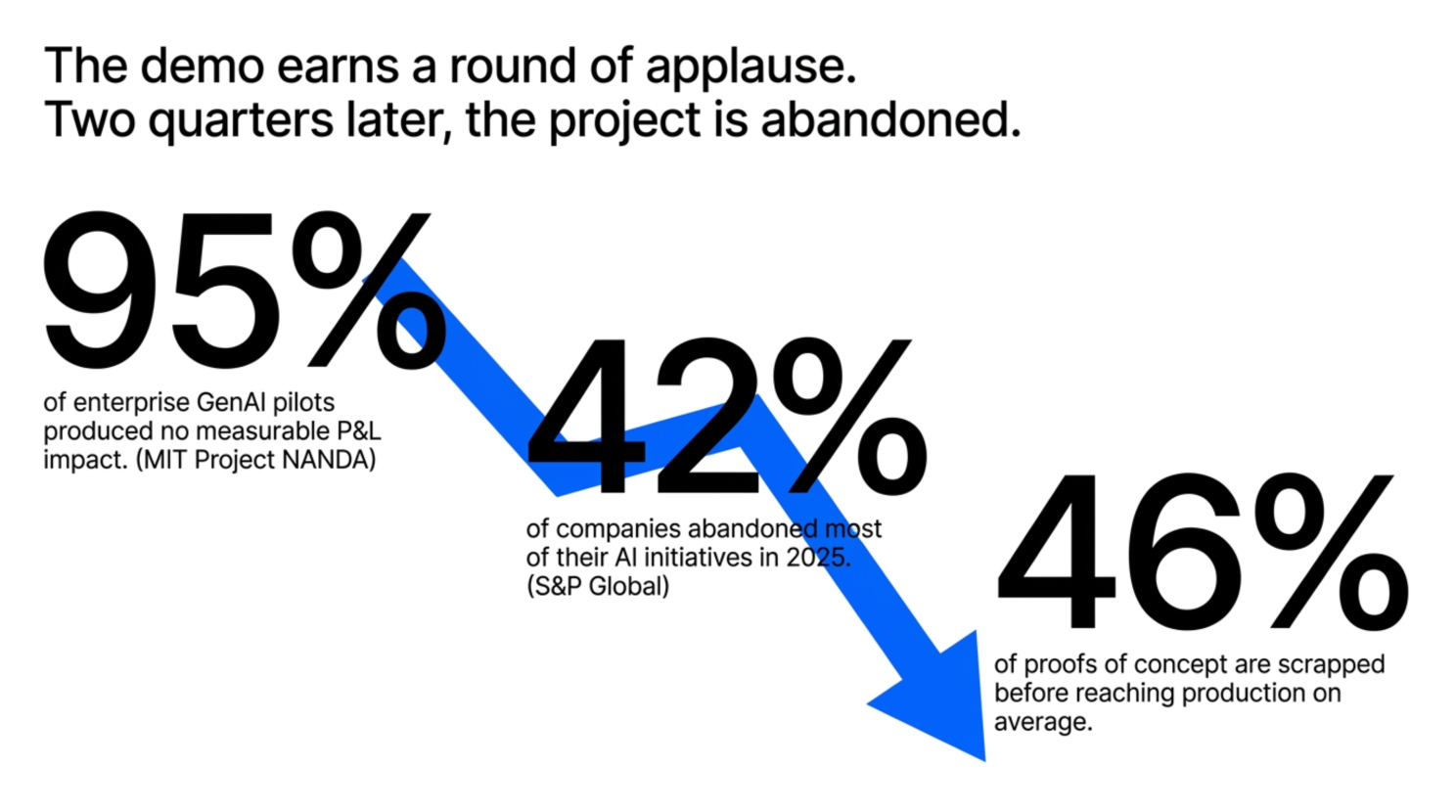
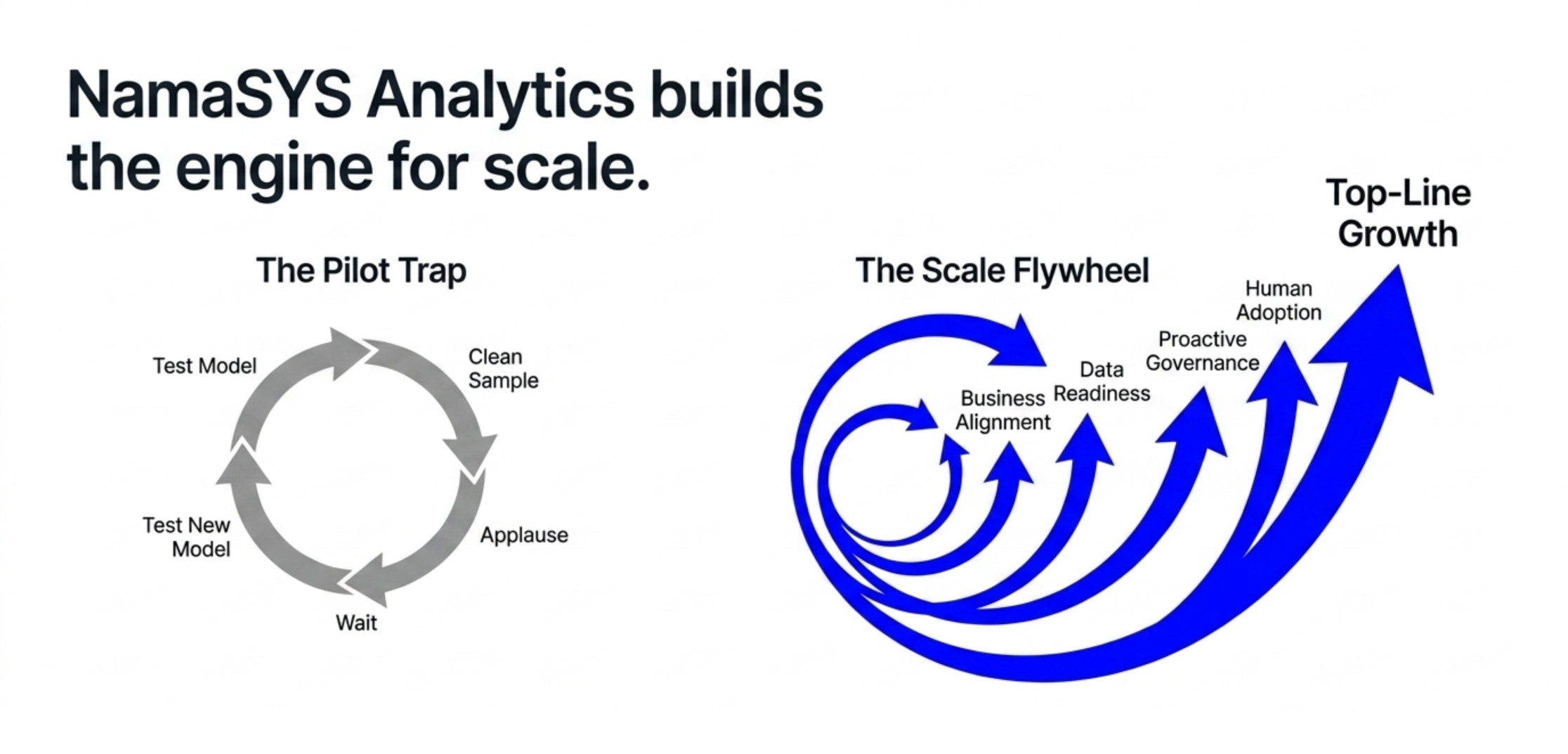
A leadership team runs an AI pilot. The model performs. The demo earns a round of applause, and people start using words like transformation. Then the project sits in pilot mode for two quarters, and someone finally asks the quiet question in the room: now what?
That pattern shows up across the research. MIT's Project NANDA studied 300 public AI deployments, 52 executive interviews, and 153 leader surveys for its 2025 report, The GenAI Divide. About 95% of enterprise generative AI pilots produced no measurable impact on the P&L. Only 5% created real financial value.
The fall-off is getting steeper. S&P Global Market Intelligence surveyed more than 1,000 companies across North America and Europe and found that 17% had abandoned most of their AI initiatives in 2024. By 2025 that figure reached 42%. The average organization scrapped 46% of its proofs of concept before they reached production.
Pilots and scale answer different questions
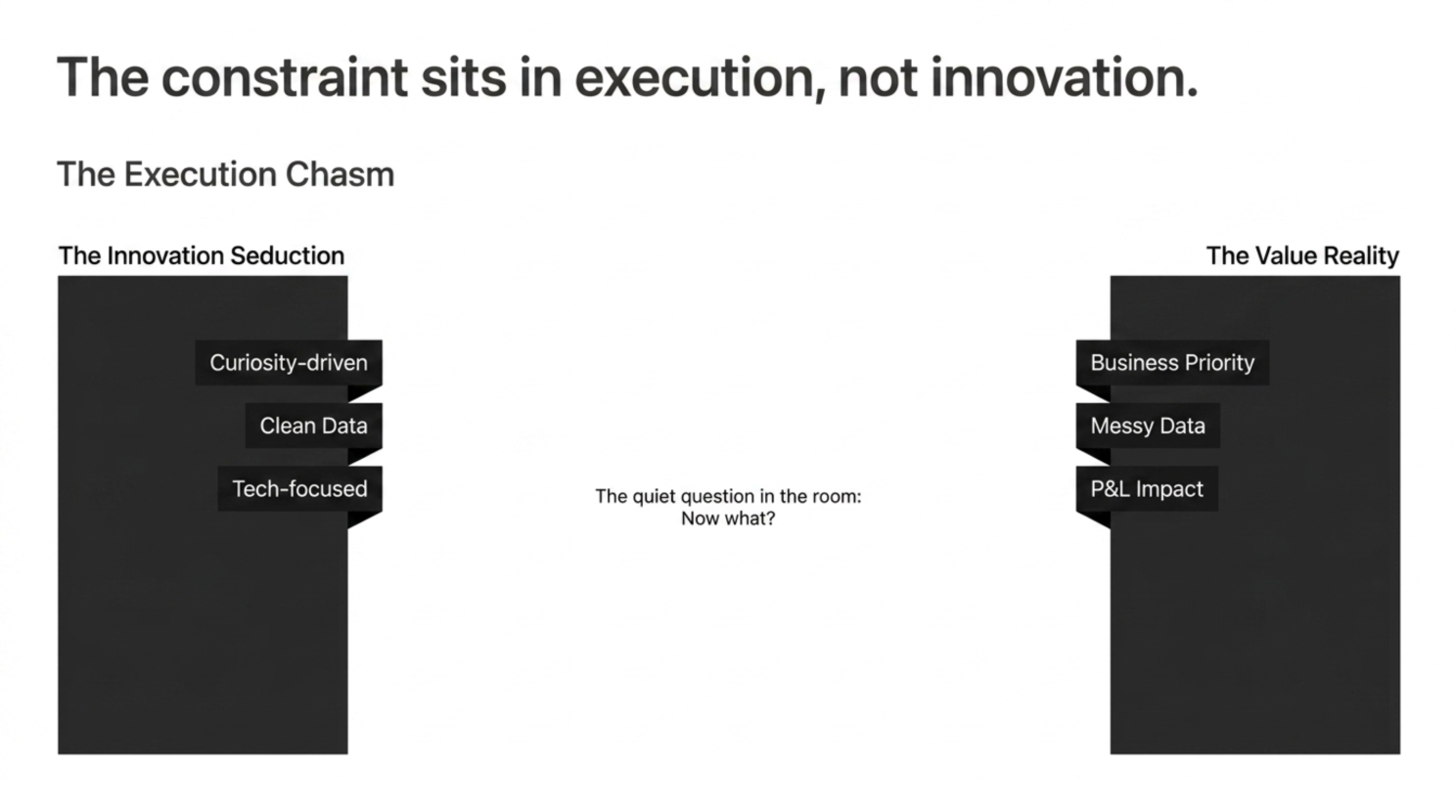
A pilot asks: can this work? Scaling asks harder ones. Does this solve a business problem that someone owns? Is the data reliable outside a curated sample? Will employees trust the output enough to act on it? Can it connect to the systems people already use, and can you govern it for years instead of weeks?
Many AI projects start with curiosity about what the technology can do, before anyone defines the outcome it should produce. A pilot built that way demonstrates capability. It does not solve a problem.
The data foundation sets the ceiling
During a pilot, the team works with a clean, prepared dataset. Production data lives somewhere else. It sits across departments, in systems that don't talk to each other, labeled with definitions that change from team to team.
Gartner expects organizations to abandon 60% of AI projects through 2026 when the underlying data is not AI-ready. In the same research, 63% of organizations said they either lack the right data management practices for AI or are unsure whether they have them. A model is only as good as the data it can reach.
The human factor moves slower than the model
New tools change how people work, and people hesitate.
Gallup’s latest workforce research locates the real barrier. Among employees who have AI available and still avoid it, the reasons cluster around usefulness, ethics, data privacy, and a preference for current ways of working. Access barely registers. Gallup also found that manager support changes the outcome: when a manager backs AI use and sets clear expectations, employees are far more likely to use it and to report value from it.
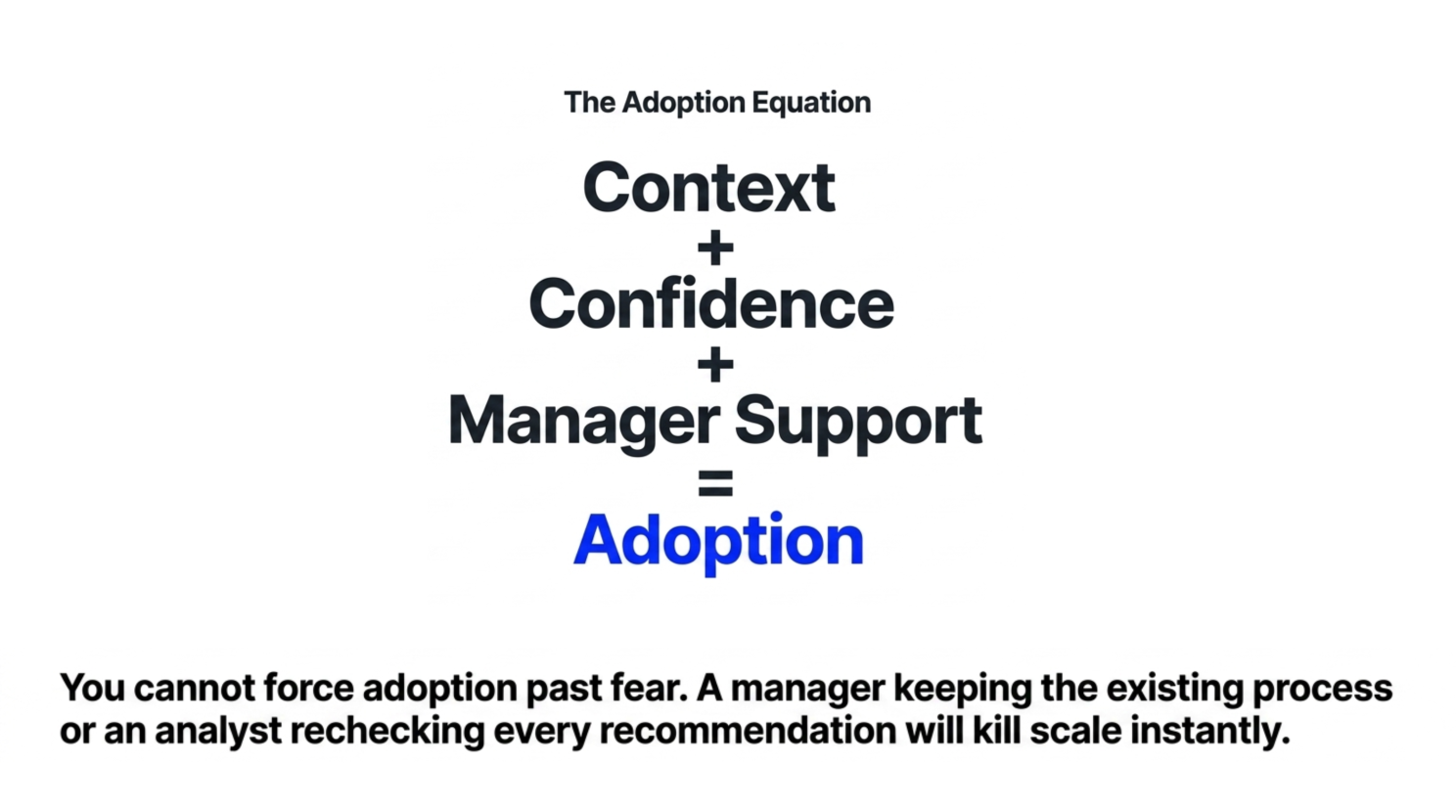
The anxiety is real and worth naming. EY's survey on AI and work found that a large majority of employees worry AI could make some jobs obsolete, and many fear for their own roles. You cannot force adoption past that. People take up a tool when they have context, confidence, and a clear line from the tool to their actual job.
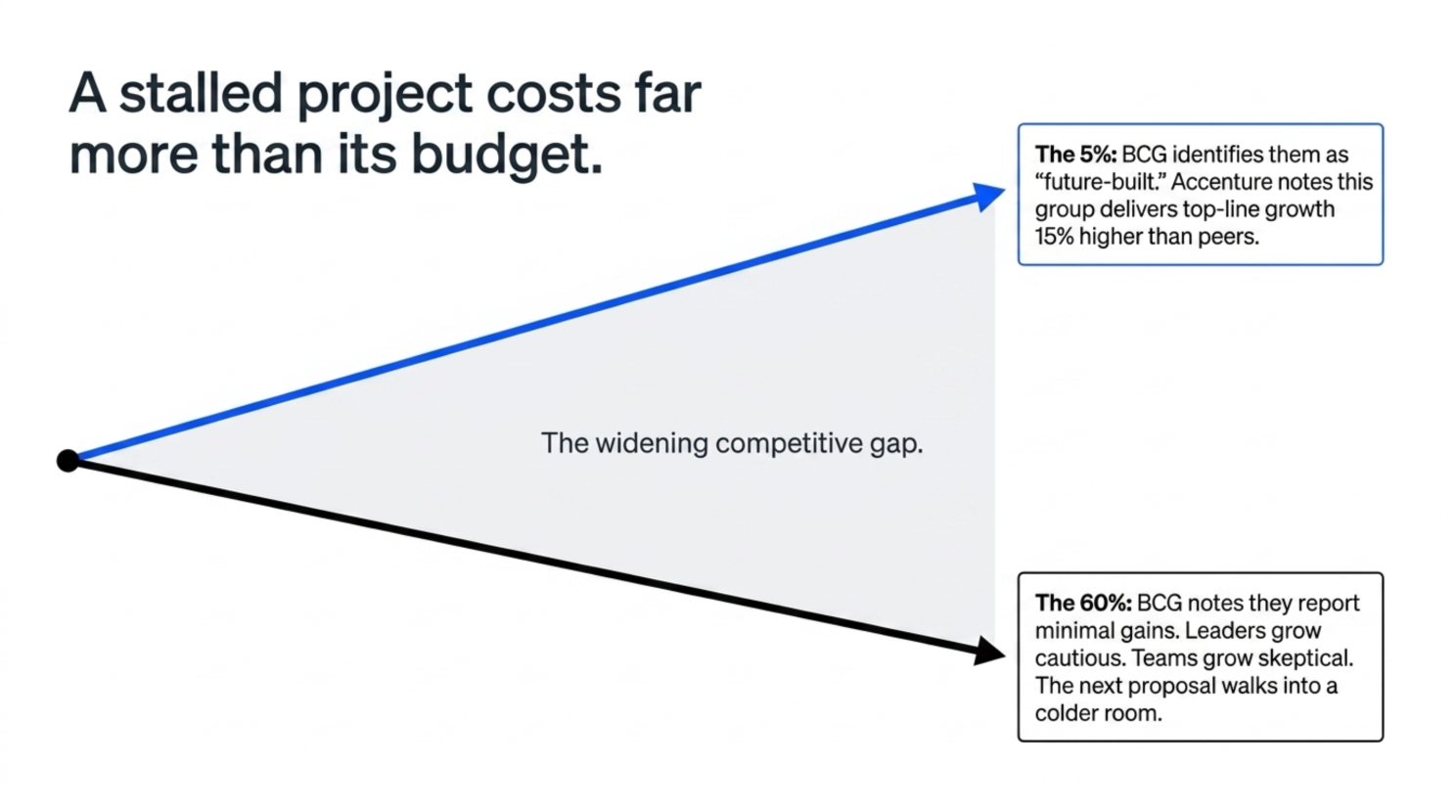
When a project stalls, the sunk cost is the smaller loss. Leaders grow cautious. Teams grow skeptical. The next proposal walks into a colder room.
BCG's Build for the Future 2025 study of 1,250 companies put numbers on the split. Only 5% qualify as "future-built," scaling AI and reshaping how they operate. Around 60% reported minimal gains in revenue or cost. The gap between those two groups keeps widening.
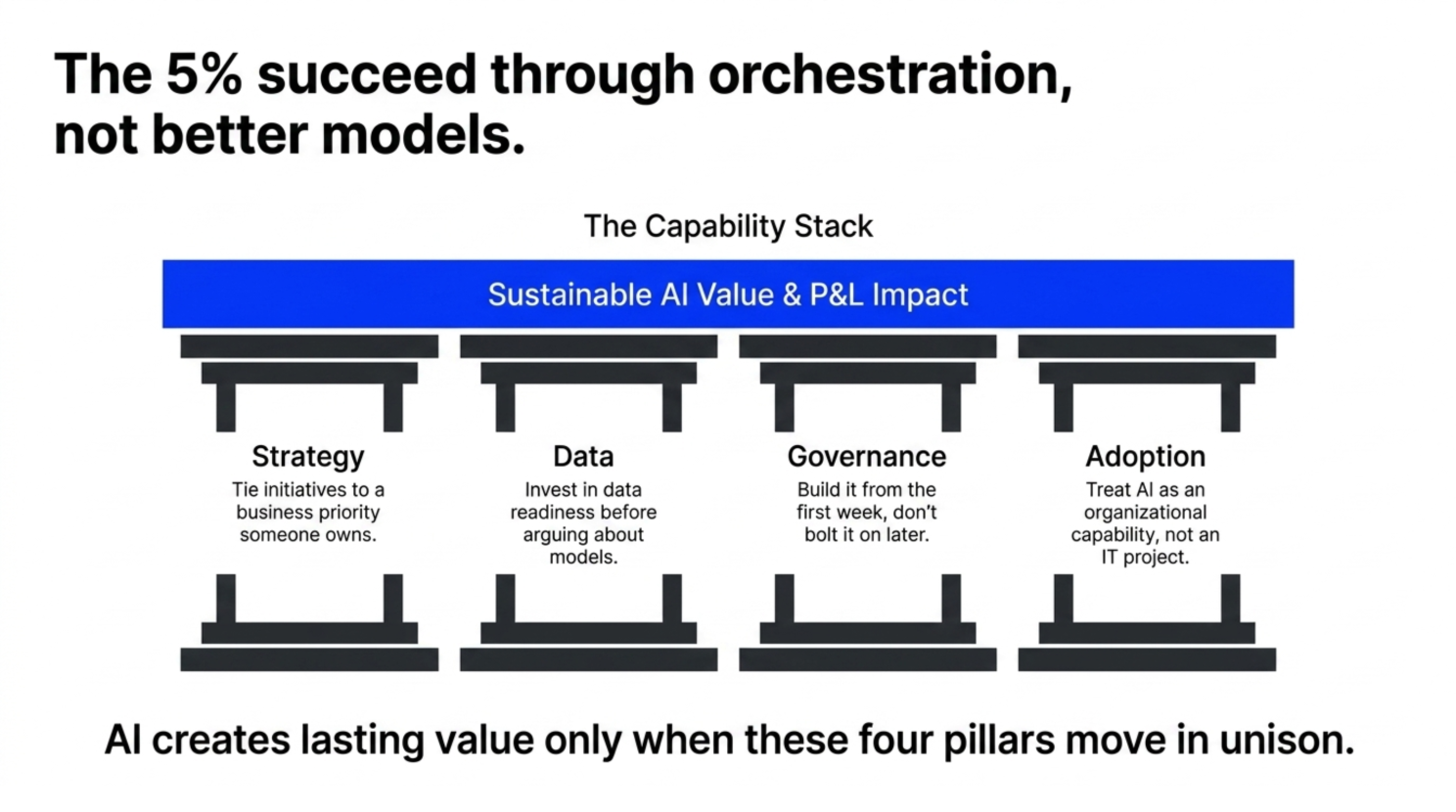
The companies pulling value from AI don't run more pilots. They ask the hard questions earlier. They tie each initiative to a business priority that someone owns. They invest in data readiness before they argue about models. They build governance from the first week instead of bolting it on later. And they treat AI as an organizational capability rather than a project parked in one department.
That choice shows up in the financials. Accenture found that companies pursuing AI-led reinvention delivered top-line growth about 15% higher than their peers, with the gap set to widen further.
The work that lasts
At Namasys Analytics, our approach is rooted in understanding your business objectives and aligning AI with the outcomes that matter most to you. Because AI creates lasting value only when strategy, data, governance, and adoption move together.
AI earns its keep when it stops being a demo and starts shaping ordinary decisions. The forecast a planner trusts. A review cycle that drops from days to hours. That work is quieter than a launch event, and it is what separates the 5% from everyone else.
Sources: MIT Project NANDA, The GenAI Divide: State of AI in Business 2025 (July 2025) · S&P Global Market Intelligence, 2025 Voice of the Enterprise · Gartner, Lack of AI-Ready Data Puts AI Projects at Risk (Feb 2025) · BCG, The Widening AI Value Gap: Build for the Future 2025 (Sept 2025) · Gallup, Workforce AI research, 2025 · EY, AI Anxiety in Business survey, 2024 · Accenture, Going for Growth: Navigating the Great Value Migration in the Age of AI.
As enterprises connect AI agents to live workflows, security risks extend beyond the model. Learn how prompt injection, excessive access, weak governance and poor oversight can expose business systems—and how leaders can secure AI agents from the start.
Generic AI improves productivity, but industry-specific AI creates measurable business value by combining enterprise data, workflows, governance and domain expertise. Explore why context will define the next phase of AI adoption.
Namasys Powers What’s Next for Your Enterprise
Bring clarity, efficiency, and agility to every department. With Namasys, your teams are empowered by AI that works in sync with enterprise systems and strategy.